
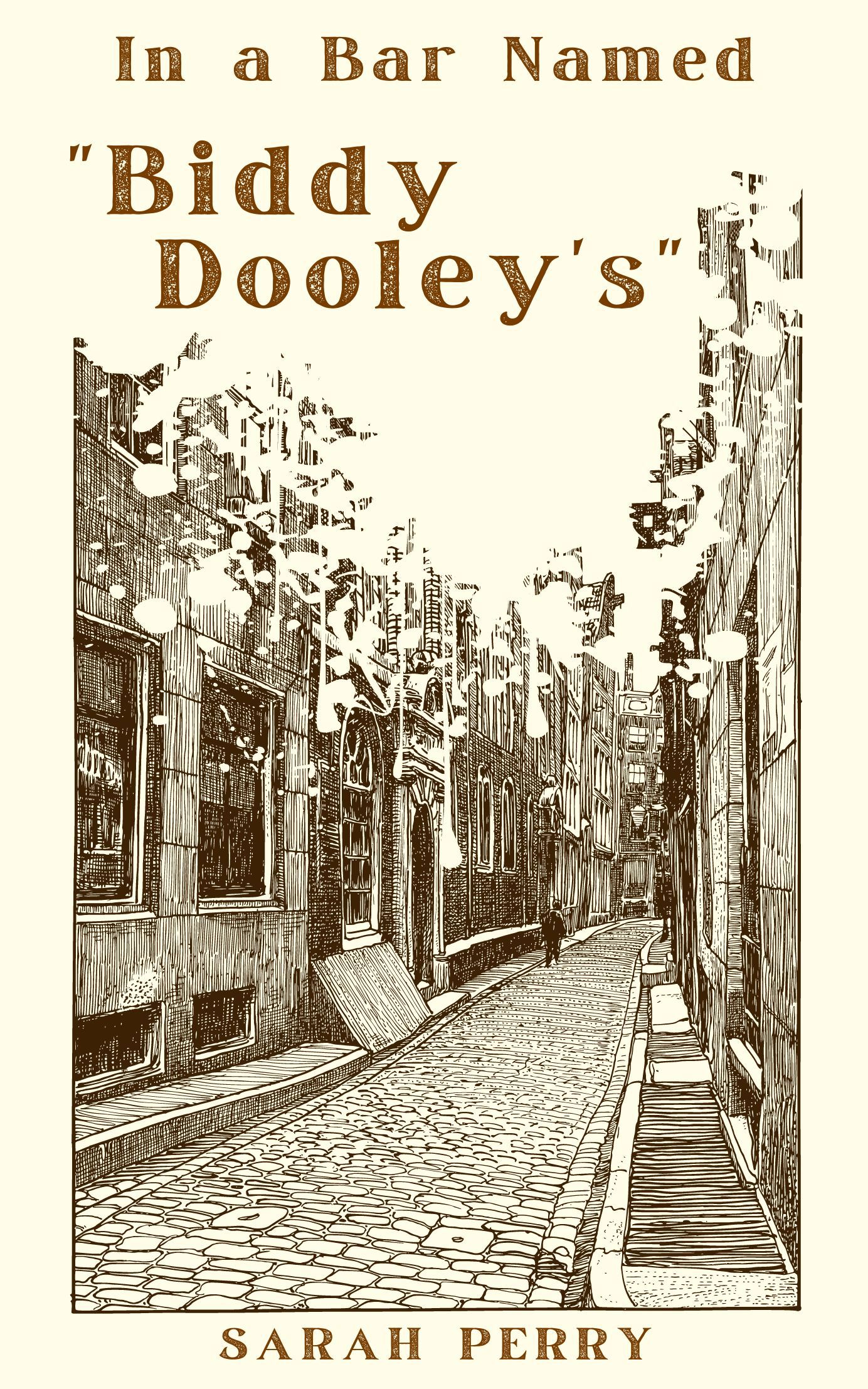
In a Bar Named Biddy Dooley’s
In 1960's Boston, Reyes De Santo, a former Italian mobster, wrestles with his past and his longing for a lost love as they both confront their identities in a world that isn't yet ready for them.
In a Bar Named Biddy Dooley’s
You’re not the man I thought you were.
Reyes De Santo had been shot in the chest once before, back home – well, lower Boston, he supposes now. Way back in another life in a distant city, in a place and a time that no longer exists, to a man he can hardly remember. Some young Charlestown thug with a bad attitude and an itchy trigger-finger down in the Needham District in West Roxbury. Bullet went straight through him, not two inches above his heart, and shattered the window behind. Took a month’s pay and twice as long to recover from that one.
He should’ve died then. The slug should’ve killed him. It sure as Hell felt like it. All his buddies knew it, and if he hadn’t been a half-decent shot himself in those dirty warrens and back alleys, he was sure Buddy McLean would’ve tossed him out of the Winter Hill Gang the moment they dragged him through the door, bleeding all over the greasy Irishman’s floor.
Yeah. Well. This hurts a lot worse than that.
Reyes knocks back another shot and puts a hand over his heart as the too-familiar ache begins to swell up from inside.
“Rita,” he says, trying his damnedest to look interested in the glass he’s holding. “Hey, Rita. What do you think happens when we die?”
The bartender frowns at him. “Me? A beach somewhere down in Florida. But you? Hm. Hell, if you’re lucky.”
Well, he can’t argue with that one.
He motions for her to pour another shot, and she complies, the usual scowl on her face.
“Thanks, Rita.”
“Sure.”
Reyes lives up in Somerville now, in a big white house overlooking Boston Harbor, but he’d rather drink in Biddy Dooley’s downtown. It’s a slanted little side-street Irish pub sandwiched between two brick rowhouses at the bottom of a hill so steep he can’t park his old T-Bird there in winter. The sunlight hasn’t ever touched the shingles and no one knows how old it is or where the name came from, only that it used to be a raucous speakeasy in its not-so-distant glory days. There’s an apartment above that Reyes himself used to live in, as cramped and moldy as Rita can be. The liquor is cheap and watered down, still lingering in the basement from prohibition. The linoleum floor is peeling back and lead paint is chipping off the walls and the chairs don’t match and the fan is broken, the air stale and smothering, and the stench of rotten eggs wafts in through the screen door from the old tannery down the street. And hardly anyone comes here now because of that – they’ve all moved out of downtown, on the fringes of the city, stuffing themselves into those new bars springing up between the crawling suburbs like unwanted weeds. The place lingers with memory and ghosts, in every empty chair.
There was no reason, really, to be wasting away in this hole-in-the-wall when Somerville’s cafés and lounges lay just outside his door. Though in all honesty (honest being a quality he was sorely lacking), Reyes kept hoping something might happen here that would bring Nate Kelly back into his life.
It was like the bullet to his chest all over again, except this time it was his own hand on the trigger. Boston in 1962 was like a supernova – flashy, dazzling, but violent and fatal, especially if you looked at it too long or too closely, and it belonged to them, the Winter Hill Gang. A band of lawless bootleggers found themselves jobless after prohibition and gave themselves a name and some people to push around. Then the McLaughlin brothers gunned and shanked their way to the top of the rival Charlestown Mob hierarchy and gave the Winter Hill Gang, gave Buddy McLean and Reyes and his friends a true run for their (dirty, laundered) money, launching the city into one of its darkest, dirtiest, most corrupt chapters yet – the Irish Mob Wars. Dirty cops crawled through the streets like rats, bribes and shakedowns and shootouts as frequent as the New England rains.
Then three years ago Nate Kelly showed up from the deep south in his poor man’s duds and his lockpick and the sort of ambitious defiance that comes with being a black man in a white man’s world. Three years ago Nate Kelly came with big dreams and grand intentions and together, they carved out a place for themselves in the brick walls and cracked pavement of the city, as significant as any of the old copper statues that peppered the corners of streets. Together they turned Boston into a white dwarf instead – cool, and stable, and maybe with a sort of calm beauty, the kind that lasts. Three years ago Nate Kelly walked into that bar and so casually changed Reyes De Santo’s life.
Ha. A black man and an Italian walk into an Irish bar.
A pub, actually. And what makes you think I’m Italian?
Cause you don’t belong here. This ain’t the place for guidos and negros, my friend.
Six months ago Nate Kelly watched the McLaughlin brothers die, watched Reyes trick them into a fake duel, and had left him there under the streetlight. No words. No anger. No bullets or knives or blood. He just… left. Whatever you wanted to call it, six months ago Nate Kelly walked out of Reyes’ life as swiftly as he entered it.
You’re not the man I thought you were, De Santo.
Reyes shakes his head and downs the shot, maybe not quite enjoying the burn but liking the way it pushes Nate’s face from his mind, if only for a little while.
“Hey, Rita.”
“Hm.”
“Can I ask you something else?”
“No.”
“Do you think we have a destiny? Do you think our lives are all planned out for us? Or something.”
Rita frowns at him again, wiping a glass clean with a rag. Or pretending to, anyway. “What in stars has gotten into you, De Santo? You going through some sort of mid-life crisis?”
“Hey, a fanabla…” he slurs, slipping back into Italian easily. “…figlio di puttana. Look here. I’m only thirty-one years old, I’ll have you know.”
“Right. Well, honestly, looks like you’re pushing forty, maybe fifty.”
“Ouch.”
“I’m no doctor, De Santo, but you should probably take it easy with the drugs and smuggling. It’s not doing you any favours.”
“Look at you, being all… concerned and shit. It’s almost endearing,” Reyes smirks. “Alright, I get it, no drugs or smuggling. But what about drinking?”
Rita actually cracks a smile. “Drinking’s good for the soul.”
She pours him another shot.
Both of them know he’s never going to give all that up.
You’re not the man I thought you were.
The shot burns, but not in the way he wants it to. Not in the way he needs it to. Not strong enough to burn away the face of a certain man. Push it to the side, maybe, or make it a bit blurry, a little frayed around the edges. But still. Not enough.
You’re not the man I thought you were.
He remembers that. And he also remembers Why didn’t you trust me?
Nate Kelly was the biggest fool Reyes had ever met. He was stupid. Stupid for trusting him, for trusting anyone in Boston. For even hitching a ride to this messed-up slum of a city in the first place. For thinking he could come six hundred miles out of his way and find his destiny in these dirty streets. Serves him right, he thinks, downing shot after shot. Serves him right for thinking deep down Reyes was an honest man, a decent man, someone that might be good for him. He was stupid, and it serves him right for thinking everyone came from their old lives with only good intentions and good hearts and grand dreams for adventure and a future beyond the burnt umber of his skin, and he was stupid to believe Reyes wouldn’t fuck that up.
Because nobody came here to be better. They came here to run away from it all. To be someone else, something more than they’d left behind.
What about you? Why did you come here, Reyes?
…To be someone.
Ha. Well. You’re someone to me.
Oh, he is someone now, all right. He is a smuggler, a thief, a shadow in the night. He is the ears and eyes of Boston itself, and the brain. The saviour, the charismatic benefactor, and the hands that orchestrated it all. He is the man that took down the McLaughlin brothers and freed the city from their violence. He is the right hand to Buddy McLean himself. He is the Baron of Back Bay, the Sultan of South End, the King of Fenway Kenmore. He is everything he had ever wanted to be, and more.
Then why does he feel like less of a man because of it?
“Hey. Hey, De Santo.”
“Hm?”
“You’re starting to look a little pale. You better pay up and get out before you paint my bar a new colour.”
“I…?”
“Vomit, De Santo. By God, you’re tanked. Get out.”
Reyes sighs, pressing a palm to his eyes. “Porca miseria, donna – Just one more? For the road? Please, Rita.”
She scowls but pours him another anyway. “Drink up. Pay up. Get out. Don’t come back until you’re sober. And stop asking strange questions.”
“Yeah. Thanks.”
He throws back the shot and lets it burn all the way down.
Outside, the pale sun hangs low in the sky, the shadows of buildings cutting strange shapes across the pavement, and a cold breeze blows trash and filth round the street. People crawl along the sidewalks and in between cars and alleyways like ants, or city rats maybe, always busy, always chasing the next opportunity to scrape a living from the dust. Reyes wasn’t so very different from them, not long ago.
He lights a cigarette and sucks it in, leaning against the brick wall, the Biddy Dooley’s sign creaking in the wind above his head.
He closes his eyes for a moment, the sun on his face, and remembers.
Remembers the first time he ever saw Nate Kelly, here in this very bar. Remembers the white flash of his smile on his dark face and the deftness of his hands. Remembers breaking into fifteen houses together one night, a record that still stands in the Gang. Remembers burning down the theatre in Scollay Square, watching from the alleyway as the streets lit up in flames – remembers the rushed press of his lips on his own, and the smell of ash on his Cajun skin, and the way that something inside him sighed as it settled in as if to say yes, this is how it should be.
You’re not the man I thought you were.
He remembers that, and he remembers when the black world pushed back against the white violence and oppression. Remembers the way Nate’s head hung low at the names the other members threw at him from time to time. Remembers how he avoided Boston Common that week the protests took root. Remembers the sit-ins and walk-outs and freedom rides. Remembers watching the news one morning, the both of them tangled in motel sheets, cigarettes from their mouths, eyes fixed on the screen of the black man with a dream.
You’re not the man I thought you were.
He remembers the look on his face when he found out Reyes had been lying to him, using him, all to claw his way to the top of the Winter Hill Gang, to be someone else, something more than the tan of his Sicilian skin, than the accent he still carried, than the man and the country he’d left behind.
He remembers that, and he remembers saying it would never work – he was black and they were men – men – and the world wasn’t ready for that. It never would be.
He remembers that, and he remembers watching Nate Kelly walk away from him under the streetlight in the square, over the dead bodies of the McLaughlin brothers, those last stepping stones on his way to something more.
He remembers. He remembers the way Nate’s voice pitched when he told him he wasn’t the man he thought he was – and remembers the laughter of the gang, laughing at the black man, laughing as he walked away from them all. Walked away from him.
They never knew, of course. They would’ve killed them both. Being black in the sixties was crime enough.
Reyes opens his eyes with a sigh, and there he is.
He’s a little thinner and older and his eyes look tired, but there he is, Nate Kelly in the flesh, standing before Reyes’ very eyes.
He supposes he must look the same, must look like the weight of the drugs and guns and violence pressing his shoulders down these last years is finally taking its toll. God, it’s like looking in a mirror – but it always was with Nate.
“Hey,” Nate says, and the way his lips move, the way his voice sounds on his ears again, sounds like home.
Reyes blinks. Flicks the cigarette onto the ground casually. Tries his damnedest not to look drunk and lonely and like his heart might just burst through his chest. “Hey. It’s you.”
“Yeah. It’s me.”
Reyes doesn’t belong up in Somerville. He doesn’t deserve his big white house overlooking the harbour. He doesn’t belong in the streets with the other gang rats, scratching in the dirt. He doesn’t belong anywhere, he realises. But he always felt like he might’ve belonged when he was up to no good with Nate Kelly.
He tosses a thumb behind him. “Want to grab a drink? You’re buying.”
Nate smiles, a brilliant flash of white on his black, black skin, and nods.
“Hm. Yeah. Reminds me of something, you know.”
“Yeah?”
“Yeah. A black man and an Italian walk into an Irish bar –”
“And this ain’t the place for guidos and negros.”
“No. It’s not.”
And maybe Reyes can’t be the man Nate thought he was, nor the man Reyes always wanted to be. And perhaps Boston would never be the place for a black man, or an Italian mobster in an Irish mob. And the world might never be ready for the two of them together, but it didn’t have to be. They’d carved a place for themselves here once before. They could do it again.
And Reyes smiles in what feels like years as they walk back into Biddy Dooley’s bar.
That is the end of In a Bar Named Biddy Dooley’s . Thanks for reading.
Get the app for the rest of Sarah Perry's writing, and everything else on Novellea.
Open in Novellea