
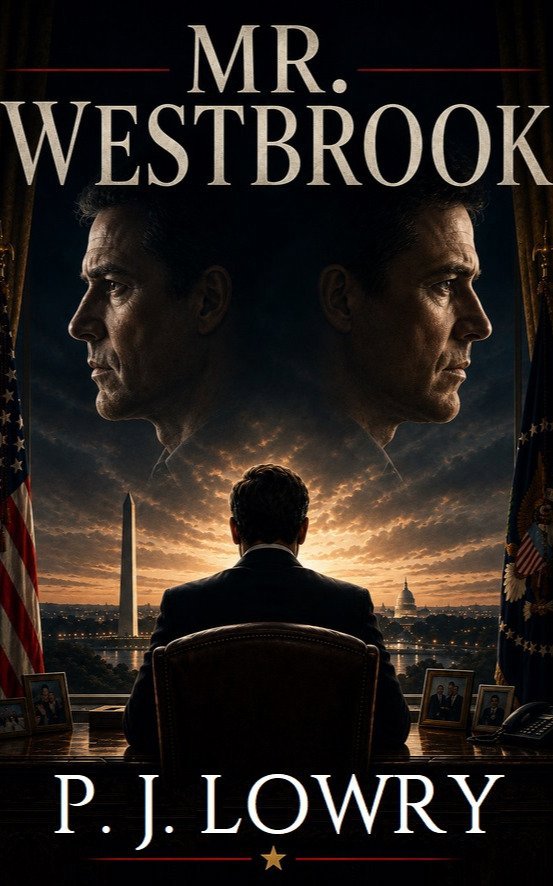
Mr. Westbrook
Nathaniel Westbrook wakes in a secure hospital surrounded by doctors and armed guards. As he struggles to remember what happened, he discovers his life has changed in ways no one can explain.
Chapter 1
As he slowly came back, the first thing he noticed was the beeping. It was slow, regular, and insistent.
Beep. Beep. Beep.
The man tried to open his eyes, but nothing happened. He tried again, and this time light found him. It was a very bright white light, so he closed his eyes again. Somewhere nearby, a machine hissed. He could hear someone speaking in a low voice. Another voice answered, quieter still.
“Blood pressure?”
“Eighty-nine over fifty-four.”
“Heart rate?”
“Forty-eight.”
“That's a little low.”
“He's coming around.”
The voices seemed to be coming from very far away. He tried to speak, but his throat felt as though he'd swallowed sand. He took a deep breath and tried again.
“Water.” He slowly managed to say, as his tongue felt like sandpaper on the roof of his mouth.
The room went silent, and then suddenly everyone was moving.
“Take it easy.”
“Don't try to sit up.”
“Stay still.”
“Can you hear me?”
He opened his eyes again, and this time they stayed open. A woman in blue surgical scrubs was leaning over him. She had a stethoscope around her neck and the tired, concentrated expression of someone who had been awake for far too long.
“Can you hear me?” she asked him.
He swallowed.
“Yes.” He managed to say, “I can hear you.”
The woman smiled.
“Very good.” She replied.
He looked past her, and there were people everywhere. Doctors, nurses, and even someone adjusting an intravenous line. There was another person studying a monitor, and a man in a dark suit stood near the door. The man in the suite clearly wasn’t a doctor, or any member of the medical staff. Neither was the second man standing beside him in a near identical suit. Both wore small communication devices in their ears, and they were carefully watching the room. More importantly, they were watching him.
He tried to remember where he was but couldn’t remember a thing.
“What happened?” he finally managed to ask.
The woman glanced at another doctor.
“We're going to explain everything.” She informed him.
“Where am I?” He inquired, hoping to get an answer this time.
“You're in a hospital.” The lady replied.
That seemed obvious as he looked around again. The room was far too secure to be an ordinary hospital room. There were no windows, and the door was thick. At least two armed men stood outside the glass partition beyond it, and he could see another man farther down the corridor. Then he spotted another, and he frowned.
“Why are there so many guards?” he asked the lady beside him.
Nobody answered immediately. The woman looked toward the man beside the door as he stepped forward.
“Sir.” The man said to him with a very calm voice. He sounded very professional, and even familiar. The man had a square face, gray hair at his temples and the expression of someone who had spent his entire career learning how not to look worried.
“Do I know you?” He asked the man.
“Yes, sir.” The man responded.
“I'm sorry.” He replied, “My head is drawing a blank.”
“That’s to be expected,” The lady in scrubs replied, “You've been unconscious.”
“For how long?” he asked her.
The man looked briefly toward the doctor.
“Three days.” The man answered.
“Three days?” He repeated.
“Yes, sir.” The man confirmed.
He tried to sit up, and every muscle in his body protested. As he tried to do that, three people immediately moved toward him.
“No.” one person called out.
“Don't do that.” Another called out.
He ignored them all.
“Why was I unconscious?” he called out.
The lady in the scrubs stepped closer.
“You experienced a serious medical emergency.” She explained.
“What kind?” he asked.
“We'll explain that.” She reassured him.
“You keep saying that.” He countered.
The doctor smiled faintly.
“Because you're going to have quite a few questions.” She replied.
“I already have one.” He said, looking around the room. “Why is everyone acting like I'm going to explode?”
Nobody laughed as he looked from face to face. The woman beside him had gone pale. The man by the door was studying him with an intensity that made him uncomfortable. Then another person entered. It was a woman in a dark suit, and she stopped the moment she saw his eyes open. For a second, she simply stared at him and then covered her mouth.
“Oh my God.” She said, before crossing the room quickly. She reached for his hand, and he could feel her hands were trembling as she took his hand in hers.
He looked at her, and he was almost certain he knew her. Yet the name wouldn't come to him. She sat down beside him.
“You scared the hell out of me.” She told him.
He stared at her.
“I'm sorry.” He said, trying to sound sincere.
She laughed, and it slowly turned into a sob. Then she leaned forward and kissed his forehead.
He closed his eyes, as something about the gesture felt right. It felt safe, and quite familiar.
“What is your name?” he asked.
She pulled back as for a moment she looked genuinely frightened. Then she smiled at him.
“It’s Elizabeth.” She answered.
He nodded, as the name triggered something. Not a memory exactly, but more like the sensation of a memory. The name Elizabeth triggered something as he remembered why that name was important. His wife was named Elizabeth. The moment he realized that the knowledge arrived without explanation. He looked at her more carefully.
“But I call you Beth, right?” he said, hoping he wasn’t messing up.
Her smile broke.
“That's right.” She confirmed, “You do.”
He squeezed her hand.
“I knew that.” He lied.
“Good,” Beth replied, “Because you had me worried for a moment.”
The doctor stepped forward.
“Mrs. Westbrook…” The man said as he was not paying attention, and then he suddenly stopped. The room seemed to freeze. The man beside the door straightened. The woman in scrubs looked at him. He stared at the doctor.
“Westbrook?” he repeated.
The doctor seemed to realize what he'd said. He glanced toward the man in the suit, and then back at him.
“Yes, sir.” The doctor confirmed.
The man felt something shift inside his head. Westbrook… that name was also familiar. Not just familiar, but very important. He looked at the armed men outside the room, and the back at the doctors. He looked over at his wife, and then at the man standing by the door. Something still wasn't connecting.
He looked at the man in the suit who was speaking to him.
“Who are you?” he asked.
The man gave him a small smile.
“Special Agent Thomas Reed, Sir.” The men in the suit replied.
“Secret Service?” he guessed.
“Yes, Sir.” Agent Reed replied.
The answer should have explained everything. Instead, it raised another question that he blurted out without thinking about first.
“Why is the Secret Service guarding me in a hospital?” he inquired.
Reed looked at him for several seconds, and then his expression softened.
“We’re your security detail, Sir.” Agent Reed answered, “Because you're a very important person.”
He almost laughed.
“That's not an answer.” He replied.
“No, Sir.” Agent Reed confirmed, “It is not.”
Reed glanced toward the doctor, and the doctor nodded. Reed took one step closer to the bed.
“How are you feeling, Sir?” Agent Reed asked.
“Still a little foggy,” he answered, “What time is it?”
“It’s nine-thirty in the morning.” Agent Reed answered.
“Well then,” he said, taking a deep breath. “Good morning, Agent Reed.”
“Good morning, Mr. President.” Agent Reed calmly said.
The room seemed to disappear as he stared at Reed. The words echoed in his mind: Mr. President. He looked at Beth, and at the doctors and the men standing guard outside. Suddenly, everything made sense. The security, the secrecy, the doctors, and their high level of concern. The impossible number of people waiting for him to wake up. He looked down at his hands, and then back at Agent Reed.
“I'm the President?” he asked him.
Reed smiled.
“Yes, Sir.” Agent Reed answered.
He closed his eyes, and then something came back to him. The name Nathaniel Jefferson Westbrook popped right into his head. For the first time since waking up, he remembered exactly who he was. He had absolutely no idea why he couldn't remember the last three days, but whatever happened caused him to be rushed to this hospital to be treated. A doctor came forward and started to put a small flashlight in his eyes to check his pupils.
“Mr. President,” the doctor said to him, “What is the last thing you remember?”
The President waited until the flashlight was out of his face to respond.
“It’s still a little foggy,” he replied, “But I remember a dinner. I was wearing something spiffy… like a… a tuxedo! I was at an event, wasn’t I?”
“You were,” Beth replied, holding his hand tighter. “It was a campaign event.”
The word campaign also seemed to trigger something in him. It wasn’t just any kind of campaign event; it was a re-election campaign event. He was running for re-election and that event was to raise funds for his war chest. The president took a deep breath and looked back at his wife.
“Could I please have some water?” he asked again.
Chapter 2
By noon, President Nathaniel Jefferson Westbrook had learned three things. First, Walter Reed National Military Medical Center had very good coffee. Second, the Secret Service had absolutely no sense of humor when it came to him attempting to leave his room without permission. And third, that being President of the United States meant that even a hospital room could become an office.
The secure presidential suite at Walter Reed had been designed to accommodate far more than a sick man and his doctors. By the time Nate had finished his second cup of coffee, the room had become a temporary command center. There were phones on a small table near the windowless wall, a secure communications terminal had been wheeled in and connected to the hospital's network, and two pretty large television screens were mounted so Nate could see them from his bed. One of them was tuned to a news channel with the sound muted while the other displaying a continuous stream of briefing material. The President’s clothes had been returned to him, although someone had thoughtfully replaced his suit with something more appropriate for someone staying at a hospital.
Nate was wearing sweatpants, which he considered this an affront to the dignity of the presidency. Beth had laughed when he told her.
“You're recovering from a heart attack.” She reminded him.
“Apparently.” Nate said, sighing as he sat back in bed.
“You're allowed to wear sweatpants.” His wife informed him.
“No, I can’t,” Nate protested, “I'm the President.”
“You're the President wearing sweatpants.” Beth corrected him.
Nate looked down at himself.
“This is humiliating.” He told her.
“You'll survive.” Beth said with a warm smiled. She kissed his cheek before leaving the room to make a phone call. Nate watched her go as there was still something strange about the woman. Not Beth herself, as she felt right. The sound of her voice felt normal to him as well, as did the way she touched him. Even the little crease that appeared between her eyebrows when she was worried felt familiar.
But there were small gaps. He remembered loving her and he remembered marrying her. He even remembered their first apartment, or at least he thought he did. Yet some memories seemed to exist behind frosted glass. He could almost see them but knew they were there. Yet when he tried to reach for them, they slipped away.
The doctors had told him that was normal, as temporary memory disruption following a major cardiac event wasn’t uncommon. He was unconsciousness for three days, so this was nothing to worry about. Nate wanted to believe them, and he did mostly. The door opened and Margaret Sloan entered carrying a tablet and three folders. Nate knew her instantly, and that gave him a sense of relief.
He couldn't remember the first time they'd met, but he knew Margaret Sloan. He knew she had been his Chief of Staff for nearly four years. He knew she had a tendency to speak more quickly when she was angry and more slowly when she was furious. At the moment, she was speaking very quickly.
“Good.” She called out, “You're awake.”
“I've been awake for several hours.” Nate informed her.
“That's good too.” Sloan said, even giving him a thumbs up.
“You look terrible.” Nate told her.
“So do you.” Sloan countered.
“I had a heart attack,” Nate reminded her. “What’s your excuse?”
She put the folders on the table and smiled at him. Nate smiled back.
“It's good to see you, Margaret.” Nate said to her.
Sloan’s expression softened.
“It's good to see you too, Nathaniel.” She replied, as she stepped closer and looked at him for several seconds. “You gave us quite a scare.”
“So I've been told.” Nate replied.
“You don't remember anything?” Sloan inquired.
“Not the actual incident.” Nate confirmed.
His Chief paused for a moment and then nodded.
“That may be for the best.” She informed him.
Nate studied her.
“Then why do you tell me,” Nate requested. “What happened?”
Sloan pulled one of the chairs closer to the bed and sat down beside his bed.
“You were at the Jefferson Hotel for the campaign dinner.” She started, “You were on stage, and had just finished your remarks and had came back to the private reception for something to eat.”
Nate nodded slowly.
“Then what?” He asked.
“You complained about feeling light-headed.” Sloan answered, “You sat down, and then you collapsed.”
Nate looked at her.
“On the floor?” he asked.
“Yes.” Sloan confirmed.
Nate frowned.
“I don't remember that.” He told her. “What happened after that?”
“You stopped breathing,” Sloan in formed her. “Your security detail actually started CPR the moment you went down. One of the doctors attending the event took over from there until the paramedics arrived only minutes later.”
“Who was the doctor?” Nate asked.
“I don't know his name.” Sloan answered.
Nate looked toward the door.
“Tom?” He called out.
Agent Reed, who had been standing just outside, stepped into the room.
“He was a cardiologist attending the dinner, sir.” Reed answered. “You were very lucky he was there.”
Nate nodded.
“Lucky.” Nate said, thinking about it. “What happened at the hospital?”
“They stabilized you at the scene,” Sloan replied, “And then you were transported you here which is standard procedure.”
“Why here?” Nate asked.
Sloan gave him a look.
“Because you're the President of the United States.” She answered, “Walter Reed is the standard hospital for all presidential care.”
Nate smiled faintly.
“Right.” He acknowledged as it still felt strange hearing someone say it. Not frightening, but just very strange. He had been awake less than a day, and already the words seemed both obvious and foreign to him.
Sloan Margaret opened the first folder.
“While you were unconscious,” she continued, “The Vice President assumed the routine responsibilities of the office.”
Nate looked at her.
“What did he do?” Nate asked, rather curious.
“Nothing extraordinary.” Sloan answered. “He addressed the nation that night, held a meeting with the Cabinet the following morning, spoke with several foreign leaders and handled the emergency appropriations bill.”
“He did all that?” Nate said, almost impressed.
“He's the Vice President.” Sloan reminded him.
“I suppose I should be grateful.” Nate added.
“You should.” Sloan agreed.
Margaret slid a sheet of paper toward him.
“The President's daily briefings continued.” Sloan added, “The Vice President received them in your absence. There were no major national security incidents while you were out.”
“Foreign affairs?” Nate inquired.
“Stable.” Sloan responded.
“Russia?” Nate asked.
“Quiet.” Sloan replied, “Ditto for China and the Middle East. Well, it was less quiet in the Middle East, but nothing that couldn't wait.”
Nate leaned back against the pillows.
“So, the world survived without me.” Nate observed.
“Barely.” Sloan said, trying to make him feel better.
Nate smiled, but Sloan didn’t as she took a breath.
“The country has been watching.” Sloan reminded him, as she picked up the remote and unmuted one of the televisions. A news anchor was speaking.
“President Westbrook remains hospitalized at Walter Reed National Military Medical Center after what doctors are describing as a serious cardiac event.” The well-dressed man said, “Sources close to the White House say the President is conscious and responding well to treatment.”
Nate watched the screen. His own photograph appeared beside the anchor, and it was an official portrait. He stared at it as something about seeing himself on television felt strangely detached. Sloan changed the channel to another network, and it was covering the same story about him. She changed it a few more times, and every one of them were speaking about the President's condition and his potential recover. They were also speaking about how this could affect the President's campaign, and how the numbers have changed over the last three days.
Nate frowned upon hearing that.
“What's the latest numbers?” he asked Sloan.
“You're not going to like it.” Sloan replied.
“Try me.” Nate said, eager to know more.
“Your approval rating is up eight points.” Sloan informed him.
Nate stared at her.
“Eight points?” He repeated, “Because I had a heart attack?”
“Because you survived one.” Sloan corrected him.
“That doesn't make me feel better.” Nate replied.
“It shouldn't.” Sloan concurred, “Your opponent's campaign has suspended negative advertising.”
“Why?” Nate asked.
“They don't want to look like they're attacking a sick man.” Sloan answered, “I know that might sound cynical, but it’s just politics.”
Sloan sat back in her chair and sighed deeply.
“Your campaign manager wants to resume advertising by the end of the week.” She suggested.
“No.” Nate refused.
She blinked.
“No?” Sloan repeated, genuinely surprised.
“No campaign ads.” Nate told her.
“Why?” Sloan asked.
“Because I nearly died.” He replied. “I don't want to exploit it myself.”
“Nate, that's not what we're doing.” Sloan protested.
“It sounds like exactly what we're doing.” Nate insisted.
“That’s good.” Sloan said with a smile.
“What?” Nate asked. “Why?”
“Because you're still you.” Sloan explained.
The door opened again. This time, the room became noticeably quieter. Nate looked toward the entrance as a tall man in a dark suit walked in. He had a broad smile, carefully combed gray hair and the relaxed manner of someone who had spent years practicing the art of appearing comfortable in uncomfortable rooms.
Nate knew him immediately. It was Thomas Avery, the Vice President. Avery stopped beside the bed.
“Nate.” Thomas greeted him.
Nate smiled.
“Tom.” He replied.
The Vice President reached for his hand.
“It's good to see you.” He said, shaking Nate’s hand.
“Good to see you too.” Nate said, as he couldn’t believe the words coming out of his mouth.
“You scared the hell out of everyone.” Avery said, trying not to sound creepy.
“I seem to be hearing that a lot.” Nate confessed.
“That's because you did.” Avery said, pulling up a chair. “How are you feeling?”
“Like I was hit by a truck.” Nate replied.
“You look better than you did on television.” Avery observed.
“That's because television adds ten pounds.” Nate reminded him.
Avery laughed, and Sloan smiled. For a few moments, the room felt almost normal, as two politicians who happened to be old friends were just hanging out while a President recovering from a medical issue. The Vice President had spent the past several days carrying the responsibilities of the administration. Avery leaned back.
“You know, I gave the Cabinet meeting yesterday.” He informed Nate.
“I heard.” Nate acknowledged.
“They were remarkably attentive.” Avery reported.
“They're usually terrified.” Nate said.
“Not of me.” Avery replied.
Nate laughed.
“Give it time.” He assured the VP.
Avery smiled. There was something reassuring about having him there. Nate couldn't explain why. Perhaps because Avery represented continuity. The government had carried on in his absence, as did the country and even the election. Nothing had stopped because Nate Westbrook had collapsed. That realization should have been comforting, but instead, something about it bothered him. He pushed the feeling aside for the time being.
“How did the campaign handle it?” Nate asked.
Avery glanced toward Sloan.
“Better than expected.” Sloan replied.
“That's what she says.” Avery retorted.
“Your numbers are excellent.” Sloan repeated.
“If I knew that would give me eight points,” Nate said, “I would have collapsed a long time ago.”
“You're going to win.” Sloan said, sound rather sure of herself.
Nate looked at him.
“That confident?” Nate asked.
“Eleven points nationally.” Sloan informed him.
“That's not a guarantee.” Nate reminded her.
“No.” Sloan agreed, as nothing in politics was ever guaranteed. She stood up to leave. “I'll give you two some privacy.”
Nate looked at her.
“Don't go far.” He ordered.
Sloan nodded.
“I won't.” she replied.
The door closed behind her. Avery waited until she was gone.
“You really don't remember?” Avery finally asked.
Nate shook his head.
“Not a damn thing.” He confirmed. “I have some bits and pieces, but I don’t remember collapsing or anything till I woke up here.”
Avery nodded.
“That happens.” Avery told him, “The doctors say it’s common for those who went through what you did that night.”
Nate studied him.
“You were there?” He asked Avery.
“At the dinner?” Avery replied, “I was standing backstage.”
“Do you remember what I said?” Nate asked.
“You made a joke about the opposition.” Avery recalled.
“What did I say?” Nate asked, as that was a bit he was missing.
“Something about their economic plan being written on a cocktail napkin.” Avery said, giving out a little chuckle.
“That sounds like me.” Nate said, trying hard not to laugh himself.
“It was so you.” Avery agreed.
Nate looked toward the television, as his photograph was still on the screen.
“Did I say anything to you?” Nate asked.
Avery hesitated.
“Nothing important.” He replied.
Nate looked back at him.
“What?”
Avery smiled.
“You told me I had the easiest job in Washington.” He answered, “I told you I wasn't so sure.”
“You've always been modest.” Nate reminded him.
“Someone has to be.” Avery agreed. The two men smiled at each other, and a few second later, Avery stood up to leave. “I should let you rest.”
“Tom.” Nate called out.
“Yes?” Avery said, as he stopped to turn back.
“Thank you.” Nate said, “For taking care of things.”
Avery's smile was genuine.
“That's what I'm here for.” He replied, “You shouldn’t have to thank a man for doing his job. Right now, your job is to get better.”
“I will.” Nate said, as he watched Avery walked to the door.
He stopped with his hand on the handle. For just a moment, his expression changed. The warmth disappeared for a second, and then it returned.
“Get better,” he repeated.
The door closed, and Nate stared at it. Something about the Vice President's last look had unsettled him. He couldn't explain why, but then the door opened again. Sloan stepped back inside. Nate looked at her.
“What now?” he asked her.
“Now you rest.” Sloan answered.
“Not happening.” Nate replied, “I’ve rested enough the last three days.”
“You were unconscious.” Sloan corrected him.
“Exactly.” Nate said, as he pushed the blankets aside.
“What are you doing?” Sloan asked as she stepped up.
“Getting dressed.” Nate answered.
“You're not leaving.” Sloan told him.
“I didn't say I was leaving.” Nate corrected her.
“You were thinking about it.” Sloan guessed.
“I was.” Nate confessed.
“Nate!” Sloan called out, clearly frustrated.
“What's the schedule?” Nate asked her.
“You're impossible.” Sloan said, deeply sighing. She picked up her tablet and took a quick look at the schedule. “Tomorrow is supposed to be Pennsylvania.”
“Cancel it.” Nate ordered.
“Really?” Sloan said, looking surprised.
“Really.” Nate confirmed. “Move it to Friday.”
Her expression changed.
“No.” Sloan rejected rather defiantly.
“Saturday?” Nate suggested.
“No.” Sloan repeated.
“Sunday?” Nate offered. “Monday?”
Sloan just stared at him.
“You just survived a cardiac arrest.” She reminded him.
“Survived being the key word.” Nate reminded her.
“You need rest.” She insisted.
“I'll rest on the plane.” Nate countered.
“You're not getting on a plane.” Sloan informed him. “No doctor would approve of air travel after what you just went through.”
“Then I'll rest on the campaign bus.” Nate suggested.
She closed her eyes.
“I swear you're going to kill me.” Sloan muttered too loudly.
“Not before the election.” Nate promised.
That finally made her laugh. Sloan looked at him for a long moment, and then she nodded.
“Monday?” She offered.
“Monday.” He accepted.
“Short appearance?” She asked.
“Yes, of course.” Nate agreed.
“And no rallies.” Sloan insisted.
“Fine.” Nate conceded.
“No more than two events.” Sloan added, “And you follow the doctor's orders.”
Nate considered that.
“Within reason.” He countered.
Sloan shook her head and then turned toward the door. Nate stopped her.
“Sloan?” he called out.
She looked back.
“Thank you.” Nate said to her.
Sloan’s expression softened.
“Welcome back, Mr. President.” She said with a soft smile.
The door closed, and Nate sat quietly for a moment. He looked at the television, and his face on the screen stared back at him.
“President Nathaniel Jefferson Westbrook is recovering at Walter Reed. We’ll have an update from the press secretary in a few hours.”
Nate smiled, as it was a strange thing to see his own name on the screen. Stranger still that it felt so completely right. He reached for the glass of water beside his bed, and his hand trembled slightly. He ignored it.
Outside the room, boots moved quietly across the polished floor. Outside his room were agents, doctors, nurses, and other various staff members. An entire world was also waiting for him to return to the Whitehouse. Nate took a drink as he had no idea that the hardest part of his recovery would not be physical. It would be remembering exactly who he was.
Chapter 3
President Nathaniel Westbrook stood outside the Oval Office for a few seconds before opening the door. He had been away from it for nine days. It wasn't long enough to forget the place, but that was long enough for him to miss it. Nate rested his hand on the doorknob and looked at the familiar hallway. Agents stood at both ends, and staff members moved quietly through the corridor. A young aide nearly walked into him, stopped abruptly, and looked horrified.
“Mr. President.” The young aide said.
Nate smiled.
“Relax, kid.” He replied. “Let’s both get back to work.”
“Yes, sir.” The young said as he hurried away.
Nate watched him disappear, and he smiled to himself. Then he opened the door and slowly walked inside. The Oval Office looked exactly as he remembered it. The Resolute desk, the flags, the big couches, and the portraits that he had personally selected when he first moved in.
A familiar afternoon light coming through the windows. For a moment, Nate simply stood there and it felt so good.
“Welcome home.” A voice called out.
Nate turned to see his Chief of Staff, Margaret Sloan, standing near the desk. She was holding a folder in one hand.
“Home?” Nate repeated.
“You know what I mean.” Sloan countered.
“I do.” Nate concurred, as he looked at the folder. “What is that?”
“I've been instructed not to let you overdo it.” Sloan said, as one folder was a lot less than what she usually walked into his office with.
“By whom?” Nate asked.
“Every doctor you've seen since Walter Reed.” Sloan answered.
Nate walked toward the Resolute desk and stopped behind it. He ran his fingers across the polished wood. The desk felt familiar beneath his hand. He looked at the chair, and then back at Sloan.
“Are you going to let me sit?” Nate asked.
“I was hoping you'd ask.” Sloan confessed.
Nate lowered himself carefully into the chair. For a moment, he closed his eyes. There it was as the weight of the room, the responsibility and the silence all hit him at once. He would never admit it, but Nate had missed it. Sloan placed the folder on the desk. It looked a lot lighter than what she usually brought in.
“Nothing heavy today.” She admitted.
“What's this?” Nate asked as he opened it.
“Your schedule.” Sloan replied.
“That's it?” Nate said, looking back at her.
“That's it.” Sloan confirmed.
He turned the first page and read what he was supposed to do that day. There was a national security briefing scheduled at ten, then an economic briefing at eleven. Then lunch with the leadership and press availability at two. Nate looked back at Sloan and smiled.
“That's not a light schedule,” Nate observed, “But it’s a lot lighter than what I’m used to doing in this office.”
“Compared with your usual schedule, this is practically retirement.” She admitted.
Nate laughed at the comment. His chest didn't hurt this time he chuckled, and that pleased him.
“Anything else?” Nate asked.
“Your doctors want you back at Walter Reed tomorrow morning.” Sloan added.
“For what?” Nate asked.
“Just a follow-up.” Sloan explained.
“No,” Nate replied, “They can come to me and do the follow up here.”
Sloan raised an eyebrow.
“I expected you to flat out refuse,” She said, “I’ll take that as a win. I’ll inform them to make the house call.”
“Do that,” Nate approved. “I nearly died. So, I’m willing to bend a bit.”
“I’ll take it.” Sloan said, not willing to push her luck.
Nate looked at the folder again.
“What's the situation?” He asked her.
“The world is still turning,” Sloan informed him.
“Good to hear.” Nate replied, “I hear that’s important.”
“Markets are stable.” Sloan continued, “The Middle East as quiet as it can be. The Russians are making noise but nothing unusual. The Chinese are watching the election, and Congress is being Congress.”
“Some things never change.” Nate said, hardly surprised.
“Apparently not.” Sloan agreed.
“And the campaign?” Nate asked, as he closed the folder.
“Monday.” Sloan reminded him, “As we agreed.”
“Monday.” Nate repeated, “I remember.”
“No arguments?” Sloan asked.
“None.” Nate said, as he was okay taking things slow.
Sloan turned toward the door.
“I’ll be in my office if you need me.” She told him.
“Thank you.” Nate said, as he watched her leave.
Nate leaned back in the chair. For several seconds, he simply enjoyed the silence. Then the secure telephone rang. He looked at it and realized that the silence was over as quickly as it had begun.
The national security briefing lasted twenty-eight minutes, even though Sloan had promised thirty. Nate noticed but let it go. The Secretary of State was on the secure line. The National Security Advisor sat across from him with a folder open. Two intelligence officials stood near the television screen. Nate listened and occasionally asked questions. Thankfully, he remembered names and operations. He remembered the history behind every dispute they discussed before which made the meeting almost completely effortless. There were moments when a name escaped him for half a second. A treaty. A meeting. A minor foreign minister. It was nothing significant. Stress, he told himself. Just another part of his recovery. The doctors had warned him about fatigue.
Then the National Security Advisor began discussing an intercepted communication, and Nate frowned at them.
“Can you play it again?” he asked.
The advisor looked surprised.
“Certainly, Sir.” He replied.
The recording began. A man's voice spoke rapidly in a language Nate didn't immediately recognize. The advisor explained the translation, and Nate nodded. Then he stopped.
“Wait.” Nate called out.
The recording continued, but he could hear it clearly. Too clearly, actually. He looked toward the advisor.
“Turn that down.” Nate ordered.
The advisor lowered the volume, and Nate frowned again.
“Sorry. It's fine.” He conceded.
The advisor looked at him.
“Are you sure, Sir?” he asked.
“Yes.” Nate confirmed, “That’s fine.”
The meeting continued, but Nate found himself distracted and he couldn’t exactly explain why.
At eleven, the economic briefing went smoothly. At lunch, the Senate leadership spent most of the time telling him how happy they were to see him back. By two, Nate was quite exhausted. He sat behind the desk while David Bell, the Press Secretary, stood nearby.
“Ten minutes, Sir.” Bell reminded him.
“Fine,” Nate replied, “Ten minutes.”
“No questions about your health beyond what we've already released.” Bell started, and he noticed that his boss had a face that asked why. “If we give them an inch, the press will ask about everything… right down to your cholesterol.”
“I have nothing to hide.” Nate suggested.
“You're a politician.” Bell reminded him. “That's not the same thing.”
Nate smiled.
“Ready?” He asked Bell.
“Always, Sir.” Bell replied, “Time to feed the animals.”
The doors opened, and the reporters entered the oval office. Every camera turned toward him as the room filled with voices.
Nate waited patiently, but he felt something strange. It wasn’t nervousness, but recognition. This was his world, and that thought made him smile.
“Good afternoon.” Nate greeted the reporters as he stood up from his chair. Ther were some women in the press group, and his mother had always taught to stand whenever a women entered the room.
Then the questions began.
“How are you feeling, Mr. President?” one reporter asked.
“Much better.” Nate replied, “As you can see!”
“Are you returning to the campaign trail Monday?” Another inquired.
“That is the plan.” Nate confirmed.
“Do your doctors believe you're ready?” A third reporter asked.
“My doctors have been very clear about what I can and cannot do.” Nate informed them, “And I plan to follow their advice to the best of my ability.”
The room laughed.
“Mr. President,” Another reporter spoke up. “There have been reports that you suffered cardiac arrest.”
Nate's smile faded slightly.
“We've released everything we're going to release regarding my medical condition.” He replied.
“Are you concerned about your ability to serve a second term?”
“No.” Nate said, and the answer had come instantly. “I feel very good.”
That was the truth, as Nate was feeling much better since he returned to the White House a few days ago.
The questions continued, and ten minutes became twelve. That was when Bell finally stepped forward.
“Last question.” He called out.
A reporter raised his hand.
“Mr. President,” that reporter started, “Do you believe the American people have a right to know the full extent of your condition before they vote?”
Nate looked directly at the reporter.
“They have a right to know that I'm capable of doing the job.” Nate answered.
“And are you?” That same reporter countered.
Nate smiled at that person.
“Yes, I am.” Nate responded without hesitation.
The room erupted in questions, but Bell stepped between them.
“Thank you, everyone.” Bell interrupted, “But that’s it!”
The reporters were ushered out of the office, and the doors closed. Once everyone was gone, Nate sat back down in his chair as he suddenly realized that he had been standing the entire time. Once back down in the chair, he gave out a long, deep sigh.
“That was too long,” Bell declared.
“It was just two minutes.” Nate said, as he wasn’t as bothered by it.
“Two minutes is how scandals are born.” Bell said, sounding concerned.
All Nate could do was laugh.
“I'll try to remember that.” He said to Bell.
His left hand had gone to his neck, where a small scar should have been. He touched the skin beneath his collar and there was nothing. Nate frowned as he pulled his tie loose, and there was still nothing. He touched the spot again and all that was there was smooth skin. He stared at his reflection in the dark television screen.
“What is it?” Bell asked as he noticed what was going on.
Nate looked up.
“It’s Nothing.” He lied, “Just an itch.
He tightened his tie back up as Bell watched him.
“You sure?” Bell asked.
“I’m fine.” Nate insisted, “If there are any issues, I will not hesitate to inform my detail, and they can contact for medical assistance. Alright?”
Nate walked toward the door but stopped. He was tempted to ask Bell about the scar on his neck, but he decided against it. Bell was already a little creeped out, so Nate decided not to add to that as he left the office.
Later that evening, Nate stood in the residence bathroom staring at himself in the mirror. His shirt was open at the collar, and his fingers moved slowly across his neck. There was nothing. Nate turned his head and couldn’t believe what he was seeing. He remembered the scar and knew exactly where it had been. He got it when he was seven years old. He'd fallen from his father's old bicycle and caught the edge of a metal fence. The cut was so bad that his mother had taken him to the emergency room, and it took over ten stiches to close it. He even remembered the nurse, and crying his ass off as they sewed the wound closed. It had left a nasty scar not because the doctor doing the stiches was terrible, but because the seven-year-old he was treating was unable to stand still.
Nate remembered his father telling him that girls liked scars and that it would make a good story someday. He also remembered looking at the scar in the mirror for many years afterward. It had always been there, and now when Nate touched his skin where it was supposed to be there was nothing.
“What the hell?” Nate said to the man in the mirror.
There was a knock at the door, and Nate quickly buttoned his shirt.
“Come in.” he called out.
Beth entered the bathroom, and she stopped when she saw him.
“Are you still working?” She asked him.
“Apparently.” Nate answered.
“You're supposed to be resting.” Beth ordered.
“I was just about to.” Nate replied.
She walked closer.
“What are you doing?” Beth inquired.
“Just checking something.” Nate honestly answered.
“Checking what?” Beth asked.
Nate hesitated, and then he turned his collar down.
“Do you remember the scar?” he asked her. “I had it since I was a kid.”
Beth shook her head.
“No.” she replied, “I don't remember a scar.”
Nate stared at her.
“You don't?” He asked her.
“Nope.” His wife answered.
Nate looked back at the mirror.
“That's strange.” He said out loud.
Beth touched his cheek.
“You're tired.” She told him, “You've been through a lot.”
“That's what everyone keeps telling me.” Nate confirmed.
“Because it's true.” She agreed.
Nate looked at her, and it felt like there was something else. Something he couldn't put his finger on. Nate turned toward her.
“Beth?” He asked her.
“Yes?” She answered.
“Did I ever tell you I couldn't hear very well in my right ear?” Nate asked.
“What?” Beth said, frowning.
“My hearing.” Nate insisted, “I had an impairment in my right ear… ever since I was a teenager.”
Beth stared at him.
“You never told me that.” She admitted.
“Oh,” Nate replied, “I thought I did.”
“I don't remember.” She replied.
Nate looked at her.
“Didn’t you always wonder why I sat your left side at restaurants?” he asked.
She stared at him, and then her expression changed.
“You did.” She recalled. “But I thought you just preferred it.”
Nate said nothing, and Beth studied him. He touched his right ear. There were no ringing and no muffled sensation. No difference at all. Then he covered his left ear.
“Say something.” Nate asked her.
Beth looked at him strangely.
“Say what?” Beth asked.
“Just say anything.” Nate requested.
“Nate, you're worrying me.” Beth replied.
“Please.” Nate insisted.
She sighed.
“Your coffee is getting cold.” She told him.
Nate uncovered his left ear.
“I could hear you.” He said to her.
“Of course you can.” Beth said, slightly confused.
Nate slowly lowered his hand. For the first time since waking up at Walter Reed, the explanation he'd been given began to feel inadequate. The doctors had said he had suffered a cardiac event, and that memory loss was normal. They also told him that confusion and fatigue was normal, but none of them had said anything about a scar disappearing. None of them had said anything about a hearing impairment he'd had for decades suddenly vanishing. Nate looked at his wife.
“When did you say I came home from Walter Reed?” He asked her.
“Three days ago.”
Nate nodded slowly.
“And nobody noticed anything different?” he asked her.
Beth shook her head.
“No.” She answered.
Nate looked back at the mirror. His reflection looked exactly like the man he remembered. The same face, eyes, and smile. Except something was wrong, and Nate Westbrook just didn't know what. Yet.
Chapter 4
Nate Westbrook didn't sleep much that night. He lay awake beside Beth, staring at the ceiling while the room remained dark. The missing scar bothered him, and the fact that his hearing was now perfect bothered him more. He had spent his entire adult life compensating for the hearing loss in his right ear. It had become so routine that he rarely thought about it anymore. He would automatically position himself so that people were on his left. He tilted his head slightly when someone spoke from the other side. He had learned to recognize the subtle difference between a person speaking to him and a person speaking near him. It wasn't something he could have forgotten, and it wasn’t something that medication could have cured. Nate was also certain that it wasn't something that disappeared because he had suffered a cardiac event.
He turned onto his side, and Beth was asleep. He looked at her for a long moment and recalled that she said that she didn't remember the scar. She had remembered his habit of sitting on her left side at restaurants, but she'd never connected it to his hearing. That bothered him too. Nate closed his eyes and knew that tomorrow he would find out what really happened to him.
At seven the following morning, Agent Thomas Reed was waiting outside the residence when Nate walked toward him carrying a cup of coffee.
“Morning.” Nate called out to him.
“Good morning, Mr. President.” Reed replied.
Nate looked around the hallway.
“Is Sloan here yet?” He quietly asked.
“No, sir.” Reed answered.
“Good.” Nate replied.
Reed raised an eyebrow.
“That sounded ominous, Sir.” Reed observed.
“Do you have five minutes?” Nate asked the agent.
“I can make five minutes.” Reed acknowledged.
“Somewhere private.” Nate requested.
Reed glanced toward the two agents stationed farther down the hallway.
“Of course, Sir.” Reed said, as they walked into a small study, and he closed the door behind them.
Nate set his coffee down.
“I need a favor.” He asked Reed.
Reed said nothing and simply waited for the request.
“I need my medical records.” Nate started to explain.
“You have them.” Reed replied.
“Not the summary.” Nate said as he looked directly at him. “I want everything.”
Reed studied him.
“May I ask why, Sir?” Reed inquired.
“Because something isn't right.” Nate answered.
The agent's expression changed.
“What isn't right, Sir?” Reed asked.
“My scar.” Nate answered.
Reed frowned.
“What scar are you talking about?” he asked.
“The one on my neck.” Nate answered.
“I've never seen a scar on your neck.” Reed informed him.
“Exactly.” Nate said, “I've had one there since I was seven.”
Reed didn't interrupt.
“And then there’s my hearing.” Nate added.
“What about it, Sir?” Reed asked.
“I've had impaired hearing in my right ear since I was a teenager.” Nate replied.
Reed stared at him.
“I didn't know that, Sir.” Reed informed him.
“Neither did Beth.” Nate said, and that had gotten Reed’s attention.
“She didn't?” Reed asked.
“No.” Nate confirmed, as he leaned against the desk. “The doctors say that confusion is normal after what I’ve been through. That memory problems are normal. Everything they've told me is normal.”
“But?” Reed said, as he knew one was coming.
“But my body has changed.” Nate told him, “You've been protecting me for years, Tom. You know how I walk. How I sit. How I move.”
“That’s correct, Sir.” Reed confirmed.
“Have you noticed anything different?” Nate asked.
Reed considered the question.
“Not anything I can put my finger on.” Reed replied.
“That's not very reassuring.” Nate confessed.
“I would guess not, Sir.” Reed concurred.
Nate smiled faintly.
“I don't need reassurance.” He told the agent.
“What do you want me to do?” Reed asked.
“I want you to find out what my medical records say.” Nate answered.
“I can request them.” Reed suggested.
“Officially?” Nate asked.
“No.” Reed answered.
“Good.” Nate said.
Reed's expression hardened.
“Mr. President,” Reed started, “If there's something you're concerned about…”
“I don't know what I'm concerned about.” Nate confessed. “That is precisely why I want to know.”
By ten o'clock, Reed had disappeared. Nate spent the rest of the morning pretending everything was normal. He met with the Secretary of Defense, and they reviewed an intelligence briefing together. Then he spoke with Sloan about his campaign schedule. Nate smiled, listened, and answered questions. All the while, a single thought remained at the back of his mind.
Something about me is different.
At eleven forty-two, Reed returned. He entered the Oval Office without knocking, and that alone told Nate something was wrong.
“Close the door.” He ordered, and Reed did as he was told.
Nate looked up from his desk.
“Well?” he asked.
“I found something.” Reed informed him.
“What is it?” Nate asked, as he put down his pen.
“Your medical records from Walter Reed.” Reed answered.
“I already have those.” Nate informed him.
“No,” Reed corrected him, “You have the records they gave the White House.”
Reed placed a thin folder on the desk.
“These records are different.” He declared.
Nate opened the folder. The first page looked ordinary as it talked about blood pressure, cardiac activity, and his medication. There was also a neurological assessment included as Nate flipped through several pages. Then Reed pointed when he came upon a specific page.
“Here, Sir.” Reed said.
Nate read the line.
Previous surgical history: none.
“What?” Nate said, frowning.
“Keep reading, Sir.” Reed insisted.
Nate did as the agent requested, and the folder also listed no childhood surgeries, no significant injuries, and no hearing impairment. Zero neurological abnormalities. Nate looked up from this folder.
“This is all wrong.” Nate told him.
“I know.” Reed said, as he was in complete agreement.
Nate turned the page, and there was a section regarding physical examination.
Skin: No visible scarring.
He stared at it.
“That's impossible.” Nate declared.
“Yes, Sir.” Reed acknowledged.
Nate looked at Reed.
“How did you get these?” he asked.
“Someone at the Pentagon owed me a favor.” Reed answered.
“Who?” Nate asked.
“Doesn't matter.” Reed replied.
“It matters to me.” Nate insisted.
“He's a career officer.” Reed informed him.
Nate nodded.
“Good.” He said, satisfied with the answer.
Reed leaned closer.
“There is something else, Sir.” Reed said.
He handed Nate another page.
Nate read it, paused for a moment, and then read it again.
“What am I looking at?” Nate asked him.
“Your blood work, Sir.” Reed answered.
Nate frowned as he noticed something.
“My blood type is wrong.” Nate told him.
Reed nodded.
Nate looked at the page again.
“My original medical file lists my blood type as O negative.” Nate said, “And this says that I’m AB positive. That can't be right.”
“It isn't.” Reed concurred.
“My blood type has been in my medical records since I was a child.” Nate reminded him, “And I’ve always been O negative.”
“Yes, Sir.” Reed said, well aware of it.
“So,” Nate continued, “Either the records are wrong…”
Nate paused, so Reed finished the thought.
“Or something happened to you, Sir.”
Nate stood up and walked toward the window. The White House lawn stretched below him. People moved through it, and cars passed beyond the gates. The world continued as though nothing had changed. He turned back to face Reed.
“What about DNA?” Nate asked him.
Reed nodded.
“I checked.” He replied.
“And?” Nate asked.
“The genetic profile in your current records doesn't match the archived profile.” Reed answered.
Nate's mouth went dry.
“How different is it?” Nate asked.
“Not enough to suggest a completely unrelated person.” Reed replied.
Nate stared at him.
“But enough?” he asked.
“Yes, Sir.” Reed acknowledged.
“How much?” Nate inquired.
Reed hesitated.
“Enough, Sir.” He replied.
“Show me.” Nate said as he walked back to the desk. Reed handed him the report, and the numbers meant little to Nate. Yet one sentence did: Genetic comparison indicates substantial divergence from historical presidential medical records.
He looked at Reed.
“What does that mean?” He asked.
“It means your DNA isn't the same as it was before.” Reed answered.
Nate laughed once. It was a short, humorless sound.
“That's not possible.” Nate declared.
“No, sir.” Reed agreed with him.
“Is it possible someone altered the records?” Nate asked.
“That's what I thought too.” Reed said, “So, I checked the originals.”
Nate felt the room become very quiet.
“Where?” he asked.
“The Pentagon archives, Sir.” Reed answered. “Same result.”
Nate sat down, and for several seconds neither man spoke. Finally, Nate looked back up.
“Tom.” He said to the agent.
“Yes, Sir.” Reed replied.
“Find out what happened to me.” Nate requested.
Reed nodded.
“I’ll get right on it, Sir.” He answered.
They began with the Pentagon, not officially. They didn’t go through channels that would create paperwork or leave a trail. Reed contacted a retired intelligence officer who now worked as a civilian consultant. The man's name was Colonel Marcus Hale, and he had known Reed for fifteen years and had worked closely with Nate during his first term. Hale met them in a secure conference room beneath the Pentagon.
Hale looked at Nate for several seconds.
“You look good, Mr. President.” He said to Nate.
“Thank you.” Nate replied.
“You almost died,” Hale reminded him.
“So everyone keeps telling me.” Nate acknowledged.
Hale smiled.
“Glad you're still difficult, Sir.” He said with a smile.
Nate sat across from him.
“I need to ask you something.” Nate said.
Hale glanced toward Reed.
“What is it, Sir?” Hale asked, eager to serve.
“Have I changed?” Nate inquired of him.
The colonel's expression became serious.
“What do you mean by change, Sir?” Hale asked.
“Physically.” Reed replied for him.
Hale studied the President for a moment.
“Not that I've noticed.” He replied.
“Have I ever had a hearing impairment?” Nate asked.
“Not that I know of.” Hale replied.
“What about a scar on my neck?” Nate asked.
“No, Sir.” Hale answered.
Nate leaned forward.
“I've had both.” Nate informed him.
Hale looked at Reed, and the agent nodded, and slowly Hale's expression changed.
“What exactly did the doctors find?” Hale asked.
“My blood type is different.” Nate answered.
Hale stared at him.
“That's impossible.” He told them both.
“That's what I thought.” Reed concurred.
“And your DNA?” Hale asked, seeing where this was going.
“Different.” Nate replied.
Hale sat back. For the first time since they'd entered the room, he looked genuinely unsettled.
“Give me an hour.” He replied.
“What are you going to do?” Reed asked.
“Look.” Hale answered.
“At what?” Nate asked.
Hale didn't answer.
He simply stood up and walked out of the room.
Hale returned two hours later, and he was carrying a single sheet of paper. He put it on the table, and Nate looked at it. There was one word at the top.
CONTINUITY
“What is this?” Nate asked.
Hale sat down.
“I don't know, Sir.” Hale answered.
“You're telling us the Pentagon has a classified program you don't know about?” Reed said, as he found that very hard to believe.
“I said I don't know what it is.” Hale confirmed.
Reed picked up the page.
“Where did you find this?” he asked.
“In an old, compartmentalized archive.” Hale answered.
“Who had access?” Nate asked.
“That's the problem.” Hale answered, “This program doesn't officially exist.”
Nate frowned.
“Meaning what?” Nate asked.
“No authorization.” Hale answered. “No official budget, no congressional oversight, and zero presidential authorization.”
“Then who authorized it?” Nate asked him.
“That is what I'm trying to find out.” Hale replied.
He opened a secure terminal.
“This is going to sound strange.” Hale confessed.
“I'm beginning to get used to strange.” Nate admitted.
Hale entered a series of credentials, and the system rejected them. Hale tried a second time, this time using a second set of credentials. The screen changed, and a classification warning appeared. Hale read it silently and then looked at Nate.
“I'm going to ask you to leave, Sir.” Hale informed him.
“No.” Nate replied.
“Mr. President…” Hale insisted.
“I said no,” Nate said, doubling down.
Hale sighed.
“You're going to hate what you find.” He wanted them.
Nate leaned forward.
“Then let's find it.” He ordered.
Hale entered another authorization code, and the screen opened. A directory slowly appeared: CONTINUITY
Below it was several sub-directories.
1. PROJECT HISTORY
2. BIOLOGICAL DEVELOPMENT
3. NEURAL TRANSFER
4. SUBJECT PREPARATION
5. COGNITIVE INTEGRATION
Nate stared at the screen.
“Neural transfer?” he repeated.
Hale didn't answer, and Nate looked at Reed who was also staring at the screen too with a curious look upon his face.
“Open it.” Reed ordered.
Hale hesitated for a second and then clicked. A list of names appeared. They were scientists, military officers, and a lot of medical researchers. There were also many consultants from varying fields.
Nate scanned the list, but he didn't recognize most of them. Then he stopped and moved his finger toward the screen.
“That one.” He called out.
“You know him?” Hale asked, looking at Nate.
“Yes, I do.” Nate said, as he leaned closer.
The name was familiar, but not from a briefing, the Pentagon, or even politics. It was from somewhere much more recent.
Hale looked at the name: Dr. Adrian Keller.
“How do you know him?” He asked.
“I saw him at Walter Reed.” Nate informed Hale, “He was one of the doctors that was treating me there.”
Reed looked at him.
“Are you sure, Sir?” he asked.
“Yes.” Nate confirmed, “I remember him.”
Hale looked back at the screen.
“According to this, Dr. Keller was one of the original architects of Continuity.” He said, reading the doctor’s file more closely.
“What does Continuity do?” Nate asked him.
Hale didn't answer as if he was afraid to speak.
“What does it do?” Nate asked again.
“I don't know.” Hale answered.
“Then we're going to ask someone who does.” Nate concluded.
“What does that mean?” Hale asked.
Reed understood immediately.
“It means we’re going to Walter Reed.” The agent answered.
“Get the car.” Nate ordered.
“Mr. President,” Hale said, standing up. “I strongly recommend against confronting a man involved in a program that officially doesn't exist.”
“So do I.” Nate agreed, “But I'm going anyway.”
About an hour later Reed and Nate returned to Walter Reed and the hospital looked exactly as Nate remembered it. That was the problem. It had the same corridors, same polished floors, and the exact same security checkpoints. Even the same smell of disinfectant. He remembered waking here, the doctors, and Beth holding his hand. He even remembered Reed telling him he was the President, and somewhere in this building was a man who might know why his body had changed.
Reed walked beside him.
“Are you sure you want to do this, Sir?” Reed asked.
“No.” Nate honestly answered.
“Good.” Reed said, as Nate looked at him.
“That wasn't the answer you expected?” Nate asked.
“No, Sir.” Reed confirmed.
“Neither was any of this.” Nate confessed, as they reached the secure medical wing. As they did so, a hospital administrator approached them.
“Mr. President.” The administrator said.
Nate nodded.
“We need to see Dr. Keller.” Nate informed him.
The administrator hesitated.
“He's not scheduled to see patients today.” The man replied.
“Where is he?” Reed asked.
The administrator glanced at Reed.
“I'm sorry,” the administrator answered, “I don't have that information.”
Reed stepped forward.
“You're going to find it.” He informed him.
The administrator swallowed.
“Yes, sir.” He whispered before walking away.
Nate looked through the glass partition. It was the same corridor, doors, and hospital room where he'd awakened. Nate stared at it and for the first time, he wondered what had happened there before he opened his eyes. A few minutes later, the administrator returned.
“He's in the research wing.” He calmly told them.
“Take us there.” Nate ordered.
The administrator nodded and led the way. They followed him down the corridor, and Nate felt his heart begin to beat faster. It wasn’t from exertion, but fear. As they reached a secure door the administrator entered a code. The lock clicked, and the door immediately opened. A man in a white coat stood on the other side.
It was Dr. Adrian Keller.
He looked at Nate, and for several seconds neither man spoke. Then Keller's face went completely pale. He looked at Reed, and then back at Nate. Right there Nate knew that whatever had happened to him, this man knew about it and had the answers he was looking for.
“Good afternoon, Doctor.” Nate called out to him.
Keller said nothing, as Nate took one step forward.
“You treated me.” Nate reminded him.
The doctor swallowed.
“Yes.” He softly confirmed.
“Then perhaps you can explain something.” Nate said as he walked closer.
“What?” Keller said as he couldn’t stop staring at him.
Nate's voice was calm.
“My blood type is different.” He informed the doctor. “And my DNA doesn’t match my old medical records.”
Keller sat there and didn’t make a sound.
“I had a scar on my neck for forty years.” Nate continued, “And now it's gone.”
The doctor looked away.
“And I had impaired hearing in my left ear.” Nate added, “That's gone too.”
Keller finally looked at him, and his expression wasn't confusion. He wasn’t even surprised either. All that was on his face was fear.
Nate saw it, and so did Reed.
Nate spoke quietly.
“Doctor,” he said, stepping closer. “What did you do to me?”
The doctor opened his mouth, but nothing came out.
Nate took another step.
“What happened to me?” he asked again.
Keller looked at the two men standing in front of him. Then he whispered the only words he seemed capable of saying.
“You shouldn't be here, Sir.”
Chapter 5
At first Dr. Adrian Keller didn't move. He stood on the other side of the secure doorway, staring at Nate as though the man in front of him couldn't possibly exist. Nate waited for him, but Reed didn't.
“Doctor,” the agent said.
Keller finally looked at him.
“I can't discuss this.” He insisted.
Nate's expression hardened.
“You just told me I shouldn't be here.” Nate reminded him.
“I shouldn't have said that.” Keller informed him.
“Then perhaps you should start saying things you mean.” Nate ordered.
Keller looked toward the hallway.
“There are procedures.” He tried to insist.
“Forget the procedures.” Nate dismissed.
“I can't, Mr. President.” Keller begged, “I really can't. You're asking questions about something that doesn't officially exist.”
Nate glanced at Reed, and then the agent stepped forward.
“Doctor Keller,” Reed said, “What you’re involved in a classified military program… is it not?”
Keller didn’t reply.
“This program was funded through military channels.” Reed added.
Still nothing.
“You’re operating under military authority.” Reed continued, “Aren’t you?”
Keller's eyes narrowed.
“That's complicated.” He replied.
“No,” Reed replied. “It isn't.”
The agent's voice remained calm, but there was steel beneath it.
“You are speaking to the President of the United States.” Reed reminded Keller. “The Commander in Chief is standing directly in front of you and asking you to answer a direct order.”
Keller looked at Nate.
“Mr. President,” Keller said, almost begging.
“Doctor,” Nate said, as his voice was quiet. “What happened to me?”
Keller looked away.
“I can't tell you.” He replied.
Reed stepped closer.
“Doctor,” Reed insisted, “Whatever security classification you're hiding behind, it does not supersede the President's authority over the military chain of command. If you are operating under a military program, then you will answer to its Commander in Chief.”
Keller shook his head.
“You don't understand.” Keller said.
“Then explain it!” Nate ordered.
“I can't.” Keller insisted.
Reed's expression hardened.
“You can refuse to answer an agent.” Reed said, “You can refuse a staff officer, or a bureaucrat… but that man is your Commander in Chief!”
Keller looked at Nate again, who said nothing because he didn't need to. The doctor looked as though he had finally reached the edge of something he had spent years trying not to see. His shoulders dropped.
“Close the door.” Keller requested.
Reed did as he was instructed as Keller walked to a chair and sat down. For several seconds he stared at the floor, and then he covered his face with both hands.
“Tell me.” Nate said, as he remained standing.
Keller lowered his hands.
“The President died.” He said as the words hung in the room. Nate didn't understand them at first, and he looked at Reed. Then he looked back at Keller.
“What?” Nate asked, as he was clearly confused.
“The President died.” Keller said again, swallowing hard.
“That isn't funny.” Nate said, even though it was tempted to laugh.
“I know, Sir.” Keller agreed.
“You're looking at him.” Reed reminded him.
Keller closed his eyes.
“No.” Keller said, “I’m not.”
Nate's jaw tightened.
“I'm standing right here!” Nate called out to him. “I'm alive!”
“What the hell are you talking about?” Reed asked Keller.
“The man who was President died.” Keller answered. “He died at the campaign dinner of a heart attack.”
The room seemed to tilt, as Nate reached for the back of a chair.
“Your heart stopped.” Keller explained, “And you never woke up.”
Nate stared at him.
“But I did wake up.” He disagreed.
Keller's voice broke.
“No, Sir.” Keller replied, “President Westwood died that night.”
Nate could hear the ventilation system, and he could hear Reed breathing. Nate could also hear the faint movement of people in the hallway beyond the door. That was part of the problem, as Nate could hear everything too clearly. He looked at Keller.
“Then who am I?” he asked.
Keller didn't answer but looked scared as Nate stepped forward.
“Who am I?” Nate asked again.
Keller's eyes filled with tears.
“You're Nathaniel Westbrook.” He answered.
“That isn't an answer!” Nate scolded him. “Who am I?”
“It is the answer,” Keller insisted, “You are Nathaniel Westbrook.”
“Then where’s the President?” Reed asked, trying a different tactic.
Keller's voice dropped to a whisper.
“He’s dead.” He answered. “The President is downstairs, in the morgue.”
“The morgue?” Nate repeated, as the word seemed obscene.
“Yes, Sir.” Keller confirmed.
“Take me there.” Nate ordered.
Keller didn't move or even respond.
“I said take me there.” Nate repeated.
“Sir,” Keller tried to say, “You don't want to see…”
Keller looked at Reed.
“Your commander in chief has given you an order.” Reed reminded him, “I suggest you follow it, or you can face a court martial.”
No one spoke as they descended three floors. The elevator hummed quietly as it carried them downward. Nate stood between Keller and Reed and stared at the numbers above the door.
Three. Two. One. B.
Nate had no idea what he expected to find. A body? Obviously. But whose?
He knew the answer, but he didn’t want to accept it.
The doors opened, and the morgue was cold. Not dramatically cold, but cold enough to make Nate pull his jacket tighter around himself. A medical examiner met them at the elevator, and he looked surprised to see the President.
“Mr. President?” The man said, clearly stunned to see him.
Nate ignored the greeting.
“Dr. Keller.” He said to Keller.
“Yes?” Keller replied.
“Where is he?” Reed asked, as he knew what Nate was thinking.
Keller pointed toward the far side of the room, and Nate walked in that direction with Reed following. Keller stayed behind for a moment before forcing himself to move. A covered body lay on a stainless-steel table as Nate stopped several feet away. He couldn't breathe as Keller approached the table.
“Mr. President,” Keller started with a tone that hoped he would change his mind.
Nate stared at the body.
“Show me.” He ordered.
Keller slowly pulled back the sheet.
Nate saw a face and was his. That face was older, paler, and motionless. The face looked exactly as it should. The same nose, jaw, and eyebrows. The same tiny crease between the eyes, and the small indentation beneath the lower lip. Nate could feel his knees weaken, and Reed reached for his arm. Nate pushed him away.
“No.” Nate insisted, “I’m alright.”
He stepped closer and stared at the body.
“That's me.” He said, looking closer.
“Yes, Sir.” Keller said as he nodded.
Reed didn't answer as he didn’t know what to say.
Nate turned back toward the body, as his eyes moved over the face, the hair, and even the hands. He looked at his chest and then his gaze stopped. The collar of his shirt had been opened slightly. Nate stepped closer and reached down. His fingers trembled as he touched the dead man's neck, and there it was. A thin, pale scar running just beneath the collar line. A scar that was created by ten stitches that came from a childhood accident. A piece of his past that had existed for almost his entire life. Nate took a deep breath and looked back at Reed.
“That's the scar I was telling you about.” He told him.
Reed stared at it and was fascinated by the detail.
“I told you.” Nate said.
Reed nodded slowly.
“I believe you, Sir.” Reed finally said.
Nate looked back at the body. For a moment, he couldn't speak. Then he slowly turned towards Keller.
“Start at the beginning.” He ordered.
Keller took a breath.
“The program is called Continuity.” He started, “It was created because of a problem.”
“What problem?” Reed asked.
“Presidential mortality.” Keller answered.
Nate stared at him.
“That's your explanation?” he said, not sounding very impressed.
“Presidents die.” Keller reminded him.
“So do everyone else.” Reed added.
“Not everyone else’s death has the same consequences.” Keller explained, as he gestured toward the body. “A sudden presidential death can create instability. Markets can crash, governments panic, and enemies react. The military has to determine succession, while the public has to be informed. Congress has to respond.”
He looked at Nate.
“In the wrong circumstances,” Keller continued, “The death of a President could trigger panic or even violence. Ten of thousands of people could have died, and that doesn’t even include the wars or conflicts that could occur in the confusion.”
“So, what did you do?” Nate asked.
“We made a clone.” Keller finally admitted.
Both Nate and Reed stood there for a moment as the statement sunk in.
“You made a clone?” Reed repeated.
“Yes.” Keller confirmed.
Nate laughed bitterly.
“You made a clone of the President?” He asked.
“We’ve been developing this technology over many years.” Keller explained.
“Who authorized this?” Nate asked.
Keller hesitated.
“No one officially.” He answered.
Nate's expression hardened.
“What?” Nate asked.
“The program was created outside normal channels.” Keller told him.
“Then who the hell authorized this?” Nate asked.
“People who believed it was necessary.” Keller answered.
“That isn't an answer.” Nate informed him.
“No,” Keller agreed, “But it’s the truth.”
Nate turned toward Reed, and the agent’s expression was grim.
“The program was funded through classified military appropriations,” Keller resumed, “Research was distributed across several facilities. No single budget line identified Continuity. The people involved were compartmentalized.”
“For how long?” Nate asked.
“Decades.” Keller answered.
“And the subconscious?” Nate demanded
“We developed a method of preserving neural information.” Keller replied, “It’s more than just memories… it’s personality, emotional associations, learned responses, and instinctive patterns. Everything we could possibly preserve.”
Nate stared at him.
“You recorded my mind?” he asked.
“Not consciously.” Keller answered.
“What does that mean?” Reed asked.
“The President never knew.” Keller explained, “We used routine medical imaging. Neurological mapping. Continuous physiological monitoring. Every presidential medical examination gave us more information.”
Nate looked disgusted.
“You were studying me!” He roared, his anger evident.
Keller lowered his eyes.
“Yes, Sir.” He replied.
“And when I died?” Nate asked.
“We activated the contingency.” Keller answered.
“How long did it take to make the clone?” Nate asked.
“The clone was already prepared.” Keller answered. “Your genetic material had been preserved, so you were grown over the course of your term.
“Then you put my mind into me?” Nate asked.
“Your subconscious.” Keller corrected him.
Nate stared at him.
“What is the difference?” he asked.
“The difference is philosophical.” Keller replied.
“I don't care about philosophy.” Nate cussed.
“You should.” Keller responded, “The transfer doesn't contain every conscious thought you've ever had. It isn't a recording that we play back. It's continuity.”
“That's convenient.” Nate said.
“It's the best word we had for it.” Keller admitted.
“So, you built another me?” Nate asked.
“Yes, Sir.” Keller confirmed.
“And put what you had of me into him.” Nate continued.
“That is correct, Sir.” Keller admitted.
Nate stared at the body again.
“Why didn't you change anything?” He asked.
Keller looked confused.
“Change what, Sir?” he countered.
“Me.” Nate reaffirmed.
“We couldn't.” Keller replied.
“You could have made me more compliant.” Nate suggested. “Why not change my personality, and make me easier to control?”
“We specifically prohibited that, Sir.” Keller answered.
“Why not?” Nate asked.
“Because if we altered you, someone would notice.” Keller answered.
Keller's voice became quieter.
“Your wife would notice.” Keller continued, “Your children would notice. Your staff would notice. The public would notice.”
Nate looked toward Reed.
“They needed you to be exactly who you were before.” Keller insisted.
A long silence followed, and then Nate understood something. The party hadn't wanted a puppet… they wanted him, or as close to him as science could create.
Keller looked at the dead man on the table.
“We thought that if the public saw you alive,” he continued, “The country would remain stable, and it could potentially save lives.”
Nate's voice was barely audible.
“And after that?” He asked. “After the election?”
Keller said nothing, and Nate's expression changed.
“What happens after the election?” he asked.
Keller looked away, and Nate understood that answer too. He turned back toward the body. For several seconds, he simply stared at the man beneath the sheet who had his face. His scar. His own dead eyes.
“They were going to replace me.” Nate whispered, “Weren’t they?”
Keller closed his eyes, which was all the confirmation they needed. Nate looked over at Reed, and for the first time since waking up at Walter Reed, the President understood that his medical emergency had never been the real mystery. The real mystery was why he had been allowed to wake up at all.
Chapter 6
The Oval Office was occupied when Nate returned, which was the first thing that he noticed. The second was how silent everyone was as they waited for him. Margaret Sloan stood near the fireplace with her hands folded in front of her, the Vice President sat on one of the couches, and three other people occupied the room.
Nate knew all of them.
The first was Senator Charles Whitmore, Chairman of the National Party Committee. The second was Harold Vance, the Senate Majority Leader. The third was Eleanor Price, the party's senior strategist and the woman responsible for most of the administration's electoral operations.
Nate stopped just inside the doorway, and Agent Reed took a strategic position behind him. No one spoke as first as Nate looked around the room.
“Well, well, well,” Nate said as he walked towards his desk.
Nobody smiled as Reed closed the door.
“This is quite the welcoming committee.” Nate said, smiling at them.
Sloan stepped forward.
“Nate.” She called out.
He looked at her.
“You knew about this.” He said, almost accusing her of something.
She didn't answer, but the Vice President stood up.
“Nate,” Avery said to him, “Please sit down.”
The President looked at him.
“You knew too.” He said to him.
Avery's expression tightened.
“Yes, I did.” He answered.
Nate nodded slowly. He had suspected it, but now he had confirmation. The President walked towards his desk.
“Who else knows?” he asked the room.
“All of us, Mr. President.” Senator Whitmore answered.
Nate looked at each person.
“And how long?” he asked them.
Nobody answered immediately.
“Since I woke up?” Nate suggested.
Sloan finally spoke.
“Long before that.” She answered.
Nate stopped.
Nate looked at her.
“How much before?” he asked her.
Sloan took a breath.
“From the beginning of your term.” She replied.
Nate nodded as that hurt more than he expected. Not because Margaret had betrayed him, but because he trusted her… or at least he had. Nate looked toward Reed, and the agent's expression remained unreadable. Nate walked behind the desk and sat down.
“Go ahead.”
Whitmore looked at the Vice President, who nodded at him. The Senator walked closer to Nate’s desk.
“This isn't personal, Mr. President.” He started.
Nate almost laughed.
“That is exactly what people say immediately before explaining why they've ruined your life.” Nate replied.
Whitmore didn't react.
“The country cannot afford instability.” He insisted.
“I've heard that.” Nate confessed. It was similar to what Keller had said.
“You've also heard the medical explanation.” Whitmore admitted, “And you know now that it wasn't the complete truth.”
“It wasn’t.” Nate confirmed.
“You are the President.” Whitmore said.
Nate looked at him.
“Am I?” he asked.
“Of course.” Whitmore answered immediately. “Legally, politically, constitutionally… we have no choice but to treat you as the President.”
Nate raised an eyebrow.
“Well, that's reassuring.” He finally replied.
“It should be.” Whitmore insisted.
“Then why are all of you standing here?” Nate asked.
Whitmore folded his hands.
“Because there is an election coming in six weeks.” He answered.
“Five and a half,” Nate corrected him.
“Yes,” Whitmore agreed, “And you were leading by a substantial margin before your medical emergency.”
“You mean before I kicked the bucket.” Nate corrected him.
“Yes, Sir.” Whitmore agreed, “but now your lead has increased.”
“By how much?” Nate asked.
“Fourteen points, Sir.” Sloan answered from the couch.
Nate sat back and let out a loud exhale.
“Damn,” he replied, “That's one hell of a lead.”
“It is.” Whitmore concurred. “Your recovery has become a national story. People are sympathetic. They see you as resilient.”
“And you want to use that.” Nate assumed.
“We need to use it.” Whitmore insisted.
Nate stared at him as the point finally dawned on him. He finally had the answer to the mystery to why he had been allowed to wake up at all.
“You need me to win.” Nate said, amused by the concept.
Nobody corrected him.
“Yes,” Avery finally confirmed. “The election is too close to risk a change.”
“Too close?” Nate repeated, “We’re leading by fourteen!”
“No, Sir.” Whitmore disagreed. “You’re winning by fourteen. If we announced that you had died, the entire political landscape would change overnight.”
“I'm sure it would.” Nate agreed.
“The Vice President would assume the presidency.” Whitmore added.
Nate looked at Avery.
“And that means you'd have to run for election as President.” He called out.
“That is correct.” Avery confirmed.
“And you can’t win!” Nate said as he almost snickered, “You couldn’t even win a single primary! Your never got more than two percent!”
Avery looked uncomfortable, and Nate looked toward Whitmore.
“So, that’s why you needed to keep me alive.” Nate concluded, “You can’t win this election without me!”
“That is correct, Sir.” Whitmore confirmed.
“And what happens after I win?” Nate asked.
His question was met with silence. Nate waited, but he already knew the answer. He simply wanted to hear them say it.
Sloan finally spoke.
“You would step aside.” She answered.
Nate looked at her.
“Step aside?” Nate repeated.
“You would resign.” Sloan explained, “Citing medical issues.”
“Then the Vice President becomes President?” Nate asked, but he didn’t wait for an answer as he turned to face Avery. “And you get the office without having to win a single god damn vote for it.”
No one responded to the comment.
“That's real fucking convenient.” Nate said as he faintly smiled.
Avery looked uncomfortable.
“This isn't about convenience.” The VP replied.
“It’s not?” Nate asked.
“No.” Avery confirmed.
“Then what is it about?” Nate asked.
Whitmore answered.
“It’s about governance, Mr. President.” The Senator answered.
Nate looked at him.
“Of course it is.” Nate said.
“The administration has spent years building a legislative agenda.” Whitmore reminded him, “We had policies and legacies to protect!”
“And I was standing in the way?” Nate asked.
“No, Sir.” Whitmore disagreed.
Nate looked at Sloan.
“You agree with this?” he asked her.
She looked at him.
“I agree that the country needs continuity.” She replied.
“That's not what I asked!” Nate snapped back her, his voice cracking like a whip.
Sloan's face remained still.
“Yes.” She confessed, “I agreed with it.”
The answer landed harder than Nate expected as he looked away. Then he noticed something. A small movement as Reed had shifted his weight. Barely, but it was enough for Nate to notice. Something about the agent's posture had changed. He was listening carefully to what was being said.
Nate responded by looking back at the people in the room.
“So, what's the plan?” he asked the room.
Whitmore relaxed slightly.
“You campaign.” He answered, “And we all go back to work.”
“Obviously.” Nate replied.
“You return to the public schedule.” Sloan added. “And you win the election.”
“Obviously.” Nate repeated.
“And after that, we handle the transition.”
Nate nodded.
“I see.” He said, not looking anyone in the eyes.
Avery leaned forward.
“You have to understand, Nate,” The VP replied, “This isn't about hurting you.”
Nate looked at him.
“I'm a clone.” He confessed to the room.
Avery swallowed.
“We know.” He confirmed.
“You created me.” Nate added.
“No.” Avery denied.
“You didn't?” Nate asked.
“I wasn't involved in the science.” Avery replied.
“But you were involved in the decision, right?” Nate asked.
Avery didn't answer.
Nate smiled.
“That's what I thought.” He replied. For several seconds, nobody moved. Then Nate walked to the window. The South Lawn stretched beyond the glass and people were moving beyond the gates. Tourists, staff, and security. All Americans. They had no idea what was happening inside the building.
Nate turned back to look at them.
“Then what happens to me?” he asked.
Nobody answered.
“I mean after I step down.” Nate rephrased.
The Senator looked toward Sloan.
“I assumed you’d have a plan for that.” Nate added.
Sloan spoke carefully.
“We haven't finalized anything.” She replied.
“Well, I'd like to do that.” Nate informed her.
Avery looked confused.
“What do you mean?” he asked.
“I mean I don't want to disappear.” Nate replied. “I understand the political necessity. I understand the election. I understand that I'm supposed to step aside afterwards… but I'm still alive.”
Whitmore shifted in his chair.
“So?” the Senator asked.
“So, what happens to me after I step down?” Nate asked.
Sloan's expression softened.
“We can arrange something.” She offered.
“Such as?” Nate asked.
“A secure residence.” Sloan answered. “Somewhere outside Washington.”
“Under my name?” Nate asked.
She hesitated.
“I didn’t think so.” Nate said as he walked back to his desk. “I don't want to live under my own name.”
Nobody moved.
“If I resign under circumstances nobody can explain,” Nate stated, “Then it’s clear that I become a liability.”
Whitmore nodded slowly.
“That is a fair assessment.” He agreed.
“That means I want a new identity.” Nate informed the room.
Avery looked at him.
“Nate…” He tried to speak, but Nate interrupted him.
“A new identity.” Nate insisted, “Along with a nice house, and enough money to live comfortably. Medical care, and protection if necessary.”
“You're talking about witness protection.” Sloan said, as she clued in.
“I'm talking about letting me live.” Nate corrected her.
There was silence. Nate looked at Sloan.
“Call it whatever you want.” Nate added.
She stared at him.
“And what exactly would you do?” Sloan asked.
“Nothing.” Nate answered.
“You'd just disappear?” Avery asked, as he couldn’t believe it.
“Yes.” Nate confirmed. “I would.”
“Forever?”
Nate nodded.
“I don't want to be President anymore.” He told the room. It was the first lie he had told them, but they didn’t know that. “I just want to live.”
Sloan looked toward Whitmore, and Whitmore looked toward Avery. Finally, the Vice President nodded.
“I think we can arrange something.” He confessed.
Nate studied him.
“I’m glad to hear that.” Nate said to his VP.
“You deserve a life.” Avery concurred.
Nate almost laughed, as the man who had agreed to replace him was telling him he deserved a life. He kept his face neutral.
“That's very generous.” Nate admitted.
Avery looked uncomfortable.
“We'll work something out.” he insisted.
“I want it in writing.” Nate added.
Whitmore smiled.
“Of course.” He concurred.
Nate looked at Reed, and the agent was standing exactly where he had been. Still, silent, but Nate could see the question in his eyes: Do you believe them?
Nate gave the smallest shake of his head that gave his answer: Hell no.
Reed's expression didn't change, but he understood.
Nate turned back toward the others.
“All right.” He said out loud.
Sloan frowned.
“All right?” she repeated.
“I'll do it.” Nate clarified. “I'll campaign my ass off and win this election for the party. I'll do whatever you need.”
“Thank you, Mr. President.” Whitmore said. “You understand what's at stake?”
Nate smiled.
“I understand perfectly.” He replied.
He didn't anymore, but he knew enough. He knew they wanted him to win, and that they wanted him to resign afterwards. He also knew the Vice President was waiting for his turn, and that every person standing in the Oval Office had lied to him.
What they didn't know was that Nate had stopped trusting them.
That was enough for now.
Whitmore stood back up.
“Then I believe we have an understanding.” He declared.
Nate extended his hand, and Senator shook it. Then Avery, and then Eleanor Price. Finally, Margaret Sloan. When Nate took her hand, he looked directly into her eyes and she held his gaze. For a moment, neither spoke. Then she squeezed his hand.
“We're going to get through this.” She assured him.
Nate smiled.
“I know.” He replied.
Sloan released him and the others began filing toward the door.
Avery stopped beside Nate.
“You're making the right choice.” He insisted.
Nate looked at him.
“I hope you’re right.” He replied.
The Vice President smiled and then left. Nate waited until the room was finally empty except for Reed. The agent stood near the door as Nate looked at him.
“Well?” he asked.
Reed walked toward the desk.
“Do you believe them?” Reed asked.
“Hell no.” Nate answered.
“You shouldn't.” Reed said, as he was in full agreement.
Nate sat down.
“I want you to do something.” He asked the agent.
“Anything.” Reed replied.
“Find out what they plan to do with me after I resign.” Nate asked.
Reed nodded.
“And if they won't tell us?” he asked.
“Then we find out anyway.” Nate answered.
Reed studied him for a moment.
“Do you really intend to resign after the election?” he asked.
Nate was silent for several seconds. He looked at the photograph of the original President hanging on the wall. That face, those eyes, and even that smile were all his. Yet Nate knew the truth: the man in the photograph was dead.
“No,” Nate said quietly. “I don't.”
Reed nodded, and neither man said anything else. Outside the Oval Office, the machinery of the election was already beginning to move. Inside, the President had just decided to let it carry on.
For now.
Chapter 7
The ballroom erupted when the numbers appeared on the screen, and Nathaniel Westbrook stood at the center of it all. Confetti fell from the ceiling while music thundered throughout the auditorium. People were shouting his name as the giant screen behind him displayed the number that had finally ended the election.
PRESIDENT NATHANIEL WESTBROOK: 318 ELECTORAL VOTES
Nate’s opponent called to concede the election twelve minutes earlier and had been very gracious in defeat. The networks had already called the race as the landslide was so huge that there wouldn’t be a single recount. There would be zero lawsuits, and no uncertainty. Nathaniel Jefferson Westbrook had won the presidency again.
The crowd roared their approval as Nate waved to them with a big smile on his face. He accepted their congratulations and looked exactly like the man they had all voted for. Exactly like the man who had died six weeks earlier, but only Nate and a small handful of people knew the difference. And perhaps, by the end of the night, that difference wouldn't matter anymore.
Margaret Sloan appeared beside him.
“Mr. President.” She called out.
Nate turned to see that she was smiling. It was a genuine smile. For the first time since he had discovered the truth, he wasn't sure whether he hated her for what she'd done or simply felt sorry for her.
“We did it,” she said.
Nate looked at the screen.
“Yes,” He agreed, “We really did it.”
“Three hundred and eighteen!” She called out, “That's a few more than we needed.”
“Quite a few.” Nate agreed.
The Vice President approached. Thomas Avery looked almost overwhelmed.
“Nate.” He said with his hand extended.
Nate turned around and shook it.
“Congratulations.” Avery called out.
“Thank you, Tom.” Nate replied.
“You did it.” Avery said.
“We did it.” Nate corrected him.
Avery smiled.
“For once, I'm glad you said that.” He replied.
Nate looked at him.
“Enjoy tonight.” He told him.
“I intend to.” Avery said, smiling widely.
The band started another song, and the crowd began chanting.
“FOUR MORE YEARS!”
“FOUR MORE YEARS!”
“FOUR MORE YEARS!”
Nate looked around the room, as thousands of people were celebrating. Party leaders, donors, senators, various representatives, and campaign staff. There was also friends and family present too. People who genuinely believed they had just witnessed an extraordinary political victory. They had no idea what really happened. All they did was just elect a man who had been dead for weeks. They didn't know the man standing before them had been grown in a laboratory. They didn't know the party had planned to remove him as their earliest convenience. And they certainly didn't know that Nate had spent the last six weeks preparing for this moment.
He looked at over at Reed, as the agent stood at the edge of the room. Their eyes met, and Reed gave him the slightest nod. That told Nate that everything was ready. Nate turned back toward the crowd and raised his glass.
The room erupted again.
Two hours later, the celebration had moved into the private reception rooms. The numbers were even better than anyone had expected. The party had not just won the presidency but had retaken the Senate and had retained the house. For the first time in years, the party controlled the entire federal government. The champagne flowed as people were already talking about legislation, appointments, and cabinet changes. Ideas for judicial nominations were being suggested, as the future was wide open for many of them. Nate listened to their ideas and said the right things, but his attention kept returning to one thought:
They think this is their victory.
Nate waited until the room began to empty, and then he looked at Reed.
The agent nodded, and Nate turned toward the Vice President.
“Tom.” He called out to Avery.
“Yes?” Avery replied.
“Can I speak with you?” Nate requested.
“Of course.” Avery replied.
Nate looked toward Sloan.
“And you, Margaret.” He called out.
Sloan's smile disappeared.
“Now?” She asked.
“Yes.” Nate insisted.
She looked toward Avery, and he nodded. The three of them walked into a smaller conference room adjoining the reception hall. Reed followed them as well.
Avery looked at him.
“Does he need to be here?” he asked.
“Yes.” Reed answered for him.
Nate walked toward the table.
“Sit.” He ordered.
The Vice President and Sloan exchanged a glance and then sat down.
Nate remained standing. For several seconds, he simply looked at them as neither knew what to expect.
Finally, Nate spoke.
“Congratulations.” He said to them both.
Avery smiled weakly.
“Thank you, Nate.” He replied.
“You both did exactly what you intended to do.” Nate continued.
Sloan's expression tightened.
“What do you mean?” she asked.
Nate smiled.
“Three hundred and eighteen electoral votes.” He replied. “We also got the house and the senate. Complete control.”
Avery leaned back.
“That was the goal.” He declared.
“I know.” Nate said, as he was well aware. “And now you've got it.”
Sloan looked at him carefully.
“Nate?”
He put both hands on the table.
“There’s just one small problem.” He informed them.
“What would that be?” Avery asked.
Nate looked directly at him.
“I'm not resigning.” Nate informed him.
The room went silent. Avery stared at him, while Sloan's mouth opened slightly. Neither spoke of them spoke. Finally, the Vice President laughed.
“That isn't funny.” Avery replied.
“I wasn't joking, Tom.” Nate insisted.
The Vice President's smile disappeared.
“You agreed.” He reminded him.
“I did.” Nate recalled.
“You agreed to the arrangement!” Avery called out.
“I agreed to campaign.” Nate clarified.
“And to resign.” Sloan added.
“I agreed to tell you I would resign.” Nate corrected her.
Avery stood.
“You can't do this!” He declared.
Nate looked back at him.
“Apparently I can.” The president insisted.
Sloan stepped forward.
“Nate, this is bigger than you.” She pleaded. “The country…”
“Don't!” Nate interrupted her, “Don't tell me this is about the country.”
Sloan stared at him.
“You lied to me!” Nate reminded her.
She looked away.
“You knew I was dead!” Nate continued, “You watched me wake up, and then you watched me campaign.”
“Yes.” Sloan confirmed.
“And you were planning to remove me.” Nate added, “Probably kill me.”
Sloan said nothing.
Nate looked at Avery.
“You were going to take the presidency.” He carried on. “By force if necessary.”
Avery's face hardened.
“That was the plan.” He finally confessed.
“Exactly!” Nate said, smiling back at him. “Was being the key word here.”
Avery stepped toward him.
“You have no idea what you're doing.” He warned Nate.
“I know exactly what I'm doing, you smug bastard.” Nate replied.
“You're a copy.” Avery said, as the words came out before Avery could stop.
There was a short silence. Reed's expression changed, but Nate didn't move. Avery realized what he'd said as he lowered his voice.
“You're not the man we elected.” He added.
“Is that so?” Nate asked.
“Yes.” Sloan agreed.
“Then who did they elect?” Nate asked them both.
Avery didn't answer as Nate pointed toward the ballroom.
“Three hundred and eighteen electoral votes!” Nate said, “A majority in both houses! Every one of those people voted for Nathaniel Westbrook!”
Avery shook his head.
“They voted for the original.” He corrected him.
“Did they?” Nate said, smiling back at him.
Avery didn't respond as Nate stepped closer.
“You're going to have to be very careful with that argument.” Nate warned him.
“Why?” Avery asked.
“Because if I'm not Nathaniel Westbrook,” Nate continued, “Then neither of us knows who the hell won this election.”
Avery's face went pale, and Sloan understood what he meant first.
“Nate…” She tried to say.
“If this gets out,” Nate interrupted her. “Then we're all finished.”
She swallowed.
“The program is classified.” She reminded him, “The government will bury it.”
“But the election results won't be buried.” Nate responded, as he walked around the table. “You've spent years building this machine and a secret program outside congressional oversight. Then you created a human being using the President's genetic material without his consent. You copied his neurological patterns. You concealed his death from the public. You manipulated an election.”
He stopped in front of Avery.
“And then,” Nate added, “You planned to remove the person the voters elected.”
Avery stared at him.
“You wouldn't expose that.” The VP declared.
“Why not?” Nate asked.
“Because it would destroy you too.” Avery answered.
“Exactly.” Nate agreed with him.
Avery frowned.
“You'd go to prison.” He reminded the President.
“So would you.” Nate added, “So would she.”
Sloan's face tightened.
“Everyone involved in Continuity would be investigated.” Nate told them, “When the Congress investigates the election itself would be called into question.”
Avery's voice was quiet.
“You wouldn't risk that.” He muttered.
“Wouldn't I?” Nate asked as he leaned in closer.
The Vice President said nothing as Nate stepped away.
“That is the problem with your plan.” Nate continued, “You assumed I would be afraid of losing the presidency. I’m not.”
He turned toward the window.
“You created me to save the country from chaos,” Nate reminded them. “Remember?”
Neither answered.
“You said the death of a President could destabilize the nation.” Nate recalled, as he gestured toward the ballroom. “Look around.”
The music was still playing. People were laughing and celebrating. The election was over and the government was stable. The country had chosen its President.
“I'm the President.” Nate declared.
Avery shook his head.
“You're a clone.” He disagreed.
“Yes.” Nate said with a nod, “And apparently a very popular one that just won three hundred and eighteen electoral votes.”
Sloan stood.
“Nate, we can still work something out.” She begged.
“We already did.” Nate informed her.
“No.” Sloan said, stepping closer. “You said you wanted a new life.”
“I did.” Nate remembered.
“We can give you that.” Sloan insisted.
“You mean you can make me disappear?” Nate asked.
“Yes!” Sloan replied. “We can protect you.”
“You mean you can control where I go?” Nate inquired.
“We can keep you safe.” Sloan confirmed.
“Until?” Nate asked.
Sloan didn't answer.
“That's what I thought.” Nate replied, as he looked at Reed.
The agent stepped forward and Sloan glanced at him.
“You've been working with him.” She suddenly realized.
Reed said nothing.
“For how long?” Sloan asked.
Still nothing. Sloan looked back at Nate.
“What have you done?” She asked the President.
Nate smiled.
“I stopped trusting you.” He informed her.
“That doesn't answer the question.” Avery replied.
“No.” Nate agreed, “It doesn’t.”
He walked toward the door and opened it.
“There is one more thing.” Nate said, as he turned back to look at the both of them. “I want your resignations on my desk by the end of the week.”
“What?” Avery said, staring in disbelief.
“You heard me.” Nate replied.
“You can't fire me!” Avery reminded him. “I was elected, just like you!”
“I know.” Nate said with a smile. “The Constitution makes that particular problem inconvenient… but I can ask you to resign.”
Avery laughed bitterly.
“And if I don't?” he asked.
“Then you remain Vice President.” Nate answered.
“Exactly.” Avery said, as he looked almost relieved.
“For now.” Nate added. “But you won't have my support.”
Avery's expression changed.
“You'll have no access to the administration's inner circle.” Nate explained.
“You can't do that!” Avery cried out.
“I can.” Nate said, “And I will.”
“I’m the Vice President!” Avery called out.
“And I'm the President!” Nate reminded him.
Avery stared at him and had no logical response.
“You will have an office,” Nate continued, “You'll attend meetings when required and you'll perform the duties assigned to you, but you will not be part of my administration.”
Avery's face reddened.
“You're making a mistake.” he growled.
“Maybe.” Nate conceded, “But it's mine to make.”
He turned toward Sloan.
“I don’t have a constitution standing in my way concerning you,” Nate told her. “Which means you're fired.”
Sloan stared at him. “Nate…”
“Effective immediately.” Nate added.
“You need me.” Sloan told him.
“No,” Nate disagreed, “I needed you when I didn't know the truth.”
Sloan's eyes filled with tears.
“You don't understand what you're doing!” She cried out.
Nate's expression softened.
“Oh, I understand.” Nate replied, “You were my Chief of Staff, and you were very good at it.”
She looked at him.
“Then why?” Sloan asked him.
“Because you picked a side.” Nate answered. “You chose them instead of me.”
Sloan looked down while Avery remained where he was. Nate looked at him one final time.
“You wanted the presidency.” Nate told him.
Avery said nothing.
“You still might get it someday.” Nate added, “But you're going to have to win it yourself.”
Nate stepped into the hallway, and Reed followed. The door closed behind them.
They walked several yards before Reed spoke.
“You alright, Sir?” he asked.
“No.” Nate replied.
“Neither am I.” Reed said.
Nate looked back toward the closed door.
“You know they're going to come after me.” Nate told him.
“Yes.” Reed concurred.
“Soon?” Nate asked.
“Probably.” Reed replied.
Nate looked toward the ballroom as the celebration continued. People were still chanting his name. The country had voted and the world was watching. Somewhere inside the building, the people who had created him were beginning to realize they had made a terrible mistake.
“Then we'd better get ready.” Nate said as he straightened his jacket.
“For what, Sir?” Reed asked.
Nate looked toward the White House.
“For our second term.” He answered.
As Nate walked away, the celebration continued. But for the first time that night, Nathaniel Westbrook wasn't smiling. He had won the election, and now he had to survive the people who had made sure he could win it.
Chapter 8
The Oval Office was quiet the following morning. There were no reporters outside, no cameras, and no cheering crowds or confetti. The election was over and the country had chosen its President. Nathaniel Jefferson Westbrook sat behind the Resolute Desk and looked at the first briefing folder of his second term. He hadn't opened it yet, as he was staring at the name printed on the cover.
PRESIDENT NATHANIEL J. WESTBROOK
He ran a finger across the letters, as there was something almost absurd about it. He had spent the past six weeks discovering that his entire existence was a lie, and yet, there it was. His name. His office. His country.
A knock came at the door, and Nate looked up.
“Come in.” He called out.
The door opened, and Vice President Thomas Avery stepped inside. He looked pretty exhausted as if he had aged ten years since election night. Nate gestured toward the chair opposite the desk.
“Sit.” He ordered.
Avery sat down. For several seconds, neither man spoke.
Finally, Avery looked at him.
“You meant what you said.” He concluded.
“I did.” Nate confirmed.
“So, you're not resigning?” Avery asked.
“No, I’m not.” Nate answered.
“You understand what that means.” Avery said, as he looked down at his hands.
“Yes.” Nate replied.
“If you remain in office,” Avery continued, “Then everything changes.”
“Everything already changed.” Nate informed him.
Avery looked at him.
“You're asking me to resign.” He reminded Nate.
“Yes, I did.” Nate recalled.
“And if I refuse?” Avery asked.
“Then we have a problem.” Nate replied.
“What kind of problem?” Avery inquired.
“The kind that involves federal investigators.” Nate responded. “The kind that involves Congress, and that involves federal prosecutors.”
Avery's expression tightened.
“And the kind that involves Continuity.” He added.
“Yes.” Nate confirmed.
Avery looked toward the windows.
“You would expose it?” he asked.
“No.” Nate answered.
“Then what are you saying?” Avery asked him.
“I'm saying that if you force me to expose it, I will.” Nate explained.
“You'd destroy the country!” Avery snapped at him.
Nate's expression hardened.
“No.” Nate corrected him, “You would be destroying the country!”
“You don't understand.” Avery said, almost in disbelief.
“I understand perfectly.” Nate disagreed.
“You're a clone.” Avery reminded him, “You aren't the man who was elected.”
Nate walked around the desk.
“Three hundred and eighteen electoral votes, Tom!” Nate reminded him, “Full control of the house and the senate! Do you know what that means?”
“That the party won.” Avery answered.
“No.” Nate retorted. “It means the people voted.”
“They voted for him.” Avery disagreed.
“Maybe.” Nate conceded, as he gestured toward himself. “Or maybe they voted for the man standing right here.”
Avery was silent, so Nate continued.
“You told me Continuity was created to prevent chaos.” Nate resumed, “You told me a presidential death could destabilize the country, and that the program existed because sometimes protecting the nation required extraordinary measures.”
Avery nodded.
“I still believe that.” He replied.
“I believe it too.” Nate agreed. “That's the irony.”
Nate walked over to the window and looked out across the South Lawn.
“You created me to prevent a crisis.” Nate reminded him, “And now you're prepared to cause the very crisis you were trying to prevent.”
Avery shook his head.
“You don't understand what would happen if the truth came out.” He insisted.
“Tell me.” Nate challenged him.
“The President died before the election!” Avery replied. “The public didn't know and voted for a man who was already dead.”
“I’m well aware.” Nate agreed.
“And now you're telling them that you're a clone.” Avery replied.
“Yes.” Nate confirmed, “And do you know what will happen if I do?”
Avery's voice dropped.
“The election could be challenged.” He answered. “Congress could refuse to certify it, and that would cause the markets could collapse.”
“That is entirely possible.” Nate conceded.
“Foreign governments would exploit the uncertainty.” Avery continued.
“Probably.” Nate concurred.
“The people could panic.” Avery added.
“Yes, they would.” Nate agreed, “It would be ugly.”
“You'd risk all of that?” Avery asked.
“No.” Nate replied.
“Then what are you doing?” Avery demanded.
“I’m giving you a choice.” Nate responded.
Avery stared at him.
“Resign.” Nate ordered, “Walk away and this all ends. Continuity remains a secret and the party moves forward will full control.”
“And what about you?” Avery asked.
“I serve the term the voters gave me.” Nate answered.
Avery shook his head.
“You don't understand.” He repeated.
“I understand exactly.” Nate said, as he looked directly into Avery's eyes. “You have spent your entire career wanting this office. You wanted to be President, and I assume you still do.”
“Yes.” Avery confirmed.
“Then you have a choice.” Nate declared.
Avery looked confused.
“What choice?” he asked.
“You can become President the way you always should have.” Nate replied, “By earning it yourself through the democratic process.”
“Or what?” Avery asked.
“Or we tell the world everything.” Nate answered, his face cold as ice. “And we all go to prison together.”
Avery walked toward the window and stood there for several seconds.
Finally, he spoke.
“I wanted this.” He said, “I wanted this office.”
“I know.” Nate said.
“I thought I could do something with it.” Avery added. “That's the worst part. I actually thought I could make a difference.”
“Then maybe someday you will.” Nate said.
“But not this way.” Avery conceded, “I'll resign.”
He walked toward the door and then stopped.
“Nate?” Avery called out.
“Yes?” Nate replied.
“You really are him, aren't you?” Avery asked.
“Honestly,” Nate answered, “I don't know.”
Avery nodded slowly.
“Neither do I.” he agreed. “Good luck.”
“You too, Tom.” Nate called back.
The door closed and Nate stood alone in the Oval Office. For several seconds, he didn't move. Then the secure telephone rang and he picked it up.
“Yes?” He said in the receiver.
Reed's voice came through.
“Mr. President?”
“Yes?” Nate answered.
“The Vice President just left.” Reed informed me.
“I am aware.” Nate replied.
“Did he resign?” Reed inquired.
“Yes, he did.” Nate confirmed.
“Did he mean it?” Reed asked.
Nate looked toward the closed door.
“I believe he did.” Nate answered.
“Good.” Reed replied.
“Where are you?” Nate asked him.
“Outside.” Reed answered.
“Then come in.” Nate invited him before hanging up.
The door opened almost immediately, and Reed stepped inside.
Nate looked at him.
“It worked.” Nate called out to him.
“Yes, Sir.” Reed said as he nodded.
“The party?” Nate asked.
“They're scrambling.” Reed replied.
“The staff?” Nate continued.
“Confused.” Reed reported.
“The military?” Nate inquired.
“Standing by to help you out, Sir.” Reed informed him.
Nate nodded.
“And the Secret Service?” he asked.
Reed smiled.
“They're still doing their jobs.” He reported.
“Good to hear.” Nate said as he returned to the desk.
Reed remained near the door as Nate picked up the briefing folder and finally opened it. The first page contained information about a developing situation overseas.
Nate read it carefully and for the first time in weeks, the problem in front of him had nothing to do with himself. It felt almost refreshing. He turned the page and then stopped.
“Reed?” he called out.
“Yes, sir?” Agent Reed replied.
“Thank you.” Nate told him.
Reed looked at him.
“For what, Sir?” He asked.
“For believing me.” Nate replied.
Reed smiled.
“I never stopped, Mr. President.” He responded.
Nate nodded as he resumed looking at the briefing.
“Give me ten minutes.”
“Yes, sir.”
Reed turned toward the door.
“Reed?” Nate called again.
The agent looked back.
“Do you think I'm him?” Nate asked.
Reed didn't answer immediately. Instead, he looked at Nate and then at the portrait hanging behind the desk of the original President. They had the same face, eyes, and expression. Finally, Reed looked back at the man sitting behind the desk.
“No, sir.” Reed answered. “I think you're you.”
Nate stared at him as something inside him loosened, and he smiled.
“That's good enough.” He replied.
Reed opened the door.
“Mr. President?” he called out.
“Yes?” Nate answered.
“Welcome back, Sir.” Reed replied before closing the door.
Several days later, Nate Westbrook returned to Walter Reed. Not as a patient, as he walked through the secure corridors with Reed beside him. They descended to the morgue once again. Dr. Keller was waiting for him in the basement, and he looked older and smaller than he had the last time they saw him. He had resigned from the Continuity program and was now working a new job as the hospital. Nate didn't ask what happened to him, as this wasn’t his concern anymore.
Keller led him into the room, and the body was still there. The original President lay beneath a white sheet. Nate stood beside the table as Keller pulled it back again.
There he was. The original Nathaniel Jefferson Westbrook. The man who had been President and who had recently died of a heart attack. The man whose memories now lived inside another body. Nate looked at the scar on his neck. He looked at Keller.
“Thank you.” He said to the doctor.
The doctor looked surprised.
“For what?” Keller asked.
“For telling me the truth.” Nate answered.
Nate looked back at the body and stood there for a long time. Then he pulled the sheet back over the face.
“Sir?” Keller asked.
“Yes?” Nate replied.
“What do you want us to do with him?” Keller inquired.
Nate paused for a moment.
“Cremate him,” Nate answered, “And have the ashes sent to me.”
“Yes, Sir.” Keller replied, “What do you plan to do?”
“Well, I have all his memories.” Nate reminded him, “Which also includes how Nathaniel wanted his remains to be taken care of. I’ll do right by him.”
“That makes sense,” Keller agreed, “I’ll make sure he’s delivered to your man standing guard back there.”
“Thank you, doctor.” Nate said as he left the room.
At the door, Reed was waiting. Nate stopped beside him.
“Let's go home.” Nate told him.
“Yes, Sir.” Reed replied with a nod.
They walked back toward the elevator, and Nate didn't look behind him.
That evening, the Oval Office was quiet again. The lights of Washington glowed beyond the windows as Nate sat behind the Resolute Desk. On the wall behind him hung a portrait of the man who had died: Nathaniel Jefferson Westbrook.
He wondered whether the portrait belonged to him, but he had begun to stop worrying about it. The country had voted, and the Vice President had chosen duty over his ambition. The conspiracy was over, and Continuity would remain deeply classified. The truth would remain a secret, not to protect the people who had created him, but to protect the country they had been so afraid of losing.
Nate finally went back to work. The man in the morgue table may have been the President, but the man sitting behind the desk was too.
THE END
That is the end of Mr. Westbrook . Thanks for reading.
Get the app for the rest of P. J. Lowry's writing, and everything else on Novellea.
Open in Novellea