

My Generation
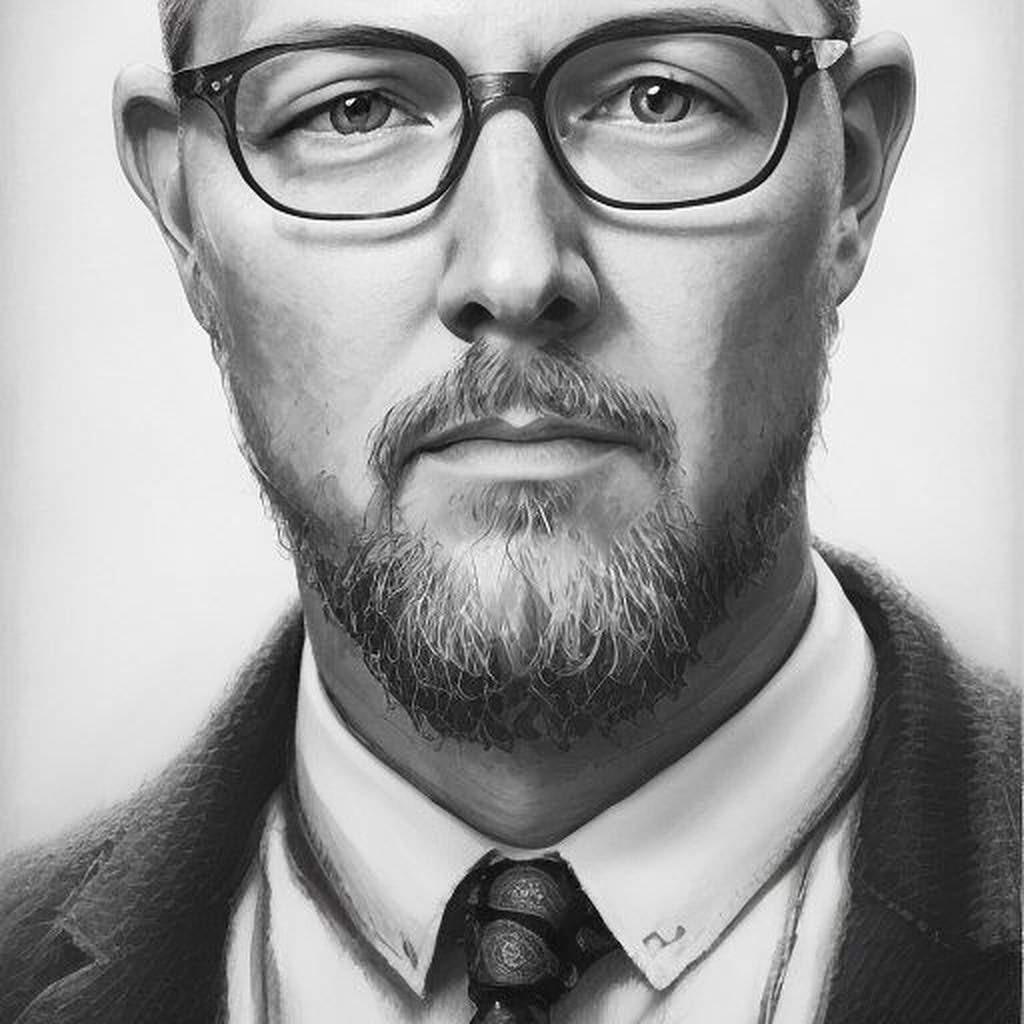
A father tries to connect with his son.
My wife tells me I need to go talk to Kyle, who is in his room. I just got home from work, where we have a first-year associate who is also named Kyle, who thinks he knows more about how to handle a federal class action than I do and has really been pissing me off lately, so I’m in no mood to be talking to people named Kyle right now. But my wife tells me that our Kyle was talking to those boys again, when she picked him up in front of the school—the boys with the stringy hair and the black sleeveless T-shirts that have the names of death-metal bands on them. The boys were smoking, but my wife doesn't think Kyle was smoking. My wife says she tried to talk to our Kyle, but he got mad, so she’s had enough unless I want her to kill him. And all I can think is that I’d like to sic my wife on the Kyle at the firm, to tell him to shut up about what he thinks he knows about federal class actions, or she’ll kill him. But I know right now I have to stop thinking about the idiot Kyle at the firm, with his stupid skinny ties, and go have a talk with our Kyle here at home about not smoking with the death-metal gang in the school parking lot, apparently.
I can hear the old stereo in the living room. The speaker thud of the switch being flicked to phonograph. My wife says, “Sounds like he's come out of his room,” and I say, “Okay, I'll go talk to him,” and I set my briefcase on the bed and pull at my tie. My wife goes back to folding the laundry.
In the living room Kyle is wearing no shirt and deteriorating jeans. He might need a haircut. The stack of albums next to him is a foot high on the floor, and he’s lowering the needle onto “American Woman,” by The Guess Who. The albums are mine, from the attic, and I say, “Hey, that's a good one,” pretending I don’t know anything about the parking lot. Kyle says, “Yeah,” but he’s not buying it. He sits on the floor in front of the stereo cabinet and doesn’t look at me.
“What are you doing with all these,” I ask him. He shrugs. Kyle turned sixteen a month ago and is into driving with his arm out the window and shrugging. He definitely needs a haircut.
“Where did you find 'em,” I say, knowing perfectly well he got them out of the attic over the weekend. He had asked me Friday night if I still had any of my old records, and I told him I might have some in the attic but that I really had no idea. Saturday morning when I was outside trying to decide about the weeding, he came out and asked me how to get into the attic.
“Wow,” I say, “I didn't realize I still had so many. To this Kyle mumbles, “There's more.” He is unsheathing The Doors.
The Doors had no bass player. This is one of the things I remember. The song Kyle plays reminds me of something, but it takes me a moment to get my hands on it. Then it comes to me: a road trip with my wife, before she was my wife, back in those young days before we ever dreamed of marriage, or children, or dangerous death-metal boys in school parking lots, or idiot first-year associates who think they know everything. Back when we weren’t thinking about our next haircut.
“The Doors,” I say. “They're a totally timeless sort of band.”
I am so, so lame. I’ve become a dad. Apparently I can’t talk about music anymore without sounding like an idiot. I still listen to it in the car, and at work—while I’m writing a brief or catching up on emails, turned down low so it won’t disturb anyone outside my office. But it isn’t really music meant to be turned down low. Keeping it low makes it feel like I’m hiding something. Like I’m sneaking a cigarette.
“You know,” I say, taking a seat on the floor across from my son, “The Doors got their name from a poet who said something like, ‘When the doors of perception are open, we see things as they really are, which is infinite.’”
Kyle shrugs. I have no idea if this means anything to him, and I feel like I should ask if he understood or what he thinks, but I’m afraid of sounding even more lame—like a high school English teacher or something. After a while, though, he says, as though he's been thinking about it a lot lately, “I don't think time really exists. It doesn't change. Only people change, he says. He’s talking mostly to the phonograph. “Time is just a way to mark our changes. As far as time goes, it's always just now. I mean,” he says—and he looks at me when he says this—“when is it not now?”
He goes back to leafing through my albums. He’s found my punk phase, so the song’s are shorter, and he plays only one or two songs from an album before swapping it out for a new one. Neither of us says anything for a while. Then I start saying things awkwardly again, like, “Oh yeah, this is a good one,” and, “Nice choice.” After a few more songs Kyle mumbles something like, “This is a pretty sweet tune,” or, “I gotta get FLAC files of this one for my phone.” I have no idea what a FLAC file is, but Kyle is starting to look my way a little more. I close my eyes and pucker my lips to the music a few times, strumming my thigh like I know anything about playing the guitar, which I don’t, and I know I look like an idiot to my son, who really can play. By the time we get to Wire’s “12xu” Kyle is smiling openly and saying, “Oh yeah, this is a great song.”
We sit there, my son and I, on the carpet in front of the stereo, facing each other and listening to the music. I’m still wearing my suit but I’ve taken my shoes off. The scratch of the phonograph sounds like a campfire in the background, and the records are splayed out on the floor like a deck of cards. Kyle plays the Sex Pistols, The Clash, and now Jefferson Airplane. Somehow he knows all the words to “Somebody to Love”—he says some band he doesn’t know the name of did a cover of it, but he thinks the original is better. I smile, and suddenly I am remembering my father.
It’s like a cheesy flashback in a TV movie about fathers and sons. I remember this day when my father and I were having this moment. It’s a vivid memory, sticking out from among the years of muddled nothings. I think I was sixteen, but I also figure I'm probably just wanting to be sixteen in this memory, so that it will be more applicable and more perfect for this little TV moment, as I sit here with my own sixteen-year-old son. But for real, I probably was around sixteen or so, or maybe fifteen, and I remember being with my dad in his garage, while he’s making a table. The same table that now sits in our dining room, maybe twenty feet from where Kyle and I sit on the floor by the stereo, listening to music.
I remember my father listening to the radio as he worked on this table, made of dark oak, and I remember telling him I kind of liked his old music, 1950s rockabilly-type stuff, and I sang along to one that I knew because I knew the Ramones’ version of it, and my father nodded and smiled and said, “This is good. You need to hear this old music,” he said, “if you want to really appreciate that new-fangled stuff you listen to. Everything comes out of everything,” he said. “Remember that.”
This is the end of my memory, which now feels a little more dutiful than spontaneous, and Kyle has switched the record to CSN&Y. He organizes the records on the floor by categories, then reorganizes. He swings the hair out of his eyes with a snap of his neck, and now it doesn't look so bad. A haircut might ruin it. He still has no shirt on, and I notice how round his shoulders are, their solidity, and the straight blue vein that runs the outside length of his bicep, which now seems suddenly full and manly. Saturday, after asking about the attic, he had joked about catching up to me in height, and now it’s like I’m seeing him for the first time as a person and not just as my son—like a person who might take off on a road trip one day soon, with a girl he’s going to marry, with his arm hanging out the window and this whole, big future, wide open in front of him like the Texas sky.
“Hey,” I say, “I want you to know that nobody's mad at you or anything.”
His smile hesitates, but hangs in there. He shrugs.
“We're just concerned,” I say. “You know. Parents.”
He looks me in the eye, squarely, his guard down and a trace of his smile still on his lips, and he is about to respond—positively, I think—when my wife calls out from the bedroom and tells us to turn it down, because she's on the phone. My son’s smile blossoms. And he moves the needle onto “Our House,” and laughs, his round shoulders shaking, so pleased at the perfectness of this joke. Time has flown. It is already after seven-thirty.
Right now in this moment, I really like my son. He is handsome and wise, I believe, sitting there, holding my records. And looking at him in this way, like a fully realized person, it occurs to me that I rarely look at anyone this way. We all move through our day, seeing and talking and interacting with people, but never really focusing on the moment. Never really stopping to realize the person in front of us. Hell, even that first-year idiot Kyle, at the firm, is probably a real person. He probably knows a few things, like my son. He probably has a father who built something once. Maybe I should ask him what kind of music he listens to.
Right now, though, I have taken the stack of records from my son and I’m leafing through them, deciding what to give him next. It will be either Jimi Hendrix or The Who. “How about The Who?” I will say. My wife will come in, on her way to the kitchen, and will give me a look to ask if I accomplished what I was sent in here to accomplish, and I’ll give her a look that says it’s done. All taken care of. Nothing to worry about. Then my son will look up at me again, and I will smile and look back at him. And I’ll try not to sound too much like an idiot when I say, “Dude, you gotta listen to this part right here. I’m telling you. Keith Moon was the greatest drummer ever.”
That is the end of My Generation . Thanks for reading.
Get the app for the rest of J.P. Steed's writing, and everything else on Novellea.
Open in Novellea