
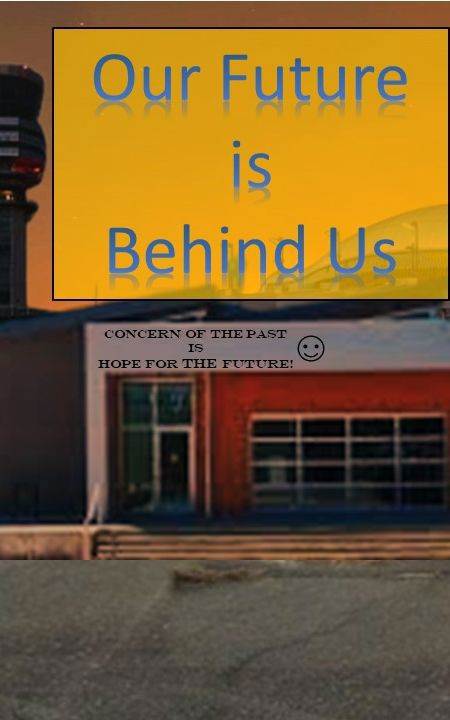
Our Future is Behind Us
The world is burning. Storms rage across every country. Fuel is scarce. Epidemics are taking whole families. A new technology may be our only hope. We must stop the decline before it's started.
Chapter 1
Arrival and Introductions
Chris regained consciousness with a shock. His trainers had not prepared him for the gauntlet he just experienced. They had told his cohort that the transit would likely be unpleasant but never given specifics – the truth was they didn’t know. It was probably for the best. Volunteers were scarce as it was, qualified volunteers even more rare. The pool would likely dry up completely if they knew going through the temportation felt like being a piece of glass broken, ground into the sand from whence it came and then reconstituted into the original pane once again. Despite having been anesthetized, Chris felt every moment of the trip.
He pulled a raspy, burning breath into his lungs, dragging nails and razor blades through his throat. The weight of the world pressed down upon his chest. Every muscle felt bruised, and every joint felt rusted. His kidneys punched and testicles squeezed. His stomach roiled with nausea, the taste of bile in his mouth. His eyelids were lined with sandpaper, mucus encrusted and propped open like rocks in a doorway. His sinuses were entirely blocked, forcing him to breathe through his raw, sensitive mouth. His vision was a muddled darkness, his hearing cottony tinnitus. Chris imagined lying on the bottom of a muddy lake. Floaters swam in the haze, darting glints of light, and the pressure crushed against his ears.
He hoped the warmth spreading around his groin was piss and not blood.
Cocooned in his pain, Chris tried to focus his mind as he had been taught, seeking refuge in thoughts of his sister and of his friends at the Center. The memories he could latch onto helped briefly, but the pain was persistent, like aspirin when he needed morphine. He imagined worse pain – slowly breaking a bone, trapped in burning car after a crash. Losing a loved one. His last sunset on the dock.
The problem with sentiments is they don’t distract, they compound. Who’d told them that? It had to have been Jackson. He hadn’t been their meditation instructor, but he was always saying things like that. With the thought, Chris realized his agony had lessened. He felt like he was emerging from a cave after a storm or a grave after being buried alive.
The transition eventually reached its full end. With his cells and tissues realigned, his body began to return to him. His eyesight stabilized, the dark haze opening into a light one. Chris ventured a glance through his tears. He could just barely make out the tall silhouettes of trees at the edge of the clearing and the lesser, swaying waves of grass stalks nearby. The tinny, buzzing in his ears was incrementally being replaced by the sound of the breeze swimming through the glade and the soft trill of birds dancing in the bordering bushes.
Chris tentatively rolled from his back to his belly. He still had a massive headache and the movement made him want to throw up. He rested with his cheek in the dirt; his breath puffed up dust and chaff and set him to coughing. He laid there for a count of one hundred before trying to push up to his knees. The first couple of attempts ended in failure, but perseverance brought success. He racked back and sat on his heels. For an unstable moment Chris thought his momentum was going to continue taking him back and he would wind up in the dirt again, but like a toddler on the verge of toppling, he was able to steady himself and prevent the fall. Small miracles. Big victories.
Rest, hands on thighs, head tilted back, breathing deeply, more controlled and less painfully. His sight was nearly restored – there was still no depth and colors seemed confused –, but everything was so bright. Chris rubbed the heels of his hands into his sockets. It felt raw and sublime.
When he reopened his eyes, he saw the copse of pine trees standing before him like sentinels, brown needles carpeted the ground around their trunks. Myriad long-reaching brambles and grasses sprouted up across the entire glade and up to the edge of the acidified ground. Not trusting his balance fully, Chris gingerly looked over his shoulder and found an adjacent thicket of leafy trees – Maple? Beech? – growing behind him. A wider stretch of tree line lay further beyond and downhill.
The air tasted of sap and wild onions.
He tried breathing through his nose. Blocked tight. Chris inhaled deeply through his mouth and, holding one nostril at a time, forcefully blew out. A concoction of infernal detritus burst from his nostrils and splashed into the soil before him. The pressure in his sinuses and ears popped painfully, setting his eyes watering even more than before. His ears crackling as they sought equilibrium, Chris took in his first true breath of the forest.
Smell was the leading sense to fully return following his temportation. The trainers at the Center had explained the air would smell and feel thinner and lighter, less burnt, but he had taken it for granted how complex and rich the difference he’d encounter. His tongue had already detected the nearby pines, but now he could distinguish a variety of sweeter smells which he knew came from various wildflowers in the grove. Earthy odors: dirt, mold, decay and the slight bite of fresh feces, also accompanied the plant fragrances.
“That smells so good,” he said to the open field as though complementing a chef. His voice sounded gravelly, tubercular, like a lifetime smoker. The contrast to the air from home – what had always been home – struck him, and he found himself feeling maudlin. Anna filled his mind as he knew she would.
#
The Center’s motto, “Concern of the Past is Hope for the Future!” was carved above the entrance. Someone had spray-painted a smiley face next to the exclamation point and, though there had been a half-hearted attempt to remove it, the graffiti remained defiantly visible.
Chris stepped up to the glass reception desk. Behind sat a fair-complexioned young woman typing on the keyboard embedded into the desk. She had fiery, red hair spilling over her shoulders; a navy hair band was wrapped around her wrist. Her blouse and skirt were in the Center’s color motif – navy blue and orange. She looked a lot like a majorette.
“Welcome to the Center for Social and Environmental Advancement,” she cheerfully greeted him. “Where our past becomes our future.” She handed Chris a data pad and instructed him to type his name and press his thumbprint onto the sensor at top right corner. He noted that he was the twenty-fourth of his cohort’s fifty recruits to have arrived. Top half, he thought.
The receptionist caught his smile and returned it in kind as she presented him with the next week’s schedule. He noticed that her irises were Irish green, but the sclera were rheumy, suggesting illness, the gums around her bright white teeth, a little too red. Disconcerted, he shifted his gaze to the collection of papers in her hand. “These are the directions to the dormitory.” Her tone changed, became suddenly formal. She was probably familiar with people noticing her condition, whatever it may have been. “You will find your quarters and the dining facility there. Tonight, you will meet your roommates and section instructors.” He thanked her and passed through the reception area toward the shuttle station.
The ride and subsequent walk to the dorms were farther than he had expected. The campus – if one could call it that – was a retrofitted airport, still containing tarmac, tower, maintenance hangars and terminal but now with the additional administration building where he had reported. The airport had been one of many closed due to consolidation. With fossil fuel prices skyrocketing into astronomical territory, most interstate travel was conducted via high-speed MagLev rails. Though a few of the larger central hubs remained following the transportation down-size, most of the surviving airports were positioned in the extreme eastern and western states. Air travel between adjacent states was limited to the wealthy who could afford the shorter hops. The general public only flew when international or bi-coastal travel was absolutely necessary.
Campus access had been altered from its original design; the main entrance now lay the end of the runway rather than near its center. A side road snaked toward the parking garage next to the terminal, but it was only opened to cleared staff; a high-level security identification card was required for entry. The sleeping quarters and classrooms were kept in what had once been the terminal. Ten repurposed hangars served as “field” instruction sites. Each cohort had their own assigned hangar; each one covered in years of class insignias, mottos, and typical inane shout-outs.
The tower remained a tower.
Chris stepped from the shuttle with five other recruits and approached the terminal building. An automated sign flashing instructions, directions, and the ubiquitous weather and air quality reports greeted the group. Chris noted the barometric pressure was low, and a front was on its way, rain was forecasted. Air quality hovered in the upper yellows – just below dangerous potential – and everyone was advised to remain indoors as much as possible; if unable to be inside, seek cover once the expected rain began. The warning felt redundant.
He found his name and room assignment on the display, but, even with color-coded directional arrows along the walls, it took nearly half an hour to locate his quarters. The room was a straightforward twelve by twelve-foot box set up for four occupants. The entryway and door to the bathroom took up one corner, so two of the four simple, metal-framed beds occupied the wall next to the door. The other two beds sat in the far corners. Sheets and blankets were folded and stacked against at the head of each bed with a pillow perched on top. Each bed was paired with a wall locker, a prefab nightstand and small reading lamp. Someone had already claimed the bed in the far-right corner which made sense since Chris was 24/50. The early bird had taken the one spot away from both the entryway and the bathroom. “Good choice,” Chris said to the bag slumped on the mattress. Chris laid his own duffle on the bed to the far right of the entrance but still away from the bathroom since he figured, though it was the closest to another bed, it would at best afford him a corner and would be the second least likely to get disturbed during the night.
Before he had opened his bag, a woman a few years younger than he, stepped into the room. She toted a small, blue hiking pack over her right shoulder. Seeing the bag in the far corner, she muttered, “Top choice.” Chris grunted his agreement, causing her to flinch in surprise. “Jeez!” she cried. “Creep much?”
“Sorry,” Chris said sheepishly. “I didn’t mean to…”
“S’alright, you must have been in my blind spot. I’ve got to check my side mirrors better, I guess. Have you been here long?”
Chris shook his head and returned to his unpacking. “I just got here, too.”
“Missed it by moments, did we?” She stood looking at the two remaining beds, making a mental coin flip. “Oh well, if I can’t have the best, might as well have the worst.” She shrugged off her pack and laid it on the bed adjacent to the bathroom door and then went into the bathroom.
Chris hadn’t brought much with him; his recruiter advised against more than a change of clothes, toiletries and a few sentimental items, which, for him, consisted of a half dozen actual books. He put the clothes into the bottom two drawers of his nightstand, the toiletries into the top drawer. He considered hiding the books for fear of theft but resigned himself to the possibility and, instead, stacked them in plain sight on top of the stand. He pushed his bag under the bed with his foot as the woman re-emerged from the bathroom. “Communal bathroom with our neighbors, but at least there are locks on the stalls,” she said. “What’s your name?”
“Chris,” he said.
“Hi, Chris, I’m Anna,” she reached over to shake his hand. A pause as their hands clasped, each bent forward, almost bowing, like the opening of a dance. Anna’s eyes sparkled with specks of jade, gold, and humor. She stepped toward him, not letting go of his hand. “Have we met?”
“Umm…I don’t believe so,” Chris said.
“Hmm,” she squinted slightly, inspecting him, then released her grip. “Perhaps you just have a familiar face. You ever get told that?”
“I don’t think I have, but…” Chris stammered.
Anna returned to her corner.
“Dammit!” A broad-shoulder guy burst into the room like a bullet. “The last one!” He stood glaring at the empty bed, breathing heavily through his nose, his balled-up fists on his hips. A toothbrush stuck out from one hand and a tube of toothpaste from the other.
“Welcome,” Chris said.
“Jesus!” the new guy flinched and twisted his torso in order to look at Chris. “I didn’t see you there. “Are you a sniper or something?” He tossed his toothbrush and toothpaste onto the pile of linens.
“He does that,” Anna said from her bed.
“Oh, a girl,” he said, taking notice of Anna. “The rooms are co-ed?”
“Apparently so.”
The man appraised Anna before asking, “What’s your name? Is it a boyish-girl or girly-boy name like Kris or Max? Something they could have mixed up?”
“No, that’s Chris,” she indicated Chris sitting on his mattress.
“Sorry about that, dude,” he said. Chris waved him off.
“No, my name is full girl. I’m Anna.”
“Well, hi, Anna. Hello, Chris.” He crossed over to each of them in turn to shake their hands. “I’m Ian Fredricks.” Ian used his whole body in greeting; Anna received a two-handed handshake while Chris got a handshake with shoulder squeeze. An awkward silence followed. Ian stood in the middle of the room, rocking on his heels. He pursed his lips trying to think of something to say.
“Quick question, Ian?” Anna said to break the moment.
“Shoot.”
“How did you know you were the last person to get a bunk but didn’t see either of us sitting here?” She pulled her pack over between her feet and began to release the top straps.
“Funny story, actually.” Ian began. “Do you know what a prey image is?” Both Anna and Chris shook their heads. “Have you ever seen the video where the people are passing the basketball and a gorilla walks through?”
“Oh, yeah,” Anna said. “You’re supposed to count the number of passes, but really it’s to see if you notice the gorilla. Psych 101.”
“Right,” Ian said. “That’s me.”
“What, you’re a gorilla?” Chris asked.
“Nice,” Anna laughed.
“No,” Ian sighed. “I notice things, like objects and details. Patterns. Differences. Sometimes I miss the people. It’s weird, I know.”
“Fair enough.” Chris noted that Anna shrugged her shoulder in the same way as when she removed her pack.
“Either of you snore?” Ian asked, pivoting between them.
“She does.” Chris motioned to Anna.
Anna, still squatting over her ruck, craned her face around to look at him. “You sure we haven’t met?” She winked.
Ian looked back and forth for a beat; his eyes narrowed in suspicion. “Okay then,” he brought his hands together like a strike of thunder. “I’m off to find food. You two creepy conspirators care to join me?” They both agreed. Anna shoved her unpacked bag under her bed and the three set out.
In the dining facility they met their fourth roommate, Marcus. Ian spotted him from across the busy room. After they had sat down, and Ian had introduced Chris and Anna as ‘the comedy twins’. Marcus asked how he’d known that Marcus was their roommate. “All the four-seated tables are filled. You’re alone. We’re missing one. I asked and you confirmed.” Ian turned to Chris and Anna and said, “See? Patterns. I may be big and dumb, but I’m not stupid.”
“Just loud,” Chris said.
“Like a gorilla,” Anna added, nudging Chris’ shoulder.
“This should be interesting,” Marcus said.
Chapter 2
Getting Situated
As his various aches, pains and infirmaries waned and he was able to focus more, Chris realized he didn’t have his kit with him. The pack had been fastened to his shoulders and tethered around his waist before he temporated, but clearly hadn’t guaranteed it would remain attached. For all he knew, his kit could have arrived at the opposite limits of his projected space and time probability. Still unable to make out any details of objects farther than a few feet from him, he began crawling around in an expanding spiral. His search led him to a pine about twenty feet from where he had returned to consciousness. The kit sat on its side against the trunk. Chris imagined the scene, entering the grove like a dervish, his pack pulled from his body by the centrifugal forces and smacking into the bark of the tree before coming to rest in the soft, needle bed.
His first order of business was to inventory his supplies and ensure they remained serviceable. He pushed himself up against the trunk and pulled his pack over to sit between his splayed leg. He began pulling everything out and laying the individual items on the ground next to his thigh. All printed material – including his one and only allowed paperback, he’d chosen Conrad’s Secret Agent – was still wrapped in a composite-leather pouch. The documents comprised twenty-one councils broken down into four sections corresponding to Earth’s quadrants. In each section there were three subsections containing histories, testimonies and data and two subsections displaying both photographic representations and vector graphic diagrams. Lastly, one long, lone narrative section served as a plea to action.
These printed councils served as a failsafe in the event any of the electronic or mechanical versions were lost, broken or corrupted. Their immobile quietness was less immediately persuasive than the video and audio of the other devices, but they also lent a certain gravitas to the message. Paper was rarely used in Chris’ time and any new work committed to it often garnered a kind of religious reverence. He carefully returned the documents to their carrier.
Next, Chris retrieved his two devices: a small screen to project holographic video and digital audio of the information detailed in the councils, and a hermetically sealed spectrograph containing vials of soil, air and water samples with their inbuilt capacity to generate readouts of the contents. While at the Center, all the recruits received extensive instructions on how to operate and care for these blocky instruments. He went through the preliminary maintenance, checks and services as he had been trained. They appeared to be undamaged during the transit; however, he was not a technician, so until they were activated – preferably for a scientific audience – he couldn’t be entirely certain they would work correctly.
Optimistic and wanting to ensure he presented a reasonably respectable appearance, Chris searched for his mirror. His assignment would be short-lived if he walked out of the woods looking like a mountain man, talking about the coming end of the world. As he’d expected, he looked as though he had been tossed from a moving vehicle – which, really, wasn’t too far from the truth. He set about cleaning himself up. His pants could afford being a little scuffed and stained; however, the puddle of urine in his groin had to go. Likewise, he changed his shirt since, as he found in his reflection, blood was splattered across his shoulders, presumably from his ears.
Along with the clothes he wore, he had five pairs of socks and five pairs of underwear, two short-sleeved and two long-sleeved shirts, a wool pullover, a light rain jacket, another pair of pants. He also carried a sleep roll and various camping implements such as fire-making items, two water bottles, three days of high-calorie, high-protein food packets, a flashlight, a whistle, a snare and some fishing line with hooks.
He withdrew his maps and compass. While he perused one of the 1:50,000-scale military styled topographic maps, he ate a fruit bar. The sweet taste of blueberry and strawberry and the granola conspired to clog the salivary glands in his mouth, so he took a swig of water to wash it down. He quickly realized the map was too large scaled. In order for him to get any bearings, he needed his small-scale 1:100,000 map, quickly identifying a river and hilltop which should be easy to locate on the ground. He then searched for the corresponding sheet on his other maps. He looked down the hill where he had seen the deciduous wood line, but there was nothing in sight for him to fix his position. Chris sat back and continued chewing through his fruit bar. The maps were meant to help in the event he found himself dropped into a wilderness. This was clearly the case. He just needed to find a few significant landmarks in order to figure out where to start.
#
“You should find yourself within fifty miles of your targeted location,” the trainer – what was his name? – Jeffries, had said. There were various topological maps spread across a table which was also projected onto a screen to provide a clear view for the entire class. He radiated a sense of self-assurance, ensuring the students failed to question the myriad other possibilities. “So, the maps you receive won’t likely be needed for much beyond orientation though should effectively serve your purposes if greater distances need to be traversed. Of course, none of this is an exact science.” He looked up from the table. “It’s more like an art.”
The statement had been made so many times that it had become a joke among Chris’ roommates, an unofficial motto.
“I can’t find my other sock.”
“Funny, I found an extra one in my drawer.”
“Well, you know, laundry isn’t an exact science.”
“Has someone been using my shampoo?”
“It’s possible that I may have, this isn’t an exact science, after all.”
“Are these mashed potatoes or chunky paste?”
“It could be either or both, it’s not like cooking in this place uses an exact science.”
Some of the instructor/trainers who said it did so with a smile, like they knew the humor of it. Others did not smile. Chris preferred the later since it was one thing for his peers to laugh about it; it was another for their trainers to do so. Jackson had been the last one to say it to him.
Chris was lying on his side in his crèche, he could feel the drugs they had administered begin working on his extremities, starting at his fingertips and toes. Jackson leaned over to adjust the straps on Chris’ kit and check his pockets for loose or undeclared items. “Any words of advice?” Chris had asked, the cocktail in his system made his head loopy and the question came out with a slurred chuckle.
“Stay alert. This isn’t an exact science.” Jackson then closed the top like a casket and blackness filled both the crèche and Chris’ mind. The first, frightfully painful breath of his awakening was the next thing he experienced.
Chris considered that last exchange before leaving his previous place and time – the only place and time he could have even imagined six months ago. He couldn’t sparse why Jackson had said it. Did he mean Chris should stay alert through the trip or once he arrived? It made more sense if he’d meant to stay alert upon arrival since the drugs were intended to effectively knock him out of consciousness during the trip. However, wasn’t it already evident what he should do? What they’d been trained to do? Jackson had seemed more earnest than he needed in stating the obvious; the statement was meant to be more than passing advice.
It occurred to Chris that he had never questioned the need for the drugs. The process of transporting him was a physical endeavor, and it certainly was not pleasant to awaken from, but there’d never been any discussion of what he would experience during the trip. He had simply been told he would fall asleep there and wake up here. Perhaps the cocktail included a paralytic to prevent any movements from interfering with his transfer.
How long had he been out?
He wasn’t particularly hungry or thirsty, so it couldn’t have been long. In truth, there were no lingering effects of the drugs which he was aware. No persistent fog in his head. No muscle or joint stiffness often accompanying anesthesia. His body sure felt beaten up a bit, but he owed that to his… what, landing?
“Quit stalling,” Chris chided himself. He returned his attention to the task at hand. The sun bathed him in its orange warmth and appeared past its zenith, giving him an estimated four hours of daylight left. If he wanted to make any progress, he best get going. He collected his supplies and returned them to his kit after transferring a water bottle to an outside pocket. He placed another snack bar in the front pocket of his shirt.
Chris stood and surveyed the low hilltop. A copse of pines obscured the north side. He walked a hundred meters through them to see if he could get a better view of what lay beyond. It appeared that the range to which his hill belonged continued on to higher elevations. Chris turned back, choosing downhill, instead, as his best bet in finding water and people. He would keep an eye out for the river and lone hilltop he had marked on the map. He didn’t hold any honest hope of the maps being of much use. He would need to follow his instinct.
As he passed through the edge of the pines, he picked up and shouldered his kit. Looking down and past the trees below, he took the bottle of water from his side pocket and drank a mouthful before beginning the descent.
Chris walked all afternoon without coming across any sign of human presence; he passed no roads or power lines; he found no debris or refuse; he heard no sounds of faraway vehicles. Stopping to rest about halfway through his day’s hike, he lay on his back watching clouds float by when he realized that there weren’t any contrails in the sky. It worried him that he may have landed so far into the northwest, a wilderness of immense forests comprised of towering trees, thick undergrowth and verdant ferns. He decided it would be best to conserve and begin augmenting his food supplies immediately. This looked like it was going to be a longer walk than he had hoped. Luck – in one respect, at least – seemed to be on his side; he had arrived in the days of late summer or very early fall. The afternoon temperature was mild; warm enough to cause a light sweat but not so hot that he needed to shed clothing. As long as he remained at lower elevations, he should be comfortable through the nights.
Another two hours of walking brought Chris to a medium sized river. Rocky outcroppings etched out over millennia on either side of the rushing water’s edge. Recesses in the stone walls were sufficiently large to allow a person to crawl inside. He decided it was as good a place to stop for the night as any, so he began to set up before darkness fell. The river was wide enough that the break in the tree line allowed clear sunlight to fall along the shore. The cerulean sky shone overhead and reflected in pools of lazy water.
Chapter 3
The Saint, the Soldier, and the Cynic
“I just can’t stand by and not try something significant to make a change,” Anna said. Following a welcome brief by the Center’s Dean, the cohort was issued their linens, study tablets and blue and orange uniforms. (Anna’s uniform was ill-fitting, and she speculated she had been given a male jumpsuit.) The rest of the week consisted of further introductions with their instructors, undergoing the first of many physicals and immunizations and receiving crash courses into the physical and mental demands of the coming months.
“How about you, Chris?” Anna asked. “Why did you come to The Center?”
“Well…” Chris glanced around at his roommates, deciding what he should tell them. “I wasn’t really doing anything better with my life, and they needed recruits.” He turned his attention back to his plate and took a bite of his potatoes. “I figured I could offer them my services.”
“Look around you, Bro,” Ian said, sweeping his arm through the air to indicate the entire cafeteria. “They’ve got plenty of recruits.”
“Yep, and I’m one of them.” Chris closed his statement with a drink to wash down the maybe paste in his mouth.
“Don’t you have any family or friends who would rather you not join?” Anna asked.
“Nope,” Chris said. “Not anymore.”
“What happened to them?”
“Nothing special.”
There was an expectant pause as the others waited for him to elaborate. He didn’t.
“Cryptic,” Marcus said, “but fair enough. For now, at least. We’re likely to return to that at a later date.” He pointed his fork at Chris. “For now, however, I heard that a lot of people opt out once they’re finished with the training.”
“Yeah,” Anna said, eyeing Chris. “I heard that a lot simply don’t come back after their final pass.” Every recruit received a weeklong leave to spend with family and friends before temporting. Returning was ‘expected’ but not enforced. Rumor had it the Center made a single phone call to the recruit if they failed to report after their leave. Whether they were reached or not, the call was not repeated nor was any action taken against the person. Temportation was just too significant a commitment to hold anyone accountable. Honoring one’s pledge was a personal choice and entirely optional.
“Some simply go through this training intending to head to the hills and live off what they’ve learned,” Ian said. “Not that it will help in the long run.”
“Or they can’t handle the training,” Marcus said, pressing his hand into the small of his back and stretching until an audible crack issued. “After that first class, I think I might die.”
“True, about twenty-five percent of each cohort fail to make it through the whole course,” Anna chimed in. “Of those who do complete everything, only another quarter temporate. That leaves only twelve or thirteen of every fifty recruits.”
“Nine or ten,” Ian said.
“What?”
“It’s ten or fewer.” Ian spoke with his mouth full. “If you take out twenty-five percent, then the final twenty-five percent is actually from the remaining seventy-five percent, not the original fifty recruits. So, it’s nine or ten who temporate.” He took another bite of his sandwich. “Details, remember?”
“Okay, that’s even worse,” Anna continued. “Anyway, I think a lot of people just get really freaked out about the finality of being sent. It hits them hard when they go home.”
“Well, not that it matters to me,” Chris said, “but my recruiter said there’s a good chance we could live long enough to catch back up to this time.”
“I hate to break it to you,” Ian said, pushing his empty plate away from him. “Your recruiter lied to you.”
“Why do say that?” Marcus asked.
“Think about it,” he tried to snag a fry from Anna’s plate, but she blocked him. “If this whole thing actually worked, we wouldn’t be here. The effects would have already taken place, and there would be no need for us.” He shot in for another attempt at the fry and was successful. He received a slap on the shoulder for his victory.
“So, what…, we’d just disappear?” Marcus asked.
“Yep.” Ian popped the fry into his mouth. “Something like that. Hell, maybe we, individually, wouldn’t even exist because of how things got altered. Maybe our parents wouldn’t have met because they didn’t use as much gas, so they didn’t travel away to college or something. You know butterfly effects and all.”
“You’re forgetting something though, Ian,” Anna said. “Maybe our reality is fixed already because this “time” already exists. Maybe going back and making changes simply creates a new, additional and parallel timeline.”
“Nonsense,” Ian waved away the suggestion.
“How is that nonsense?” Anna asked, her tone clearly offended by Ian’s off-handed dismissal. “The idea of multi-dimensions is credible. The Dean even mentioned it in his address.”
“Lip-service, my dear. Just like Chris’ recruiter, the Dean is simply trying to make a sale,” Ian said. “And, I didn’t say multi-dimensions aren’t credible.” He took a drink, holding up his hand to pause his statement before continuing. “I’m saying we probably aren’t making any difference. Even if the multi-dimensions model is correct then those realities where we go back and change things also already exist. The realities where we don’t need to go back already exist. But the idea we make a difference and ‘create’ a new reality, a new timeline, is probably bollocks. And, further, the idea we have any chance of ‘fixing’ this one,” he hooked his fingers in air quotes, “creates too much of a paradox”
“So why are you doing it?” Anna asked.
“Well, basically for the same reason as you, to try and make a difference. I just look at our chances with a more critical eye.”
“But you just said you thought it was ‘bollocks.’”
“Look, you know those people who plant little herb and vegetable gardens in their back yards and put solar panels on their rooftops to ‘Help conserve our resources’?” Ian began hooking his fingers again, but Anna pulled his hand down. “I look at those guys and all I can think of is people using thimbles to bail out a sinking ship.”
“At least they’re doing something,” Chris said. “Most of the world just keeps making it worse.”
“Exactly!” Ian said, pointing to Chris. “Not only are they on a sinking ship, but they’re in shark-infested waters. When the boat finally and fully sinks, not only are they screwed once but then they also have the sharks to contend with, and, believe me, they will attack.”
“You still haven’t told us why you’re here,” Anna said.
“I’m swimming for shore, man. Forget the boat. The boat’s going down no matter what we do now. Our only option is to go get help. But, even if I can’t find help, at least I might find land.”
“What about the sharks?” Marcus asked.
“I’d rather take my chances swimming past the sharks while they’re circling the boat than wait for them to smell blood.”
“Are the sharks the predatory populace or do they represent our decaying environment?” Anna said, giving a quick wink in Chris’ direction.
“Huh? Wha…?” Ian looked confused for a moment. “No, the ship is the planet or the environment or whatever, and the sharks are the people not helping who will come for your babies when the end is near.” Chris laughed. “The point is, I’m not gonna stick around while a handful of people use thimbles to bail out the sinking ship. If I’m wrong about not making a difference and my efforts work and do actually make a change, great. If they don’t change anything at all and all I get is a lifetime of living in a pre-apocalypse world, breathing fresh air and not worrying about environmentally induced cancer, just as great. If all my atoms are simply downloaded into the ionosphere the instant I’m temporalized, that’s fine, too; I won’t know it anyway, and it would be better than choking to death with everyone else ten years from now.”
“I don’t think we’re ‘downloaded into the ionosphere’,” Chris said.
“Stop tag-teaming me, you know what I mean,” Ian said, taking another fry from Anna’s plate as she looked at Chris.
“Splendid!” Marcus said. “A Saint, a Soldier and a Cynic all fighting for the cause.”
“What does that make you,” Anna asked.
“Oh, I’m a just a Concerned Citizen.”
#
Chris filled his water bottles in the stream, using his line to catch a fish for dinner. He built a small fire pit at the water’s edge and burned moss to smoke the fish spitted across the low flames. As the sun fully sank into a bed of darkness, Chris ate the fish and built up the fire to provide enough light from which to read his paperback. As the temperature dropped, he found himself inching closer and closer to the fire for warmth.
Eventually, his eyelids grew too heavy and the air too chilly. He prepared a bed within a nearby crevice; his pack tucked deep inside to keep it away from any marauding animals. He doused the fire and crawled into his sleep sack. Sleep swallowed him whole. During the night, Chris woke to the sound of a large animal clomping across the river rocks. He watched as an elk emerged and drank at the water’s edge. The silver moonlight glinted on its coat. He drifted back into a dreamless night.
Birdsong greeted him as light arrowed through the trees. He had never heard such a cacophony of twittering before. The sound was both pleasant and disconcerting. Something about the unfamiliar wildness of them made Chris uneasy despite knowing they posed no threat – his training at the Center taught him to worry only when birds suddenly hushed.
After a breakfast of pine nuts, smoked fish and fireweed tea with some apricot jelly mushrooms he found outside his sleeping hole, Chris topped off his water, wrapped his remaining fish and additional mushrooms and packed his kit. He discovered a fjord not far from the campsite and crossed the river, continuing in a generally southwestern direction.
Chapter 4
Training Pains
Over the course of twelve weeks, the recruits underwent comprehensive training split into three areas of concentration. Each cohort was broken into smaller groups and instructed on: the history, politics and science of the global calamities their world faced, project management, engineering and making contacts within their targeted times, the use of their equipment, field craft, survival techniques and vigorous physical training.
Though instructors encouraged the groups to interact and discuss tactics and techniques during the classroom-styled lectures and demonstrations for deeper understanding of the material, it was the exhausting and sometimes bone-breaking physical training where recruits truly got to know one another.
Chris enjoyed the exercise like a kid enjoys recess. He and Anna, having become fast friends, often partnered up during combatives and assisted activities. It was common for the instructors to gather roommates together, anyway, so Anna and Chris’ pairing went mostly without comment. They complimented one another; where Chris lacked finesse and coordination, he compensated with brute strength, and though Anna lacked his raw power, she made up for it with stamina, agility and cunning.
Ian excelled in almost everything he attempted whether in the classroom or on the drill floor – his only apparent shortcoming presented itself during their lessons on meditation techniques. On many occasions, Jackson, a technician and their favorite instructor for the Body and Mind sessions, chastised Ian for fidgeting. Ian responded by making a quiet, purring sound like a cat. At first, this was as distracting as his squirming but became oddly comforting once everyone grew used to it.
Meditation was difficult for Chris as well. The attempt to calm his mind and body without having something tangible to hold on to or perform caused his thoughts to wander, like trying not to think about something made one think about it more. Trying it find a center or concentrating on his breathing and his core just made him more aware of his stomach and his perpetual hunger fomented by all the day’s activities.
Once, following a guttural purr from Ian – which, in turn, had followed a reprimand from Jackson – Chris chanced a peek over to Anna and found her serene as a fish, head loosely erected, lips slightly parted and smiling. The only disturbance in her countenance was a barely perceived tapping against her front teeth with the tip of her tongue, a beat suggestive of speech but without sound. With the image in his mind, Chris began to understand something growing within himself – from that moment on Anna became his mental focus.
Marcus worked earnestly, but he was awkward. His performance in the academic subjects was unparalleled – he had a wealth of information for discussions and study sessions -, but his gifts fell short when it came to anything outside the classroom. Though none of them were raised in rural settings, being a ‘city kid’ applied particularly to Marcus. To his credit, though, he always put his best foot forward and wasn’t afraid to ask for help. Ian obliged most times since it gave him a chance to shake off residual restlessness, Chris and Anna filled in the rest.
Following a brutal day from which they each sported large bruises, the roommates sat in the dining hall at their usual table near the windows. Outside the sky was a threatening shade of gray. Smoke from the summer wildfires rose in the distance, a thread of red separated the horizon from the heavens. “I don’t really understand why we need this much jungle training,” Marcus said. “My aches, ache and my bruises are bruised.”
“They’re toughening us up for life in the unknown, bud,” Ian said.
“Yeah, I got it, but is it really necessary to take it to such extremes? I thought we were meant to be ambassadors?”
“We are, but they want to make sure that we survive long enough to perform those duties, Marcus,” Anna said.
“I’m not sure I’ve figured out what context they think they’re sending us back to. Nothing in our other lessons suggests we need this level of intensity.”
“Sure they have,” Ian said. “Jackson let it slip today in meditation, in fact.”
“How so?” Anna asked, turning to face him.
“Think back if you will,” Ian began. “What was his lesson?” He pivoted and directed the question at Chris.
“Um…”
“Dude, you never pay attention,” Ian said. He turned back to Marcus and asked again, “What was today’s topic, his thought experiment?”
“Trees?”
“Jeez, you two are hopeless. Anna, save us.”
“He had us imagine running blindfolded through a forest.”
“Right,” Ian agreed, bobbing his head in a ‘sort of’ kind of way. “Specifically, having us think of running through a forest blindfolded, he was explaining that we must understand the importance of calm and deliberate movements. If we run, though it might be faster, not many would make it out safely; however, if we each walk forward, deliberately, instead, our chances of success will be many times more likely.”
“How does that explain the reasons for all our training?” Chris asked.
“I think it explains a lot,” Anna said. “What Ian’s getting at is that they’re trying to ensure as many of us as possible who go actually survive and are successful.”
“Well, of course,” Marcus said. “I think that intent goes without needing to be said, but it doesn’t answer my question about the physical intensity. We’re not going pre-Medieval.”
“The analogy of running through a forest blindfolded is an interesting choice,” Ian continued. “They’re sending us out like blindfolded individuals because, in truth, they don’t really know where or when they’re sending us.”
“And they’re sending so many to increase the odds of success,” Anna said. “Like D-Day.”
“Bingo!” Ian said. “Meat in the grinder. They’re relying on the law of averages to ensure that some of us make it through.”
“But they’re also stacking the deck by making us lean, mean, fighting machines,” Anna said. Ian nodded, raising his glass to her.
Marcus put his fork down and wiped his mouth. “Do you think this is all a guessing game then?”
“Well, sure, to some extent, but every ‘Great Adventure’ is.”
Marcus sat quietly, massaging his right-shoulder and appearing to think about Ian’s statement.
“Shouldn’t other countries be adding to this law of averages?” Chris asked.
“Where do you think this technology comes from?” Ian said.
“I thought it was ours?” Anna said.
“Hell, no! We haven’t really created anything distinctly new from the ground up on this scale in decades,” Ian said. “Believe me, sister, this endeavor is definitely multi-national.” He looked around at their blank faces for a beat, swallowed a few French fries and asked if they knew the story. Receiving three head shakes, he continued, “So, well, yeah, a while back this kid at MIT, Jacob Flinley, wrote a dissertation about how neutrinos or quark-gluon plasma or some shit affected protons’ particle-wave characteristics, relativity and the speed of light and gravity wells. The stuff is way above my head, but the point is that it basically opened up a new direction in which physicists were thinking of the role time plays in our dimensional model. A lot of the original temportation theory came from scientists at CERN working with the Hadron Collider data and Flinley’s dissertation.
“But, mostly, this tech came from a Chinese, science geek-slash-entrepreneur chick, Zhang Jiayi Ying, studying here at Cal Tech who took the theory home, added some stuff in about entanglement, and applied the whole shebang to something other than scientific journals. We then paid heavily for her original designs, and, in exchange for labor – a lot of this was built in Southeast Asia and Central America – we’ve relaxed patent laws, essentially making it open-source. So, now about every country is either running their own programs or in a collaborative with surrounding nations.”
“How do you know all this?” Marcus said
“I researched it,” Ian said. “I wasn’t going to just sign-up for some kind of Razzle-McDazzle, time-travel mission without checking into it first. It sounded way too fantastical – more like a volunteer slaughter program if you ask me.” Anna and Marcus looked down at their trays and shifted in their seats. Chris continued eating. “Don’t tell me that none of you asked yourselves whether this was too unreal to be real?”
“Ummm…” Marcus began.
“I didn’t care,” Chris shrugged.
Ian laughed and said, “I think we’ve established you should really find some friends, Chris. Surely Anna checked it out.”
“I guess I just kind of accepted it,” Anna said. “The whole patriotic piece and everything.”
“Haven’t you learned, sweetheart? You can’t trust anything these governments tell you. War. Profit. Compliance. That’s their game. But don’t worry; I’m just giving you all a hard time. I don’t hold it against you. We’re all products of our environments. I doubt one in a hundred of these people here thought to consider looking into the background of this project.”
“So, I assume you found that temportation is real, right? It actually works?” Chris asked.
“Oh yeah, I’m a believer,” Ian said. “You’ve probably heard the conspiracy theorists out there claiming that the Center’s program is simply a cover for population control. That we’re all just voluntary suicides, but that’s nonsense,” Ian waved his hand as though to push the suggestion aside.
“Yeah, ‘a volunteer slaughter program’,” Marcus said. “I’d heard that, too.”
“Right. Actually, that’s why I started looking into it. I wasn’t interested in the program at all until I heard that crap.”
“It’s not large scale enough,” Anna laughed. “They’d have to knock out at least half of the 9 billion people on Earth for it to make much impact at this point.”
“Well, even then, it’s probably too late,” Marcus said.
“True,” Anna agreed. “but, if it works, it can sure serve as one hell of a lifeboat, can’t it?”
“A real working Ark, but this time it’s not two-by-two,” Chris said.
No one said anything for a while. Chris watched Anna. She wouldn’t meet his gaze, just stared out the window. Now that the sun had fallen below the clouds, the sky was a hazy orange peeling into a hellish shade of red complimenting the glow from the hillside as nighttime approached. The tint in the windowpane served as an additional protection from the UV during the day, but it also made the light appear more sinister. The scene gradually diminished as the cafeteria lights reflected on the glass and overwhelmed the outside’s growing darkness.
“I’m so sore,” Marcus complained again, pulling everyone out of their reverie. “Are they training us to fight off bears?”
“Maybe,” Anna said. “They’re clearly expecting us to be in the wild for a while. That would explain all the trapping, fishing and hunting field craft.”
“Like I said, it’s not like we’re going back to pre-medieval time or even pre-industrial age, just post space-race and sexual revolution.”
“Bad timing for you, Chris,” Ian teased.
“Still, though,” Anna said, rolling her eyes at Ian’s comment, “they want us to survive.”
“Well, then why don’t they just give us guns or something?” Marcus said. “We could use them for defense and for hunting.”
“It would be too expensive,” Anna said, “and we’d have to carry ample ammunition to make it worth-the-while. That would get heavy quickly.”
“Those aren’t the only reasons,” Ian said.
“What else?” Marcus asked.
“Suicide,” Chris said flatly.
“Exactly,” Ian cocked his finger in Chris’ direction.
“What?” Anna said at the same moment.
“You were just saying how hard a time they’re expecting us to have,” Chris explained. “They don’t want us killing ourselves if we think it hopeless.”
“Yep,” Ian agreed.
“Oh, wow,” Anna said. “I never would have thought about that.”
“That’s because you’re an idealist and doing this for all the right, selfless reasons,” Ian said. “Most of us are doing this, in large part, for ourselves.”
“God, that’s depressing,” Anna said. “I can see the truth in it, but it’s sad, too.” She rested her elbow on the back of Chris’ chair and leaned into him.
“And that’s the reason for no guns,” Ian said.
“Then why don’t you think they don’t just send us in teams?” Chris said, noticing the strange look Marcus was giving him and Anna. “It seems we’d be more effective that way.” Anna rubbed her hand along the top of Chris’ thigh under the table, and he felt his mouth dry up. She stood and, without saying anything more, took her tray to the kitchen.
“Too inefficient,” Ian said, watching her go. “They’d have half the number of attempts made; though, one could argue they might get more volunteers and more follow-throughs.”
“They’d probably have more couples join up,” Marcus added.
“They’d have to account for a huge margin of error. It would be way too data intensive, as well,” Ian explained. “The sheer number of computations already performed just to send a single individual with limited supplies is astronomical. Each additional component represents an exponential increase in power. That’s why early proposals sent people nude. Imagine sending twice that every time, you’re talking magnitudes above our capabilities. Even if the technology were available, the money needed to upgrade to meet that requirement doesn’t exist. And in the end, it still comes down to the bottom line.” He stood to leave and squeezed Chris’ shoulder. “No, these life pods are single capacity only, Romeo.”
##
On his third day, Chris stopped at another river and bathed in the slow-moving current. The sun baked the forest, causing it to release its moisture in a warm fog. The river water felt refreshing as it carried away Chris’ built-up sweat and grime, His skin turned pink and taught. Once his tolerance for the cold had been reached, he crouched naked on the shore, emptying out trash from various pockets before washing his clothes and found a folded-up piece of hand-made paper in a cargo pocket. He recognized Jackson’s handwriting – he must have placed it there as he connected Chris in the crèche.
“I know what brought you to the Center and felt you should know more about your mission than what you’ve been told. I have given this information to everyone I’ve prepare for temportation, only subversively am I able to pass it along. Whether it’s moral or ethical, I keep quiet during training because if I allowed others to know what I’m about to write to you, I would be removed from the Center. I believe in what we are doing, but not for the reason made public. So, think of this as your last lesson, one more understanding.
Your success is not expected.
That is the long and short of it. Time’s arrow is a funny thing, but many of us here at the Center believe our reality is fixed. Even the most optimistic of us have come to accept the paradox, if those sent had been able to alter what was to come, we would no longer be aware of the disaster we are now trying to prevent – it simply would have been erased from our continuum.
I have overheard you talking about this with your friends – it shouldn’t come as a surprise the Center monitored trainees 24/7, so I won’t rehash what you’ve already intuited.
Everything we are doing at the Center is, to an extent, speculative. And, above all, desperate.
Though we don’t have the technology to reverse the cataclysmic effects caused once our environment passed the event horizon, now leading to our inevitable collapse, we are lucky – luck, I must stress, played a huge role here – to have develop the means to send you back.
There’s a lot of theoretical physics involved that I won’t go into, but essentially, as you’ve been taught, the method generates a kind of anchor using quantum entanglement by linking certain particles existing in our time and other times.
However, what you weren’t told is that due to the uncertainty principle, we are unable to ensure any truly exact position for your arrival. This unfortunately applies to both your time and location. Since to each level of certainty is scored on a gradient, there’s a built-in compromise to gain the best for both.
Time is not a single, independent thread but a complex matrix of many threads aligned in a series across a field of space – more like a blanket than a rope (or in this instance, a lifeline).
There is good news is we have a high confidence in having controlled for the location variable. This is due to the quality of near objects being more closely related to one another than objects separated by greater distances. We expect no one will find themselves waking on the shores of a liquid ammonia sea, for instance. We also hope to have not sent anyone to the bottom of our own oceans. So, as long as your location remains on terra firma the location uncertainty falls to near zero.
The bad news, however, is by emphasizing location, the compromise we make is that we can’t guarantee the same level of confidence for the time variable. We believe we have pinpointed time stamps with confidence intervals of twenty years, ten on each side of the target. The chance of falling outside this targeted interval becomes increasingly improbable, though not impossible.
This is the point I want to stress to you, and it is VERY important for you to understand. Though the probability of that confidence interval actually being twenty-one years holds a certain chance and one of twenty-three years is X magnitude less likely and so forth, ANY timeframe is possible. The trouble is we don’t actually know what this probability differential – what the standard deviation, to use the technical term – is for this problem.
As you have been instructed, we aim to send you back to target T-minus 5 years, or rather, 1965, in order to give you sufficient time to marshal necessary change. This could mean that you arrive with an additional ten years to bide your time – 1955, or it could mean that you missed your chance – 1975. We discussed sending you back to target T-minus twelve years, putting you around 1958 with a timeframe between 1948-1968, in order to err on the side of caution and still place you before your required time. The majority felt the risk of you landing so far out of your target was insignificant enough to warrant the tighter interval, reasoning, also, that arriving too early would make you as ineffectual as arriving too late.
A small contention, to include me, holds that it doesn’t really matter either way since we have not locked down the uncertainty and the twenty-year confidence interval is really just an arbitrary number someone threw out there in the beginning. You were not told about this dissention within our team because even the most cynical of us felt you should leave with the greatest sense of confidence we could give you.
I understand any anger you may feel at having been misled, but had I mentioned it before, you may have withdrawn. Realize this, where you are – or rather when you are – can’t be worse than if you had chosen to stay behind.
We are doomed.
If you are thirty years before your target or thirty years behind it, you still have a chance to live a full life. Here, in this time, it’s guaranteed you wouldn’t.
We will see the end of our world within the next few years despite the reigning talking heads placing it at twenty. The point of no return was breeched years ago, as you know, and all indications – more than the general population realizes – point to an exponential decrease in the Earth’s carrying capacity.
It’s about to get really ugly.
The purpose for this letter is really to tell you don’t worry about your “mission”, it won’t make a difference for us, anyway. Worry about yourself. Take care of yourself.
Not many have made it to where you are. You have been given an opportunity we are not fortunate enough to share. We have taught you how to survive, so take full advantage of your training.
We may not be able to save the world in which we live, but, at least, the blanket of time is now littered with our graduates.
Chapter 5
Revelation
The following two weeks found Chris in much the same condition. He had yet to encounter another person or indication of human influence. He continued trekking in a generally southwestern direction; however, since finding Jackson’s note, he no longer felt the sense of urgency. Chris took his time, remaining at sites for several days until his need to move pushed him onward. His mind continually circled back to his friends. He wondered whether they all temporized or if any had withdrawn.
Where could they have ended up? There were literally infinite possibilities. The thought rattled him. He never truly imagined seeing them again, but he discovered hope of a reunion lay under the surface of his mind – each moving into a decade post-collapse, old but at different ages.
Chris stowed all the equipment and councils in a hastily made crypt made of a hollowed-out log and some river rocks. He drew a map and marked the spot with an X. Each day he recorded the contours and features he passed. At sunset on his 19th day, sitting against a tree trunk next to a small fire, dutifully adding to the map, Chris broke down in tears. Whatever shell he had built up around himself cracked, and the full weight of Jackson’s revelation fell onto him. He tossed the map into the fire.
That night he dreamt of Anna.
Three days later, Chris heard traffic beyond a ridgeline.
The sudden rush of his pulse filled his ears with thumping and eclipsed the sound. He stood and tried to calm his racing heart, using every method he could pull from his training. He faintly heard something through the beating. Convincing himself that what he heard was merely an auditory mirage or paracusia, his want for it to be real allowed additional human activity to flow into his mind: chatter, laughter, the rush of people’s lives. He knew what he heard – the false interpretation of what he heard – came from within. Loosely anchored as he was, Chris’ need for others washed over him like a wave.
He broke into a run, zigzagging through the trees towards the direction of the noise. His pack bounced on his raw shoulders, jostling, offsetting his balance. His feet tangled in groundcover, tripping him twice. On his second fall, he stayed down, having hit his head hard against a fallen branch.
Panic.
Desperation.
“When you find yourself lost, you must remain calm.” Jackson had told his cohort. “Stop, close your eyes and focus on your breathing. Pull your thoughts inward, not to find a solution but to find peace. The solution will follow. If none comes to mind, set up camp and put your attention to your fieldcraft. However, never stay in the same place for more than a night. Along with keeping your cool, you must continue to move; otherwise, you might find yourself mired in your own funk.”
Chris forced himself to stay prone. Though he was exhausted, the adrenaline already flushing away and leaving him drained of energy, the will it took to remain down was great. He called up the image of Anna tapping her tongue against her teeth and focused on his breathing. If people beyond the ridge, they would be there once he recovered.
“Count to five hundred. Let time pass. Focus on your breathing and collect yourself.”
Once his heart rate slowed, Chris could still hear the traffic, a little louder now since he had gotten closer. In the time it took for him to stand, however, he had concluded the sound was not man-made. He walked to the ridge and stepped out from the brush line. A river, about twenty feet below, cut through a small gorge.
He took off his pack and sat, letting his legs hang over the rocky outcropping. The sun smiled down on him as it began bowing toward its western bed. Chris took out an apple and leaned back on his free hand.
##
“What happened to you, really?” Anna asked. They were on break from their kitchen duties, sitting on the loading dock out back. “I’ve talked to a lot of people at the Center, and no one joined simply from a sense of apathy. There’s got to be more to your enlistment than ‘just ‘cuz’.”
“Well…, I’m almost thirty, and I have no family,” Chris said. “My parents died several years ago – cancer runs on my mother’s side and heart problems on my father’s.”
“No brothers or sisters?“ Anna asked.
“I had a sister, Teresa, but she died when she was thirteen. I was sixteen.”
“I’m sorry.” Anna clasped her hands together in her lap, her constantly swinging legs slowed.
“It was a long time ago,” Chris said. They were quiet for several minutes. The sky rolled through a kaleidoscope of colors as the sun set in the polluted horizon. “I guess if there is a reason for me being – you know, besides the whole unanchored aspect of my life -, it’s her death.”
“What happened?” Anna asked.
“We had a wooded area out behind our neighborhood. Theresa and her friend, Morgan, were hiking through it one summer. It was really hot, as you can imagine, so when they reached river running through the woods, they decided to strip down and swim for a bit.
“The next morning Teresa woke up with a full-body rash and a low-grade fever. My mom called Morgan’s mom to check on her, and it turned out, she had the same thing. After a couple of days, the rashes were still there and maybe a bit worse, so both our parents took them to the doctor and told them about having swum in the river and the doctor said, ‘Contact Dermatitis’. She gave the girls some steroid creams and instructed our mothers to not worry about the fevers unless they went above 101 and then to just give them something to ease it back.
“Two days later, they were both admitted to the hospital. Teresa never came out. She slipped into a coma. Her organs shut down one by one. Her death was ultimately attributed to septic shock.”
“So,” Anne began, “the doctor misdiagnosed what they got from the river?”
“No, that’s the worst part, really,” Chris continued. “It was contact dermatitis. Some inspectors took samples from the river and found traces of chemicals from some industrial run off. A company twenty miles upriver had been intermittently releasing their waste into the river. The contaminate levels were below the required part per million but high enough to irritate sensitive skin. Low enough, in fact, that any effects they may have had on the ecosystems weren’t noticed, and since the river wasn’t widely fished, no one was getting sick. The only reason it hadn’t already washed all downstream when the investigators tested the water was because the whole thing with Teresa and her friend had happened so recently and so quickly.”
“Why would they go septic from a rash?” Anna asked.
“It was the doctor’s office,” Chris said. “Theresa died because she got sick and went to the doctor’s office.”
Anna pulled her leg up onto the platform and turned to him. She felt he was fishing for her to question him, and she was right. Chris wanted to talk about what killed his little sister, but he wanted Anna to drag it out of him. “What was it?”
“The rash itched, and thirteen-year-old kids aren’t scions of self-control – they scratched. When our parents took them in because of the fever, they picked up super-antibiotic-resistant-staph-slash-herpes-slash-flesh-eating bug. It was probably just waiting on a door handle, ready to jump on and ride them home. While they underwent the steroid treatment – them rubbing ointment all over their rashes, the bug found itself a nice little scratch mark and cozied into their compromised little bodies.”
“Oh my God, that’s awful,” Anna said.
“Yeah, it was pretty bad.” Chris coughed into his elbow. “Theresa was the lucky one. She fell into the coma after about three days in the hospital and died two days after that.”
“Did her friend die, too?”
“No, Morgan held on. The medical team went medieval with her treatment, they cut out infected tissue as if she were a burn patient. That’s what ultimately saved her. She had a long recovery, though; she had to suffer from multiple skin-grafts and years of therapy, and now has a lot of scar tissue. She never wore short-sleeves or shorts in public after that, either.”
“How do you know it was the doctor’s office?”
“Some guy who sliced his arm putting up gutters on his house went to the same office the day after they had been there and developed the same infection. He lost his arm, if I remember correctly.” Anna’s mouth fell open in disbelief. Chris just nodded.
“A very thorough investigation found that an international student at the local university had come in recently – like a week or so before – with a possible STD. I don’t remember his nationality, but I’m guessing it was one of the Middle Eastern or Southeast Asia countries because that’s who made up most of the school’s international population. He had already returned to his home, so I don’t know what happened with him. Being sixteen and grieving for my sister, I hoped he died.”
The kitchen manager opened the door to the dock and peered out. “You two coming back or what?”
Chris checked his watch; they had passed their ten minutes by four minutes. “We still have three minutes, man.”
“Break doesn’t start once you finish your cigarettes,” the manager growled.
“We don’t smoke,” Chris and Anna said together. The manager mumbled something more as he released the door. They smiled to one another regarding their petite coup.
Anna returned to seriousness. “I’m sorry you went through all that.”
“Yeah, well, I don’t think I’m special,” Chris said. “It’s kinda become the world’s new normal, right? Who doesn’t know someone with a similar story? Different circumstances, perhaps, same outcomes.” The last of the sun’s rim blinked out below the horizon though its light remained in the ever-present clouds. “Hey, you want to run away together?”
“What? No!” Anna said, thinking Chris was joking.
“You know, use our training to live in the hills like Ian said?”
She realized he meant it. “Seriously?” Chris shrugged a shoulder and made a maybe face but didn’t add anything more. “Chris, if I thought it was an option, I would.” She took ahold of his hand. “I care a lot about you, but you heard Ian, it wouldn’t make any difference in the long run. Anyway, I want to make – I want to believe I can make – a difference. Don’t you?” When Chris didn’t answer, she pushed against him, setting him rocking like one of those inflatable punching clowns. “Don’t you?”
“I’ve got nothing to lose,” Chris said, “or gain,” he added.
“Are you serious?” she asked again. “We’ve all got something to lose, Chris.”
He paused. “You’re right.” He looked at their hands for so long, she thought he was finished. “I just think I’d rather have something to gain, something definite.” He smiled feebly in the gloaming darkness. “Bad timing, I know.” She sat silent. “I wish they sent us out in teams,” he said.
Anna put an arm around him and pulled close. “This isn’t the end,” she whispered. She released him and they sat watching the horizon burn like cane fields, their fingers interlocked.
The kitchen manager pushed the door open again. “I know it’s been more than ten minutes now.” They stood and returned to their duties. Neither of them said anything more about their conversation.
The last week closed out.
Chris forfeited his pass. He had no one outside the Center to say goodbye to, anyway. While his cohort packed their bags and received their temportation schedules, he simply moved his things from the room he’d shared the last few months over to a single suite. He had a closet and a bathroom all to himself for the next two nights.
In a matter of hours, the Center de-evolved from being a familiar place to him to one wholly strange – his room, the new faces and behaviors of the fresh recruits. A storm had rolled in – roiling clouds blackened the sky, lightening splashed vertically and horizontally, rain pounded the windows and splashed in through the doorways as recruits clung to their bags. It all made his shift even more dramatic.
After Chris visited the Center’s medical center to undergo his final physical, he ate quickly and retired to the solitude of his room. He sat on his bed for a while listening to the voices coming from the hallway. He didn’t want to stay in his room and read, and he didn’t want to re-enter the throng of people roaming the dormitory. He chose to take a long, hot shower.
Before turning out the lights, Chris looked over his ticket. It was a basic appointment for the station, similar in appearance to a plane ticket: time, gate and crèche assignment listed. Impersonal. In darkness, he lay on his side, facing the wall, unable to sleep.
His door opened and closed quietly. Light momentarily fanned across the room. He rolled onto his back. Anna stood at the doorway, letting her eyes adjust. Her hair dripped rainwater onto the tile. She shrugged off her jacket as she had shrugged off her backpack the first time they met. As Chris watched her undress, she stayed silent, leaving her clothes in the puddle on the floor. She climbed into the tiny bed and pressed her mouth onto his.
The next morning, she was gone.
Chapter 6
Thoughts of Home
Chris sat above a river basin, his legs once again hanging over the edge. He took a final bite of the apple he’d been eating and threw the core into the ravine. Birds roosting in branches to his back chattered up a ruckus and drowned out the sound of the churning water. He decided he’d better set up camp before it got full dark.
As he stood, he noticed a ribbon of smoke in the distance. He stared in disbelief. Another ribbon floated upward and feathered out in the light breeze. A third one followed soon after and then a fourth. The sky was clear, no storm clouds, no lightning strikes.
Chris put together a hasty camp site before returning to the edge of the tree line, careful to stay back from the edge in the darkness. A new moon left the role of lighting the night sky to the stars, but from his vantage point Chris could also see additional star-like twinkling interspersed between the trees of the valley. He pulled his compass from a pocket and noted the azimuth to the lights. He had no idea how far away they were since light travels so well when the air is clear; he might as well take a guess at the distance to the stars in the heavens were.
The following morning Chris set out to find a means across the gorge. For the first time since the night he threw his last one into the fire, he began sketching a new map.
Though he didn’t know how far he’d have to travel, he knew the direction he needed to go in relation to the ledge. As long as he kept track of his movements and any diversions he made of his course, he could return to the azimuth. As an additional measure, Chris cut one of his t-shirts in a spiral a foot wide to make a makeshift banner. This gave him six feet of cloth. He weighted it against the wind by tying it to a stone and hung it over the ledge.
It took two days for him to find a suitable place to climb down into the gorge and another to find a place where he could cross the river. Walking north along the riverbank, against the flow; however, it only took another day before he spotted the white fabric bustling in the breeze. He checked the map and was pleased by his accuracy. He turned west.
Chris came to a sudden thinning in the thick forest the following day. There was a discernible decrease in deadfall, the tree trunks narrower. Grasses, not generally found under a forest canopy, blanketed the ground and grew thickly a dozen yards beyond were none had been. Chris stopped and turned a full circle, surveying the area. Stones of various sizes and shades stood up in rows through the grasses and groundcover like teeth. Then his eye caught something that put it all into a surreal perspective. A crypt hid behind a tree a hundred feet away, peeking out of the shadows. Green, leaf-filtered light swam across its surface. He looked at the headstones closest to him and wondered how he had mistaken them for anything other than what they were.
The world suddenly took a frightful pitch. The cemetery was not old, it was ancient. The headstones were worn away by the years, but their styles were familiar since they were similar to those of his time. He went from stone to stone until he found a particularly hardy one still mostly readable. The dates looked like 1973-2031. The threes could have been eights and the seven could have been a one, but the two was distinct. This grave was for a person who had died fifteen years before Chris temporated.
Chris peered up through the tree branches at the azure sky. No contrails, no smog, no industrial pollution of any kind. These many weeks, he had believed himself to be in the middle of a large, forested region of the Northwest prior to the immense urbanization of the region, but this suggested something else entirely.
Clear edges where the fir trees gave way to hardwoods: cherries, oaks and maples; the deep greens gave way to ornamental splashes of color.
Human supplantation.
It was something one would miss it they weren’t looking for it.
Chris passed through an area in which the wild forest pushed back at what had once been manicured landscape, a barely discernible scar yet still present. He continued through the stones. Heading westerly, he found markers listing whole families on single dates. Many others had no dates. Many others had no names, only numbers. And numbers.
The truth had always been in the back of his mind, but it had refused to surface. It was all gone. The society he had known and been sent back to save. The planet was fine. It just needed to get rid of its people in order to recover. Like breaking off a bad relationship. Removing a tumor.
Another day of traversing through ruins. The density of the city was the only thing keeping off its complete razing by nature. Being the Northwest, there were still old trees filling places, but they were thinner than in the forest Chris had traveled. What had once been tall buildings were now high hills, their components not as hardy as the granite and marble grave markers. These modern constructs paled to the ancient pyramids and coliseums. Interesting what people choose to make to last, how disposable we had become.
Untold years of dust and dirt covered the roads and piled up next to the fallen down walls. Windblown seeds had settled into the novel topsoil and taken root, grown and spread.
Rome could not have seemed so old or ruined. It reminded Chris of pictures of ‘lost’ civilizations in South America; now being re-enacted in the north, but with more transitory materials.
He camped in a cave of debris. The place may have been a garage or a lobby or simply the space under two collapsed buildings. Outside the entrance, he pulled together as much combustible material as he could find and built up the largest campfire he had ever dared.
He wanted to set the whole world to see.
That night, with the flames still bright enough to wake the gods, he once again dreamed of Anna. Her hand in his on the dock. They sat watching the horizon burning like cane fields. Even in his sleep, his mind acknowledged that his eyes were registering the blaze outside his hole. He turned to look at Anna, but she was gone.
The next morning, he continued along his azimuth. He knew the fires he had seen from atop the gorge were man-made and controlled. It could only mean a village of some sort still sat beyond these discarded ruins.
He walked all day and into the early evening. No more stopping.
Sometime after sunset, Chris smelt, rather than saw, the smoke. It rode on a northerly breeze. His quickened his pace but resisted the urge to run. He had learned his lesson from before and would not let panic overtake him again. After half an hour of sniffing his way forward, he found himself on the borders of the village. A field cleared for large crops separated the forest from houses, giving at least a hundred-yard buffer zone between the two.
Tears filled his eyes and sobs began to rack his chest. He retreated back into woods. He knew well enough that to walk into the village, a stranger, at this time of night could likely get him killed, so he found a soft hollow in the undergrowth and spread out his sleeping bag. He tried to sleep, but his anticipation and the chill of the night without a fire kept him awake.
Once the sun had risen enough to see clearly, Chris pulled out the mirror he had kept with him. His reflection was of a wild man, a caged creature. Using the last of his water, he washed his face and hair – it made a marked improvement. His gaunt features looked less crazed, at least.
Chris shouldered his pack one last time and made his way to the village.
He walked through the field, fall crops sprouting through the tilled soil. A smaller, personal garden sat behind the closest house and was being tended to by a couple, a young woman and a younger male crouched down next to one another. The boy saw Chris first and slapped the woman’s shoulder with the back of his hand, pointing. She shot the boy an irritated glance before looking up. Seeing Chris, she stood.
His breath caught; his heart entered his throat. His legs almost gave out from under him.
Anna.
Her hair, the same color and sheen, shimmered in the sun. The way she shrugged off the canvas bag she’d held on her right shoulder. How she held herself – the tilt of her head, the curve of her torso, the hitch of her hip – as she looked at him.
The mistaken image quickly faded, however, as he watched her call to someone in the house. Where his first impressions all pointed to familiarity, further consideration brought out only contrasts. Smaller, more compact, darker – whether from sun or lineage he could not tell.
An older couple emerged from within. Since the boy had spotted him, Chris had remained rooted to the edge of the yard. The couple exchanged a few words and then the man gestured Chris forward. The older woman had gone inside as Chris stepped closer, but she shortly returned to where the man waited, holding a cup in her hands. As he reached them, she handed the cup to Chris. He accepted gratefully, his mouth having gone completely dry.
News of his appearance spread quickly, and others came from their homes to see the stranger who had come from the forest. The residents all had a similar appearance to the family, but it was not one for which simple familial connections could account. It was as though they were a novel race, derived from a common bottlenecked set of genes. Chris wondered what extreme evolutionary pressures must have been placed on these people. He was acutely aware of his foreignness.
A spike of fear entered his mind. He worried that he might be woefully under adapted – all those medical preparations at the Center may have been for nothing. Then again, he hadn’t been sick even from food poisoning since his arrival. He guessed he’d find out soon enough. Either this community would prove to be the death of him, or he would be theirs.
As more people continued to gather, the older man motioned Chris toward the house. The younger woman whose appearance had stopped his heart earlier took hold of his arm. He turned to her. She really did look like Anna, though darker and harder. She offered him a freshly washed carrot; he presumed it had come from their garden. The father laughed and said something in a dialect Chris didn’t understand. The girl blushed and lowered her eyes as some of the gatherers also laughed. The man clapped Chris on the back and again urged him in doors.
As he entered, he stole a glance back to the young woman and found her still standing, watching.
That is the end of Our Future is Behind Us. Thanks for reading.
Get the app for the rest of Mathaniel's writing, and everything else on Novellea.
Open in Novellea