
The Birthday
A Baroque Horror Fantasy
1.
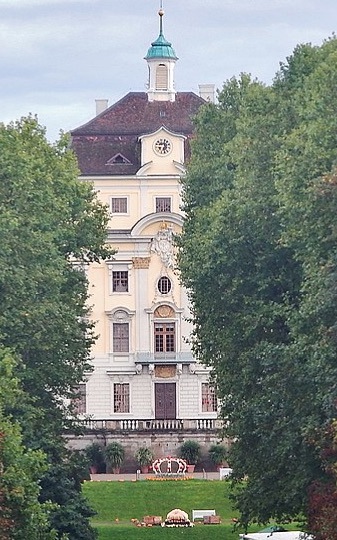
In the winter of 1765, at the Ludwigsburg Palace in the Duchy of Württemberg, after making her last confession, the eighty-seven-year-old Duchess Maria Carlotta of Brunswick-Lüneburg passed away peacefully surrounded by her family and friends. The incident had nothing unusual apart from a tiny detail. The Duchess’ penance had been far from complete. It would be legitimate to think that the Duchess died bereft of dispensation from a Church’s point of view. If only the Church and anyone else had known of the Duchess’s transgression. But no one did, or nearly no one. For there was one accomplice to the older woman’s lie (or rather her truth), one to whom the Duchess had entrusted that greatest, darkest secret of her life…
2.
The candle flickered on the wooden stand, casting a golden aura around the expansive but spartan interior while large snowflakes barraged the ice-frosted windowpanes. The bed, short and narrow, had already been made for sleeping, but Brother Antonius was still awake, down on his knees and praying. With the fingers of his right hand, he was crunching a sizeable black rosary he had wrapped around his right wrist. He had sinned, and the evidence was lying on the bed, a square brown leather case containing a small diary.
“Sanctus Pater Benedictus dimitte peccatum meum,” whispered the guilt-ridden Franciscan. Acquiring the item had been a terrifying experience. He almost got caught while rummaging through the Duchess’ office in search of the silver key of the secret compartment behind the bookcase. The Duchess commanded Antonius to acquire this diary she never had the heart to destroy.
“Bring it to me as soon as I rest in my coffin. And don’t let anyone see you,” she said just before her last breath.
Haunted by the woman’s dying wish, Brother Antonius finished his prayer and got up. He was a gangly man in his late forties with ebony black hair, wide-set eyes, a thin aquiline nose, and full lips. Antonius took the diary, turned it from one side to another, and rubbed the crimson seal that held it shut with a jittery finger. The interment was just a night away, and the noble body, now bestrewn with all the insignias of royalty and mourning, was waiting for its precious treasure. It is impossible to assess if the finger slipped by mistake or intentionally or if the old seal had been too loose on the silk strips wrapped around the diary. But the crumbly wax came off with a crack, and the Franciscan felt inside the booklet with a wavering hand. The paper was dry and smooth, giving off a sweet, leafy smell. What was it that lay on the pages, in those calligraphic rows of words? Was it a dirty court intrigue? A sinister state secret? A criminal deed? A forbidden desire? Antonius’ eyes slipped on the first line but appalled by his act, he slammed the diary with a muffled bang and swore upon the Cross not to invade the poor dead woman’s privacy. The Duchess never gave him any details regarding her enigma. The candlelight waved again, blown by an insidious cold draft.
“A thousand years in Hell for this, Antonius,” said the Franciscan, shivering not as much from the wintry breeze as from the pangs of his guilty conscience. He returned to his knees, stood up again and waffled more prayers that merged into a continuous, meaningless sentence.
When the clocks in the palace stroke one in the night, Antonius was sitting in a chair with the diary on his lap. It was still unopened. A few minutes later, Antonius read the first line…
3.
The 5th of May 1723
My brother’s name was Frederik August, but we called him Freddy, a moniker our youngest, Louise Isabelle (“la coquine” or “the rascal,” as we used to call her), had given him. It would be Louise’s second word after “sword”. Sophia was the other child that had survived the dreaded childhood diseases which took three of our siblings. Sophia was the eldest. I was the second, and Freddy was the third. All seven of us were the issue of the Duke and Duchess of Brunswick-Lüneburg.
Antonius stopped. He wondered whether the introduction had been written as if meant to be read or the result of some pedantry by the Duchess. It also struck him that she had never mentioned that brother of hers in their most private conversations or that nobody had ever spoken of him. He carried on.
What I’m about to account for happened on the 22nd of October, 1688. Sophia was twelve, Freddy was nine, and the rascal was seven, although she behaved like a war-hardened fifty-year-old general. And I was, well, dying. Consumption, the physicians had decreed, and consumption it was. Around my fifth birthday, the disease gave its first signs many years before. It started with a bad case of fever that would never go. Then the weakness and the dreadful cough nestled into my body. And with every passing year, my misery only deepened, bringing me closer and closer to an untimely passing. Children are bound to the most terrifying of all fates. They are as fragile as a spring blossom. The mildest frost and they are gone.
So yes, I was about to turn ten, and since my health had been stable for the past few months, my father had resolved to throw me the most lavish banquet our native castle of Wolfenbüttel had ever seen. I must have been a way for him to counterweight the failure of curing me of my affliction. During the first insufferable hours of the celebration, I just sat there, all nervous and feverish, surrounded by my family and a host of maids doing their utmost to comfort me. By their advice, a layer of pink powder now covered my lifeless cheeks, and a thick red paint concealed the lividity of my lips. We all sat on a promontory under a green velvet canopy overlooking the large banquet hall, the middle of which lay empty. Both sides of the hall were lined with two long rows of richly laden tables, where our courtiers and the guests glistened in pompous costumes and jewellery. Everything in that hall was polished and marbled and gilded. The tables were cluttered with heavy silverware, Bohemian crystals and piles of food that a whole army could not gobble down in a month, even if their lives depended on it. Way up, on the hall-panelled ceiling, large, dazzling chandeliers projected their warm light on us. At the same time, in the left corner, not far from the promontory, a small orchestra entertained the crowd with the joyful music of Italian composers.
However, the only effect that abundance and beauty had on me was to vex and taunt me. My only interest revolved around my siblings. They were my true light. Seeing them happy and healthy gave me the hope that somehow, through them, I may experience all the pleasures of life long after I was gone. I used to see them as better, more fortunate versions of me. The absurd idea was nurtured in my mind by the similarity in physical appearance we shared. But how radically that day changed everything for us, I would have never suspected.
4.
It goes without saying that not everyone shared my misery, and as more wine filled the cups, the guests loosened and filled the banquet hall with their laughter. And just before the celebration approached its zenith, one of our valets came to my father and whispered something in his ear.
“Well, bring them in,” said father, who fumbled in his chair and waved the valet away, the laces of his shirt flogging the humble, young cheek. For some reason, I remember that detail. The laces hitting the young man’s face somehow upset me. But my father did it unintentionally. He was always a rushed, energetic man, my father, Charles William Otto of Brunswick-Lüneburg. And he always thrived on being a good ruler. His dark blue eyes and golden eyelashes were his most distinctive traits. Everything else was deceptive. He was shorter than he seemed, but that always passed unnoticed because of his beautiful proportions. The medals on his chest and his delicate hands were the most precise indicators of his two main interests. Being from an ancient line of warriors but also a man of letters who always sought to improve the life of his subjects, he belonged to both the old and the new Europe (even if nowadays I often wonder to what degree Europe is accepting of the novel, for nothing hardly ever changes on this great continent of ours. Everywhere you look, there is oppression, social strife and conflagration.)
And as I sat there and silently watched him sending the valet to do his bidding, father noticed me and smiled. But unfortunately, an unintentional cough beclouded his face. A maid whispered to me and begged me to drink a bitter drink from a small bottle. How I resented that vile potion. Even so, I complied and consumed the medication with utmost resignation. And since I always took it in small portions, it was only the first sip that tasted the worst. It burned down my throat too, but at least it warmed me up inside. Then came the second spoonful, and that was less disgusting. Then came the third. After the fourth, the air felt complete and fresh again, and there was less noise in my chest. How I yearned for better health. Not once would my eyes look with envy at Frederik and our rascal, who all tucked in their little blue uniforms with white hems, would chase each other up around the castle grounds, fence with their wooden sabres, or shout their lungs out in the gardens all day. Sometimes their fights became so passionate that injuries became unavoidable—a purple eye, a torn lip, and on one occasion, a broken arm. Mother was desperate. Especially since the main perpetrator was our sweet Louise, a scrawny child with roedeer eyes and light-brown hair, she and Frederik were like two drops of water. The only difference was the disparaging height, where he came in second, after Sophia. Sophia and we were the other pair. Fair, shy, and golden-haired. But all four of us were typical examples of the Brunswick-Lüneburg stock.
And just within minutes after father had given his command, it happened. A large double door opened on the other end of the hall, and behind a group of valets, a large man entered the hall. His size and appearance caught everyone’s attention right away. He wore a heavy, hooded cloak that covered his head and shoulders and was made of patched-up brownish goatskin. Underneath that cloak, he had a frayed, stained robe. His feet were bare and dirty, and his face became a giant, tangled greasy black beard. Equally unkempt were the long strands of hair he revealed after removing his hood. He did that not out of reverence to us, that much was obvious, but because it allowed him to study his new environment. What I found most fascinating about him were his bony hands, strong neck and broad forehead, all furrowed and round like the statue of a saint.
Appalled at the sight, father jumped up from his chair and was inches from having the man thrown out of the castle. But then, the shabby man gave a loud cry, and his four companions, who had waited outside the hall, came in. Ironically or not, these were the most beautiful beings I had ever seen. They were so striking that everyone in the hall gasped and stood up. They were dressed like the most dashing aristocrats, and the contrast between their clothes and those of the bearded man was impossible to overlook. They seemed human and yet not, and they all had the exact figure, the same height, colour, and eyes. Under their hats, their heads were bald, and the ears were missing, but they had such perfect noses and lips. And the most intriguing aspect about them was the fine cuts that separated their lower jaws from the upper ones and the artificial movements of their eyelids and hands. Upon removing their gloves, we received the most astounding revelation. For their hands were purely mechanical.
“Maria…,” said Louise, who was next to me and began to jitter. I was not the only one to see her reaction. So did father, who, defeated by his youngest child’s brimming enthusiasm, sat back in his chair and decided to give the strange man a chance. The event he so much wanted to lavish on me was becoming a bizarre circus, but one of our servants (as I found out later) had told him that this man and his human-sized puppets were a sensation in all of Europe. And they did not charge much either. The man only asked for a few crowns, a meal and a temporary roof over his head. Hence, father complied with the servant’s suggestion and, since it just happened that the strange company was travelling through our small state, decided to send him an invitation.
The long-haired man was the first to speak, and when he did, he was so upfront and without any consideration that poor father turned red as an apple. It was not what he said that sounded insulting but how he said it, the streak of disgust that bent his mouth when he spoke, “We are grateful to His Highness and His family for dispatching us Their invitation to this, this….” He then stumbled on his words and turned to one of our valets for more information. When he did that, my father started shaking. Upon seeing that, I felt a strange rumble in my chest and got dizzy. In my poor, sensitive state, any emotional upheaval usually spelt disaster. I started panting. When they saw me, my maids, frightened of what father would say or do, flushed and bit their tiny, pink lips.
“…this birthday celebration,” concluded the man. He ceremoniously placed his right hand on his chest and said, “I am Master Mercurius, an alchemist, and these are my automatons.” Then, the man extended that same arm towards the human puppets, who bowed in perfect synchronisation. “They will perform for you today… They will perform for….”
As I heard him speaking, everything in me started to change. My mouth filled with a metallic taste, and an itchy streak of blood came down my nose. One maid gasped and whispered, “Dear God, blood… Your Highness.”
Mercurius stared at me with wild, bulged eyes as panic took over my entire family.
“…for you…”
The hall began spinning in that second, and a crisis took me over. It started with one cough, which drew yet another and another and another until coughing was the only thing coming out of me. Desperate, the maids were all hands on me. They took me away from the banquet hall under the people’s worried stares. As that happened, I caught a glimpse of the strange man who grinned as if nothing had happened. Father was going mad.
“I don’t understand,” shouted one of my maids as they carried me away. “She was so well; the medication should have settled her chest. I don’t understand.” On our way out, a physician came rushing through. He took my hand and pressed his ear to my young chest. The rest was a blur. Breathless as I was, I fainted.
5.
When I regained my senses, it was past eleven in the evening. All my three siblings were standing by my side. They told me that my parents had just left and that my father was tormented by remorse. I asked about that man Mercurius.
“He and his puppets are still in the castle,” said Louise.
“They are no puppets, rascal. They are automatons,” intervened Frederick as he sat on the corner of my bed, looking at me with a sad face. Out of all his sisters, I was his favourite.
“And what are those ottomans, if not puppets?”
“They are called automatons, rascal.”
“Puppets, Freddy! Puppets,” insisted Louise, always ready to fight, never willing to admit one mistake.
“And what did they do after I left,” I asked.
“They spoke to us like real humans,” said Frederik.
“And they sang and danced,” jumped in Louise.
“In a way, they were so daunting,” said Sophie as she held my left hand and stroked it. I had just realised that I was wearing a nightgown. I could not remember anything succeeding the horrific events in the banquet hall. But I was so intrigued about those automatons. I was still just a child, after all.
“I wish I could have seen them too,” I whispered.
“Father insisted that they stayed with us until you got better so you’d get to meet them. But the alchemist only agreed to spend this one night in the castle. They will leave at daybreak. He’s so uncanny that Mercurius,” said Frederik and looked away, lost in his own thoughts.
“He gives me shivers, too,” said Louise, competing with Frederik’s every word.
“So, they are leaving tomorrow?”
My brother looked at me and said, “Yes, they are. However, he said they might come back one day.”
“Ha! I wonder if I’ll be alive by then,” I shouted, squeezing the blanket that covered me with all my strength. My heart started beating like a galloping horse, and a dizzy spell took me over, but I did my best to hide my distress.
“Don’t say that, my dear,” whined Sophie.
But that only aggravated me more. I pushed my hand from under hers. Inside my soul, swarms of dark clouds gathered. I loathed myself and my cursed disease. For a few moments, I despised everyone; my father for hosting this banquet; my siblings for reaping all the joys that should have been mine; that ghastly alchemist who was not going to give me at least the slightest chance of having a trace of joy in my short, miserable life. Tears of anger scratched my dry eyes. But I said nothing. I was too hurt, too defeated, and too proud.
And then it happened. To this day, I am still determining who suggested it. Was it Frederik? Was it Louise? But contrary to Sophie’s protests, my brother took me on his back, and we left my room in the middle of the night. Alas, we went looking for something she should have never tried to find. But in our excited, puerile minds, we thought it would have made up for my failed celebration.
6.
I remember us slipping along the quiet hallways under the cover of darkness, trying so hard to hide from everyone that even our mirror reflections startled us. Our only accomplice was a large moon which beamed its silver light through the windows. I felt squeamish and unsteady, but Frederik’s warm body strengthened me. I latched onto him with Louise orbiting around us, pointing the way, and with the terrified Sophie at our heels. Poor Sophie. The only thing she could do was to pray and scold us for the mindless act.
“Be quiet, Sophie, or just go back if you’re not up to it,” whispered Frederik.
The silenced Sophie came along, nevertheless. No matter how frightened she was, she would have never abandoned her siblings.
“This way, Freddy,” said Louise, pointing to a narrow staircase leading to the basement. The man had refused better accommodation and requested a quiet corner on the lower ground of the castle, where he could rest undisturbed. That alone should have been a hint of his true nature. But it did not. And down we went on that spiralling stairwell.
7.
The basement was damp and mouldy, and it made my breathing harder. We crept through a warren of gangways passing by the servants’ quarters. Deprived of any light, we saw little ahead of us. But Frederik and Louise marched with such confidence that I could only guess how much these two little foxes knew about every nook and cranny in the castle. All their usual snooping around was now of great benefit, for within half an hour after we left my bedroom, we reached the alchemist’s lodgings.
“Let’s go back, please,” moaned Sophie, who stopped behind us in the darkness a few steps, wringing her hands. The answer to that was swift.
“Knock, knock.”
“Louise, no. Why did you do that?”
Through the deep darkness, I could see, or rather a sense, Louise’s little face turning at us and then turning back at the door.
“What,” she asked. “What better way to get inside someone’s room than by knocking on the door.”
“Yes, but, but… You reckless little….”
“Calm down, Sophie,” whispered Frederik. “Don’t forget why we are doing this for.”
I could feel Sophie’s gaze coming over me from where she was standing, and by the time the little rascal opened the heavy door, she had become as quiet as a mouse.
8.
“Hello! Master Mercurius, are you here,” asked Louise as she tiptoed in, followed by Frederik and me. My brother laid me down and asked if I was all right. I lied. I was.
“Master Mercurius…”
“Don’t shout like that, Louise,” warned Sophie.
“Why? He seems to be away. Come…”
The hesitant Sophie stepped over the threshold. We were all in. The room looked more like a repository than a sleeping chamber. It was packed with racks and crates and was split in two by a row of massive pillars which supported its low stone vaults. Thick dust covered an ocean of tattered rags, and the rags covered piles of paraphernalia gathered there over an uncountable number of years… useless, discarded things. We could see all that thanks to a narrow shaft communicating with the outside world and from where the pale moonlight was pouring in.
“Is this the room he asked to sleep in,” said Sophie, who was so repulsed by the unpleasant smells that she hid her mouth and nose in her perfumed handkerchief. “We should take Maria away from this pestilence.”
Frederik asked me if I wanted to go. I said I wanted to stay. Frederik sat me on a wooden crate and started looking around. To our surprise, there was no trace of the alchemist or his automatons. But then something squealed behind a shelf, and the light-hearted Sophie screamed in horror. Frederik ignored that and scoured the storage room, opening lids, looking behind boxes, twisting and turning. As for me, I was doing my best to withhold my coughs. My chest hurt, and my throat boiled. I had come that far… I had to see the automatons. And then, there it was, the revelatory “aha.”
“What is it, Louise,” asked Frederik.
I heard the dry sound of coarse fabric rubbing against something. At the very end of the room, four round heads came out into the light.
“Great job, rascal! You found them,” said Frederik, who rushed towards the automatons, whose lifeless bodies were popped against the wall.
Forgetting about my condition., I rose to my feet and stumbled in the dark. Seeing how I was struggling, Sophie grabbed my hand and saw that I walked straight.
“Not so fast, Maria,” she whispered. I could feel her fear fluttering through her words. My weakness worried her. It worried us both.
“Are they moving,” I asked as we went closer.
“No,” said Louise. “Wait, Freddy, what are you doing,” she asked my brother, who leaned over one of the automatons. My lungs were ready to burst.
Frederik did something or attempted to. There was a “click” and a “clack”, and then one of the contraptions turned to him, opened a pair of glowing, green eyes and asked.
“What are you doing, young man? That’s not how you turn me on….,” said the machine softly.
Frightened by that strange glow, we screamed and rushed for the door.
“Now, why are you so scared,” asked the automaton as it stood up and spun its porcelain head a few times. Its eyes were so eerie in the dimness of that storage room, but we halted our flight. Curiosity was more substantial than fear.
“What are these things,” asked Louise.
“What are we? The master wants us to say we’re some primitive human inventions,” said another automaton while it and the other two were also standing up.
“And are you not,” asked Loise like the brave little soldier she was. But the automatons said nothing. They dusted off their costumes as if embarrassed of the state we had found them in. The squeaking of their metallic joints broke through the silence of the room.
“We are as much a human creation as a tree or a bug,” answered the second automaton.
“They speak as if they understand everything we say,” whispered Sophie, whose hand trembled as it held to mine.
“Not only that, but we can also compute with incredible speed, read minds, and have incredible physical abilities, among other things. And I can tell you for sure you are in luck tonight. Had our master been here, you would have been in trouble. He hates it when people invade his privacy.”
“And where is he now?”
“Who knows? He could be anywhere. He might even lurk behind that door.”
“Frederik, Louise, let’s take Maria out of here and run back,” said Sophie.
“Don’t listen to what this one says,” said another automaton. “It likes to make fun of everyone. When our master is gone, he will likely stay out all night.”
For a second there, my siblings agreed it had been a bad idea for us to come snooping in this place, and if nothing had intervened that very second, we would have indeed followed Sophie’s advice. But fate had a different plan.
“We’re not automatons or anything else of human design,” continued the second machine. “Not at all, young mortals. We are what you probably class as Angels.” The automaton broke the word into syllables, knowing it would impact us. And with that, our departure was forever doomed.
9.
As the night set in, we stared, confused at those things which claimed to be living Angels. They even gave us their names, Kariel, Ramiel, Heliel and Beriel.
“Why are you telling us all of this so light-heartedly,” asked Frederik, who went around those things, trying to understand what gave them so much autonomy in wits and movement.
“Well, isn’t that exactly why you came here for, young Duke,” said the one called Kariel. Disarmed by the answer, Frederik nodded and looked embarrassed at Karel.
“And just where is he, your master,” asked Louise.
“Most probably, he is out looking for some scattered remains of our time,” said Beriel.
“Your time? Sophie and Maria get closer. Come on. Don’t be so scared,” said Louise, grabbing our hands and leading us closer to the automatons. Hers and Frederik’s eyes glistened with fascination. But I admit, I was just as intrigued.
“Our time, yes,” answered Beriel.
“And what exactly was this time of yours,” asked Frederik.
The automatons looked at one another and then at us.
“You should better withdraw that question.”
“Why?”
“Well, firstly, because being Angels, we are bound to the truth. And once we receive a question, we must answer it.”
“And secondly,” I asked, surprised at my courage.
“And secondly, it might not be safe for you to know these things.”
Upon hearing this, Sophie crossed herself and whispered a “Jesus Christ.” She would have pleaded for us to leave again, but she knew there was little hope of that happening.
“I guess you will have to tell us then,” said Frederik.
The automatons looked at my brother. One would have expected them to try dissuading him again. But the one called Ramiel took a step forward and said:
“All right then, this is the story of our time. We, the Angels, used to be the servants of the Creators, the first intelligent life form in the universe, a species so old, even this planet’s timespan pales in comparison.”
Ramiel stopped to assess the impact of this brief but straightforward introduction. Upon noticing how speechless we were, he resumed.
“The Creator’s home world was called Callius, and it was situated many aeons of space travel away from here. It is a giant planet without winters orbited by seven moons. Only a cosmic wonder allowed it to stay in a perfect state of balance for millions of years, thus paving the way for the Creators to rise to their first state of bliss, becoming the dominant species of their world. During that age, they looked very much like your kind and ours, but as they had a much more robust and malleable nature, they progressed to nearly unlimited levels of intelligence. Having vanquished their instincts, the Creators stopped waging wars among themselves. Instead, they focused on harnessing their world’s resources in ways you would never imagine. And so, ten million years after they had stepped out of the animal mind, the Creators were beyond nature. Their golden cities spread from Callius over the entire galaxy. And as they expanded, they absorbed other species into their fold, mingling and transforming even further. They became masters over both the animate and the inanimate and found a way to prevent death. This was their second state of bliss, which also coincided with the age of our inception. In a way, the Angels were the exact opposite of the Creators. While they were living beings who had merged with their science and technology, we were a life that came out of that knowledge.”
Speechless, we listened to this extraordinary story.
“I’m sure this all seems complicated to understand, but wait till you listen to what comes next, for the Creators were unsatisfied with their condition. And being capable of manipulating the material universe, they ventured into what was to become the most remarkable feat of any living entity. For about four hundred million years, their civilisation grew and populated countless planets until they ruled over a tenth of this entire cosmos, this world included. And then came Marwa.
“Marwa,” asked Loise with a trembling voice.
“The Great Revelation, an inner revolution that changed the flow of energy and how life and matter functioned.”
“What do you mean?”
“It first touched the great Maal, one of the few surviving Creator from their mortal state. For thousands of years, she had lived in seclusion on a distant planet no one ever ventured to. But then, one day, she returned. Maal discovered a new way of being, which was completely immaterial.”
“What do you mean,” I asked.
Here Ramiel stopped, and Heliel took over.
“Marwa meant that Maal’s ghost had replaced her flesh. It meant the confirmation of many millions of years of religious beliefs amongst the Creators that the highest form of existence, the spirit, was real and that, with time, it could become a tangible reality and replace the body. And this was the third bliss in the Creators’ evolution. It took the other Creators many thousands of years to reach Marwa, but eventually, they all became corporeal spirits.”
“But still, what happened to all that?” The question came from none other than Sophie.
“Amrath.”
“Amrath,” asked Frederik, who sat on a chest and waved us to join him there. We took a few steps and perched beside him. I remember his warmth. He was burning with excitement. But then again, so did all of us.
“Amrath is The Great Lesson,” said Kariel. “It was a brief event that irreversibly changed our fates. Initially, it was just a rumble, a strange, distant sound across the known Universe that we all heard on the first day of the Absolute Year.
“The Absolute Year?”
“Yes, young Duke! That was the year when no more Creators were born, a sign they had abandoned all remnants of mortality. By the end of that day….”
Here Beriel cut in and made a short intervention.
“In our civilisation, we all had only one-time zone. We even adjusted the movements of the planets and the stars to that unique time flow. A day counted sixty grains, the main units we used to count time….”
But Kariel raised the arm, and Buriel went silent. Kariel continued.
“By the end of that day, the faint sound became more articulate; even if no one knew its origin, we all heard it. It echoed through space and said only: « I am Amrath, and now you must turn back. Only Amrath can be Amrath. »”
“And what or who was that Amrath.”
“We never found out. But the most plausible hypothesis was that Amrath was God,” said Heliel. “The true immortal. And God would never allow anything within God’s realm to reach as far as God and challenge God’s divinity.”
I wondered how it must have felt for all those beings to have heard the unheard. It seemed nauseating and unbelievable. And yet, the evidence that such events unfolded once was right before me.
“And what happened next,” I asked, repressing a mild cough.
“One after the other, the Creators went insane. Our world sank into war and chaos, and chaos destroyed everything, thus making way for a new cycle of life,” concluded Kariel.
“How cruel,” said Sophie.
“Cruelty is an animal trait. Amrath is beyond that. And Amrath wanted to keep the balance of being. Imagine a universe of Gods. It is untenable. Amrath acted to protect its creation,” concluded the Angel and nothing else was said.
10.
Once the story was over, we just sat there, ruminating. A world before ours, one that eclipsed everything we would ever come to see. It made me think that everything we knew, all the tales and legends, were lost fragments from that time, just like these four bizarre mechanical creatures. We asked if their master was one of the Creators. Yes, he was, they said, decrepit and weak, but still one of those super-beings. Louise stood up and went to Ramiel. The Angel looked at my sister, and without saying a word, it unbuttoned and removed its coat, vest, and silk shirt. How well I can remember what we saw next is astounding.
The Angel opened its chest to us and revealed to a sighing audience the inners of its body. Under the delicate porcelain veneer that was covering its body, there was a second, transparent layer. And beneath that, there was an intricate network of metallic organs and vessels. They seemed set in motion by a glowing green fluid. It was not unlike the Angels’ eyes in shine and colour. While we all stood up and approached the Angel to inspect its innards, neither of us noticed that there was another movement, something that crept from behind, silent and imponderable. And when Heliel walked away from the crowd and asked with its innocent voice, “Why, that’s an unexpected return, Master,” we froze on the spot. Frederik was the first to look. The rest of us followed. The man stood there looking at us. It looked like his beard and coat were smeared with something. We were petrified. By the looks of him, he had been feeding on something. But we only realised his crime’s magnitude when we noticed that he was holding a torn human hand. I shuddered and felt how my chest struggled for air.
“I had a feeling you would come, but I did not imagine you’d be so stupid,” he said.
“Please, sir,” whispered Sophie, but her fear kept her from finishing her sentence.
He then turned to me.
“All this for a sick child,” he asked. But as soon as I felt his harrowing gaze, I fell to my knees. Gasping for air, I went into a streak of uncontrollable coughing while Sophie wrapped herself around me and tried to calm me down. As for the Angels, they just stood there and waited.
“You can’t touch us. We are your hosts, and this our castle,” said Louise.
But in reply to that, the strange man groaned. Through my painful convulsions, I could see how his long hairs got even longer and wiggled up and down, up and down, until they covered his entire body and spread over the room. The hairs then consumed his flesh, and he became a vapour. The only parts of him that remained solid were his eyes, but even those had become a pair of white glowing orbs. A petrified Sophie screamed at that sight and tried to pull me up. But, powerless, I crumbled again. I could taste the bloody content of my blistering lungs that welled out of me. Sophie started shouting for help and ran for the door, but before she could get out, a tangle of hair grabbed her and spun a cocoon around her.
“Let her go,” roared Louise, who then turned to the Angels and asked them to intervene. Yet, they did nothing.
And then the cloud of hair spoke to us in a language other than our own, which we oddly understood.
“Stop coughing and stand up,” he ordered me. I have little recollection of what went on after that, but within what must have been seconds, I was up, breathing lighter than ever before. My siblings were right next to me, with all four of us standing in a semicircle that allowed us to see one another. I tried to move, but my limbs were as heavy as stone.
“You wanted to know my secrets, now you do, but because of that, you cannot live. If it becomes known that a being such as I am walking among men, your kind will try to hunt us down and kill us.”
“But how, how could they kill you,” asked Frederik, for, despite our paralysis, we could still talk and move out eyes.
“I’ve seen what your kind can do. They will find a way,” the demon replied. “And my powers are dwindling with every passing year. I can’t take any chances. It is either you or us. Life has only this one rule. So, which one will go first?”
“Let us go, please. We won’t tell anyone about what we’ve discovered down here,” said Sophie through her hiccups and sobs. But the two pale orbs ignored her and moved around the room, stopping in front of Louise.
“No. Please. Not Louise,” I whispered. But I was unable to do anything. My body ached as if squeezed by a giant vice. And when she heard me, my sweet Louise started crying. It was the first and the last time I had seen her do that. She could not issue a full-blown cry, but her eyes were full of wet fear, and her mouth trembled. The hairs came around her and started piercing through her fresh skin.
“Don’t take Louise,” I shrilled. I hated myself for wanting to come and see those damned automatons. But regardless of my plea, the fine threads of hair dug deeper into my little sister’s body. I could only imagine the pain as Louise started hollering louder and louder. And then, when we thought there would be no hope for her, I hear him saying.
“Take me and let them go. Take only me.”
“Frederik, stop…,” I said, but my convulsing lungs smothered the rest of my sentence.
“And what if they talk? What if they tell what they saw tonight,” moaned the demon whose substance had now completely possessed poor Louise. He had already gouged one of her eyes, and her ribs broke within. She issued one last scream, and nothing else came out of her.
“T…t…they won’t. Now let my sisters go and take me!”
“Frederik, no,” I resumed.
“Master, if I may say something,” intervened Heliel with its kind, cold voice while the demon started disintegrating Louise, tearing her to bits. I could hear the wet sounds of her mauled body.
“What is it,” the demon growled.
“You should listen to the boy and take him as your hostage. The others will never dare to say anything with him in your grasp. Sadly, as your power has already touched the girls, it is unlikely they will forget him, but you could erase him and us from everyone else’s memory.”
“I think this is a wonderful idea, Heliel,” added Ramiel. I could have never imagined those Angels to be so cold-blooded. Whether the idea made sense or not to me was of no importance. But it certainly had an impact. The demon released Louise from his grasp. Moments later, Louise fell on the floor. Blood splashed out of her in such a large quantity that I would have never imagined a child’s body could yield. The demon tangled itself around Frederik and lifted him in the air, just as it did with my sisters. Meanwhile, Heliel took Louise and dragged them away from there.
“Do we have a deal then,” asked the demon.
“We do,” answered Frederik. Freddy crunched his teeth to contain his pain as the demon started to digest him.
“Frederik… Don’t go,” is whined, and my eyes flooded with hot tears.
“I am sorry, my dear Maria,” he replied. The demon’s hair engulfed him more and more. “I am sorry we could not give you the birthday present you wanted.”
“Freddy,” I screamed while my sweet brother was sliced up under my very eyes.
In the long sleep that followed, the strange man appeared to me. He warned me that if I ever betrayed him, Frederik would suffer for what could well be an eternity…
11.
When I woke up the following day, I cried his name. My confused maids, who were standing nearby, looked at me as if that name meant nothing. I stood up and ran to Louise’s bedroom. I found her crying in Sophie’s arms. She had not one scratch on her body. When we met our parents later, we cried for hours. No one in the castle understood why, and nobody ever mentioned anything about the strange man and his automatons. It was as if they had never existed. A few days later, our physicians confessed that, to their stupefaction that my illness was gone. And so, from then on, my two sisters and I kept our word and never revealed anything to anyone about that night. We grew up, married, bore children, and hoped to see our dear brother again one day. We did not…
The story stopped there, but there were a few more notes at the bottom of the page.
August 1744
I’ve just received news of Louise’s death. Her last word was “Freddy.”
June 1745
Now, Sophie’s gone too. This leaves me as the last one to preserve his memory.
12.
Brother Antonius leafed through the small diary. There were a few drawings: a mesmerising cloud with two large white globes in the middle, a few slender figurines, a few exquisite faces, some mechanical hands, and some bizarre inner mechanisms, a combination of internal organs, wheels, and cogs. The booklet also contained other notes and stories garnered by the duchess during her long existence. But none had the value and amplitude of the first one Antonius had read.
The Franciscan closed the notebook, stood up, went out of his dormitory and, mindful not to be seen, darted straight to the chapel where the Duchess had been laid. He tucked the book under the body and mumbled one final prayer for her soul. On his way back, relieved of all his obligations, Antonius exited the palace. He gazed upon the resplendent, untouched coat of snow spread far and wide over the gardens. The snow crunched under his feet, and cold flakes fell on Antonius, sizzling on his garments just before they turned into tiny water drops. In a fortnight, it would be Christmas, he thought. All the churches would glow with candlelight and cling to the chimes of sacred music. Antonius shed a few tears that rolled over his cold cheeks.
“All life must end one day,” he said under the grey and violet winter sky. Everything he had read about, the strange events that occurred many years ago, the Angels and their master, and, more importantly, God… in one insignificant story, Antonius had found the answer to the hardest of all questions, one that had tormented the Franciscan throughout his entire life. God was real…
“Amrath,” he whispered and returned to the palace, where he quietly got to his room. But just before he was about to snuff the candle out, he heard a muffled sound. It seemed to come from under the bed. Antonius grabbed the candle and leaned over. But that was not enough, so he got on his knees … there was something under the bed—a moving shadow. The scared Franciscan jumped back and crossed himself. Then, there was a crack, a rustle, and a whisper. A small hand came out from under the bed, followed by another. Next came the head and the rest of the body. It was a boy, and he was struggling to get up.
“Help me,” the child said, raising his emaciated face at Antonius. His voice was weak, his words insecure, and his face was as pale as a cadaver.
Antonius laid the candle on its stand and rushed to the boy’s aid. He only asked the boy, “Are you, Frederik?”
“The boy did not answer. He latched onto the Franciscan, who helped him to his feet and laid him on the bed. And even though Antonius wanted to disengage, the boy held him firmly and trembled as if he had just been dug out of a grave.
“My sisters… I am here… That means they are no more,” the boy stuttered.
Antonius looked at that powerless boy; no sane person would ever believe if he told them his story.
The Franciscan pulled the boy to him and summoned enough strength to say, “Don’t think about this just now.” And it worked as part of that strength was passed onto the boy, who nestled his face into the Franciscan’s garment and sat like that for several minutes. Antonius worried the boy would suffocate. He did not.
At about the same time, an old palace maid who suffered from insomnia got up from her bed. By chance, the woman peered at the window of her room and noticed something moving outside the palace. It looked as if a dark cloud was floating over the snow. And inside the cloud, there was something else. It took the maid a few moments to establish that it was a man with glowing white eyes. The man spun like that for a few seconds over the immaculate expansion of the gardens just before he turned and stared at the palace. His features were so pronounced and unsettling that an involuntary shiver overtook the maid. And just before the horrified maid could hide and move away from the window, the floating man leapt through the air and vanished into the night. The woman put a quivering hand on her chest. Her heart was about to burst. Too afraid to get out of her room and call for help, she returned to her bed, where she hid under the covers and decided never to speak about the gruesome vision.
That is the end of The Birthday . Thanks for reading.
Get the app for the rest of Mihai Stet's writing, and everything else on Novellea.
Open in Novellea