
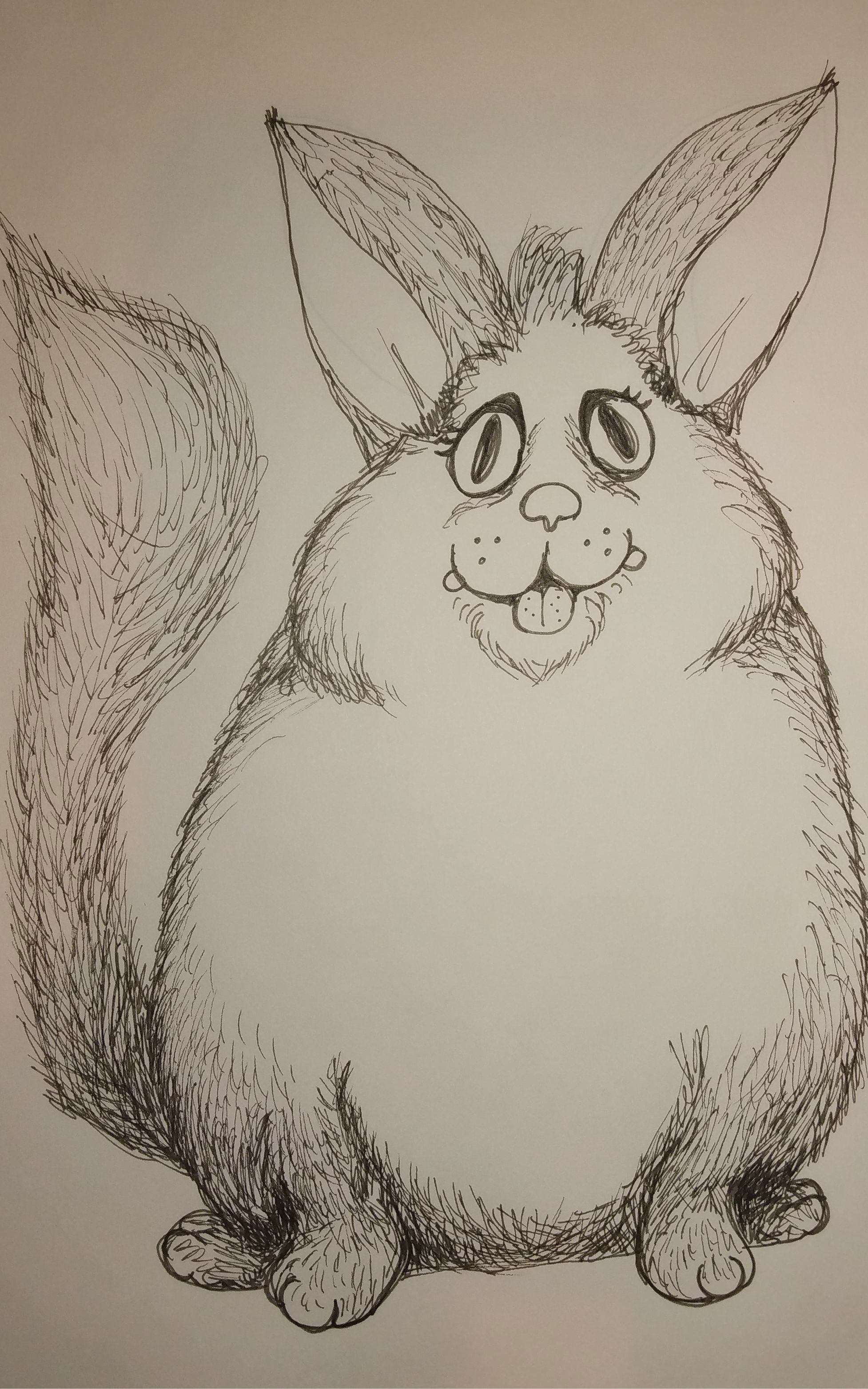
The Kudlee
A new breed of animal companion becomes popular in a high tech world. One precocious youngster pushes the possibilities to the limit, with surprising consequences.
Making it illegal to declaw pet cats seemed like a good idea to the activists who championed the law, but there were unintended consequences. This new law effectively overturned a New York state law which had been on the books since the year 2019, and which had granted landlords the right to terminate the leases of any tenants who refused to declaw their house cats. It had been reasoned that since a house cat is a different sort of creature than a working cat or a feral cat, the claws were not needed anyway, and should be removed to protect the property values of residential buildings. Sure, it was a cruel practice, but there had been a lot of money involved, on many sides. Now things were a little different. However, landlords who had previously disallowed tenants' keeping of cats that were not declawed did not simply give up and let their renters' pets destroy their property. Instead, they disallowed the keeping of cats completely. Large parts of the city became totally intolerant toward house cats. There were some newer residential buildings being constructed which would have accomodated house cats with claws, but they were essentially outside of the existing city, far from people's jobs and basic services, and so not yet a viable alternative. Millions of renters were forced to make a decision between getting rid of their beloved feline companions, or leaving the city altogether. Millions were compelled to have their pets put down, while tens of thousands simply released their cats in the streets. The abandoned animals didn't last a year. Those that had previously been declawed made an easy meal for the city's hawk population, and were no match for the giant sewer rats that came out in packs at night. Those that still had their claws were still unable to compete for food against feral cats, since they had never learned to hunt anything bigger than moths and house mice, but they did survive just a few months more. There was not a lot of breeding between feral cats and house cats, due to spaying and neutering, so the feral cats' breeding pool was disrupted, resulting in a drop in feral cat births. However, the abandoned house cats themselves were numerous enough to briefly replace the missing generation. Due to the sudden population increase of alley cats, a special task force of animal control officers was appointed to dispatch as many as possible, with a bounty on each head. This led to a significant decrease in the number of feral cats, in addition to wiping out the released house cats. Additionally, since such a large population were no longer purchasing cats as pets, the breeders lost too many sales to stay in business. Consumer cat breeding came to a complete halt. In three short years, house cats became nearly extinct. Perhaps it should not have surprised anyone. The thing that humans do best is make other species extinct.
However, people still craved the company of little furry beasts. There was a surge in trade for rabbits and guinea pigs. One enterprising startup took a different approach, seeing the situation as a great opportunity. Using newly developed gene editing techniques, they crafted a new organism from the DNA of felines. They made their creation hypoallergenic, took away it's claws, it's reproductive ability, blunted and reshaped the teeth, made it naturally pudgy, with designer colors, and even gave it a furry little flap that covered the butthole when it wasn't in use. They called this new animal the Kudlee.
The Kudlee was an instant sensation, and sales quickly eclipsed those of all other pets combined, as well as every new toy that was released that same year. Within three years, Kudleecorp was the highest grossing company in the world. They had publicly pledged to put a Kudlee in every household on Earth, and had nearly done exactly that. Early on, a marketing decision had been made to give the Kudlees a maximum lifespan of five years. If people wanted to keep their pet longer, a life extending supplement could be administered for a fee. Otherwise, old Kudlees could be recycled, and a new custom made pet created from it's remains, for a different fee.
In the twentieth year of Kudleecorp, a new product was developed. This was a home kit, called the Kudleemat, that allowed customers to design and grow their own Kudlees to their personal specifications. The Kudleemat was a truly remarkable consumer electronic device. It gave anyone with a basic understanding of how to use a computer the ability to manipulate genetic codes and animal morphology at the push of a few buttons. There was no concern for serious errors, as they had made it fool proof, with a money back guarantee. At least it said so in their advertisements. If anyone had thought that they should also make it genius proof, the marketing department took no notice. Uniquely customized Kudlees became a must have hobby item. People started making them by the dozen and selling them at flea markets. A consumer could order a custom Kudlee from one of millions of home crafters on the World Wide Web. There were even artisanal shops that specialized in made to order animals. People were making Kudlees with long ears, short puffy tails, purple fur and green spiral markings. They made them bright orange, with extra limbs that served no purpose, and ears that looked like bat wings. There was even a short lived fad of creating patchwork Kudlees whose parts didn't match in size or color. The only thing that was not possible with the Kudleemat was retro engineering a cat. All Kudlees remained blunt toothed, hypoallergenic, and clawless.
Of course, all of this did not happen in a vaccuum. It was not the entire economy that was dominated by Kudleecorp. Other industries were also doing well. Sigurd Cybernetics, which manufactured the bioelectronic parts used in Simian Simulant Servitors and NuYu prosthetics, was making a fortune from it's latest product. They had developed a brain linked external memory module, the BLEMM, which allowed anyone with the implant to instantly access all of the information that was linked to the world wide web, hands free and without a screen. It uploaded the selected information directly to the brain, as though it were the person's own memory. Not everyone was convinced to try it, as it did require surgery that permanently altered the wearer's appearance. Some even called it the BLEMMish, derisively. However, those without the dubious upgrade did begin to find themselves at a disadvantage. For those fearful of the surgical implant, but who wanted to keep up, a lighter version of the technology was invented, which was a wearable device that resembled a fashionable hat, and interfaced via electrical probes that fit into small piercings in the scalp. It was called the CAPIS, short for Cerebral Access Port Information System. Most people started calling it the thinking cap. It was measurably slower than the BLEMM, but had the advantage of being minimally invasive and removable.
Another innovative company that was shaking things up during this time was the Dietary Intention Alimentary Nutrition Alternatives corporation, DIANA corp. They manufactured low calorie nutrition supplements and food replacement products, most of which tasted like sawdust. With the new wave of brain implant technology, they had found a way to market their products to people other than masochists. DIANA Corp commissioned a computer application that would run on the BLEMM or the CAPIS, which altered the subject's sensory input while consuming their food replacements, making them seem to taste delicious. Soon, early adopters of the brain enhancement technology were lean and trim, and DIANA Corp had a higher profit margin than they had ever projected.
One fateful day in midsummer of the twenty third year of Kudleecorp, a precocious twelve year old boy named Marcus Thempe was given two birthday presents that would challenge the new world that had been built by the market. He received a new Kudleemat, with the at home recycling option, and a thinking cap, pre loaded with DIANA software. The thinking cap was a new replacement for a previous model, which Marcus had deliberately thrown against the wall in a fit of pique. He may have possessed a genius level intellect, but he still had trouble regulating his emotions. It had been his mother's idea that the whole family get the caps, specifically with the DIANA diet in mind. This had presented two problems for young Marcus, the first being that there was a small bug in the DIANA software, so that it didn't cancel out the gritty texture of the food replacement bars, which Marcus despised. The second problem was that the DIANA system didn't include a flavor profile for many of his favorite desserts. He particularly missed the taste and texture of a banana split. The DIANA version was a slick pasty mess with no distinction between fruit, whipped cream, ice cream, or nuts, and it wasn't even sweet enough for Marcus to count it as a dessert. This was a situation that he could not abide, hence his destruction of the first cap.
Marcus did enjoy tinkering with the Kudleemat, as it stimulated his imagination and gave him an outlet for his restless intelligence. He had always enjoyed inventing things by taking obsolete tech apart and combining it with other things. He immediately began pushing the Kudlee parameters to their extreme limits, and had not been doing so for long before he had an idea that was wildly outside the box. While using his CAPIS to obtain and peruse the pirated plans of the Kudleemat, he figured out that the at home recycling option operated by breaking down the biomatter of an expired Kudlee with bionanites, five doses of which the Kudleemat came preloaded, and rebuilding the new Kudlee from the cellular level up. He figured out how to build the bionanites directly into the digestive system of his Kudlee, effectively giving it it's own recycling system. He carefully selected traits that were most suitable for his secret purpose, doing much instantaneous research with the aid of his new thinking cap. The finished Kudlee was a larger than average, almost perfectly round, animal with a very wide mouth and silvery grey fur. In a world first, Marcus fitted his old thinking cap, now refurbished, onto the Kudlee's head. Next, he uploaded a special bit of software of his own devising to modify the DIANA program. Next, he purloined a day's supply of DIANA food replacement bars and supplement pills, which he fed to the Kudlee, wrappers and all, along with a litre of water.
After finishing all the preparations, he then spoke to the animal, clearly and distinctly describing exactly what he wanted. The Kudlee, accessing the CAPIS, sat seemingly unresponsive for a moment, but then closed it's eyes tightly as rumblings began to come from it's innards. It wore an almost pained expression as it continued making noises for the next three minutes. When the noises stopped, the Kudlee opened it's eyes, and it's enormous mouth. The lower jaw fell all the way to the surface of the table upon which it sat. The wide tongue lolled out like a drawbridge, and an object was pushed slowly out onto the tongue. A dense, chilly, fog poured out of the nostrils, remains of internally processed dry ice. Marcus reached out and took the object. It was round, wrapped in waxed paper, and ice cold. Carefully, he peeled off the wrapper to reveal a single large scoop of real ice cream with chunks of banana, cherries, nuts, and swirls of whipped cream. With barely contained anticipation, he touched the tip of his own tongue to the ice cream. To his delight, it was the perfect level of sweetness. Wasting no more time, Marcus began greedily munching away at his treat, enjoying the perfect flavors and textures of each mouthful.
With his belly happily full, Marcus cradled his Kudlee in his arms. He was trying to think of a name for the creature. Eventually he decided to call it Kosmo, for no particular reason other than that it sounded nice. A few minutes later, he had another fateful idea. There were a lot of other kids his age who lived in the same megastructure apartment building, and had Kudleemats. He was sure that they would be suitably impressed with his creation, maybe even impressed enough that they would trade something for the knowledge of how to make their own. Using his thinking cap, he contacted several local kids, and told them to meet him secretly in a place they called the park.
While the neighborhood was actually level three hundred and eighty six "b" of the megastructure, it was made to resemble a suburban area, with fake grass that never needed mowing, paved walkways with streetlamps that lit up when the simulated sun went into moonlight mode on the simulated sky ceiling, and a park that connected several different dwellings. That was where Marcus gathered his friends for his demonstration. He was absolutely correct about them being impressed. Every one of them wanted to know the secret to making a Kudlee that could create whatever they asked for in it's belly. Marcus shared his files with each of them, for a price.
The payment had to be something that Kosmo couldn't make, and Marcus had said that Kosmo could make almost anything organic. Several of the children had credit chits that transferred money digitally, and Marcus accepted some payments that way. Others had to get more creative. Favors were promised, and promises got in writing. Rare personal treasures were sacrificed, and later hidden away in Marcus' room. Everyone was sworn to secrecy.
It was more than a week later that the trouble started. A girl named Margot had made a red Kudlee with Marcus' plans. She also had a parakeet, but the bird was blue, and she wanted it to be red so that it would match her Kudlee. So, she fed the parakeet to the Kudlee, and asked it to make a new bird that was red. The Kudlee tried, but the result was a lifeless thing made of meat and feathers that only looked like a red parakeet. Margot was devastated, but she kept the secret from everyone except the group of children. At the same time, a boy named Patrick tried to get his Kudlee to make more Kudlees, with disastrous results. As with the parakeet, the new Kudlees came out lifeless. Frustrated and not knowing what else to do, Patrick tried to feed them back to his original Kudlee. The animal became agitated, and declined. It then shut it's mouth tight and refused to open it again. In three days, it died of starvation. Patrick considered recycling everything through the Kudleemat, but was concerned that the authorities would be notified by it about the unauthorized modifications. He also kept everything secret from everyone except the children who had got the plans from Marcus.
After another week of investigation, Marcus figured out that the bionanites had a built in weakness, put in by Kudleecorp to prevent anyone from duplicating their products. In order to build a live Kudlee, the bionanites had to be inside of and administered by the Kudleemat, where they received an instructive signal at the beginning of the process. The original bionanites that came with the Kudleemat could only build Kudlees, and only with the instructions from the Kudleemat. Marcus had not been aware of that when he altered the new strain of bionanites. So, in order to fix the problem, he began to redesign a second new strain. This new strain carried it's instructions in each individual bionanite, and those instructions allowed for open creativity, as well as some free interpretation by the Kudlees as they assimilated new information through their cybernetic implants. He gave each of the new Kudlees an injection of new bionanites, free of charge. It would take a few days for them to be absorbed properly, so Marcus told the others not to ask their Kudlees to produce anything until he could check them over again. He was a little worried that it might not work.
Being of feline stock, Kudlees sometimes went into a sort of trance state where they would stare into the distance, and not move or blink for long periods of time. No one thought this was strange. It was just cat like behaviour. But, no one had ever observed a cat's brain when in such a trance, and no one had ever seen a cat with cybernetic implants. The Kudlees with CAPIS, or BLEMMs, or cheap knock offs, had synchronized their trance states, and no one had noticed. Software was being downloaded and uploaded, strange messages were being shared between the Kudlees, upgrades started being made, and no one was aware that any of it was happening.
Before Marcus ever got to examine any of the other Kudlees' new bionanite supplies, Kosmo began behaving strangely. After one particularly long trance session, he began demanding large quantities of food. Initially, Marcus happily gave him double the amount of kibble that was the normal recommendation for a Kudlee his size, but Kosmo begged for extra portions at every meal. This would not have been peculiar for one of the old extinct house cats, but Kudlees were not supposed to do that. Then, Marcus received a message from one of the other children, saying that their Kudlee had coughed up a weird, slimy, hairball. That was another thing that Kudlees were not meant to do. What was even worse, the hairball seemed to be dissolving the genuine wood flooring in their living room. Another message arrived, reporting that a Kudlee had eaten all of the plants in the house, then chewed through a wall before consuming the plastic lawn and moving into the park. There were more messages, all very similar, with a lot said about weird hairballs that dissolved whatever they touched.
Marcus asked everyone to meet in the park with their Kudlees, and when they did, they discovered that the plant eating Kudlee had devoured several small trees before coughing up a large number of hairballs that it then formed into a three foot tall coccoon around itself. While the children marvelled at that, they heard a rumbling and cracking sound coming from one of the domiciles. They watched in fright as the foundations gave way and the walls collapsed. More than a dozen small balls of multicolored fur emerged from the rubble, and moved toward the slimy edges of pools of dissolved stuff. The miniature Kudlees began to lap up the pools, making small mewing noises in between slurps.
By this time, the adults had noticed that something was going on. The authorities were called in suitably panicked tones. Emergency services arrived with police in tow. Animal control was brought in. While the Kudlees were being rounded up, and damage was being assessed, the coccooned Kudlee hatched. It was now four times it's original size, although it otherwise looked the same as before. A young Animal Control officer unwisely attempted to capture the animal by himself, and received a slimy hairball to the face. He was instantly blinded, and fell to the ground screaming as his flesh was swiftly disassembled by the bionanites in the slime, and rendered into a nasty goo. The police quickly converged on the scene, and wasted no time in firing their electric pulse pistols on the Kudlee. It required twenty full power blasts of charged plasma to put the creature down. As it crumpled to the floor, it's brightly colored fur ignited, filling the faux park with the stench of burning hair and singed flesh.
The absence of fur allowed those present a glimpse of the mutant Kudlee anatomy. Just like the average Kudlee, it had four stubby clawless limbs and a tail attached to an almost egg shaped torso, with a large and exaggerated feline head, blunt toothed as ever. Of course, it had a BLEMM attached to the cranium, but that seemed inoperative, it's indicator lights burned out. There was something very odd about the skin, other than the second degree burns. Small raised blisters lay in clusters along the sides, with keratinous objects emerging from the pores. The objects were very faintly glowing. When questioned about it, Marcus admitted that he knew what the objects were. They were tritium bearing byproducts of the lithium with which he had laced the Kudlees' bones. When they were exposed to oxygen, the tritium glowed. The lithium had been necessary to power some of the more extravagant mutant processes he had given to the Kudlees' digestive system. This news frightened the police, who were already agitated by the unusual nature of the situation. They contacted a government office about it in short order. The corpse was bagged, labelled, and shipped to a government facility in an armored vehicle.
The next several months were something of a nightmare for Marcus' family. The insurance company refused to pay the megastructure's owner for the damage, since destruction caused by pets was not covered in the policy, so they tried to charge Marcus' parents. A judge threw out the case, since Marcus had acted without his parents' knowledge or consent, and was a minor. They wound up having to move and Marcus' dad had to get a new job. An inquiry was made into Kudleecorp's safety policies, but the CEO had taken a sudden trip to the Mars colony on his private space yacht, and was unreachable by agents of the North American government. The altered Kudlees were all confiscated by the authorities, including Kosmo, and a public safety announcement was made informing the public that they should neither allow gene splicing at home, nor attach unapproved cybernetic hardware to animals. A new law was proposed in Congress, aiming to prevent any such tragedy from happening again, nicknamed Kosmo's Law. Marcus' mom put him back on the DIANA diet, this time without the thinking cap. He was miserable, and when he was miserable, his brain automatically thought up ways to reduce his misery. With his stomach feeling sour, and the sawdust taste of DIANA bars fouling his tongue, he sat sulkily in his room and daydreamed about his next invention.
That is the end of The Kudlee. Thanks for reading.
Get the app for the rest of David Ray Hancock 's writing, and everything else on Novellea.
Open in Novellea