
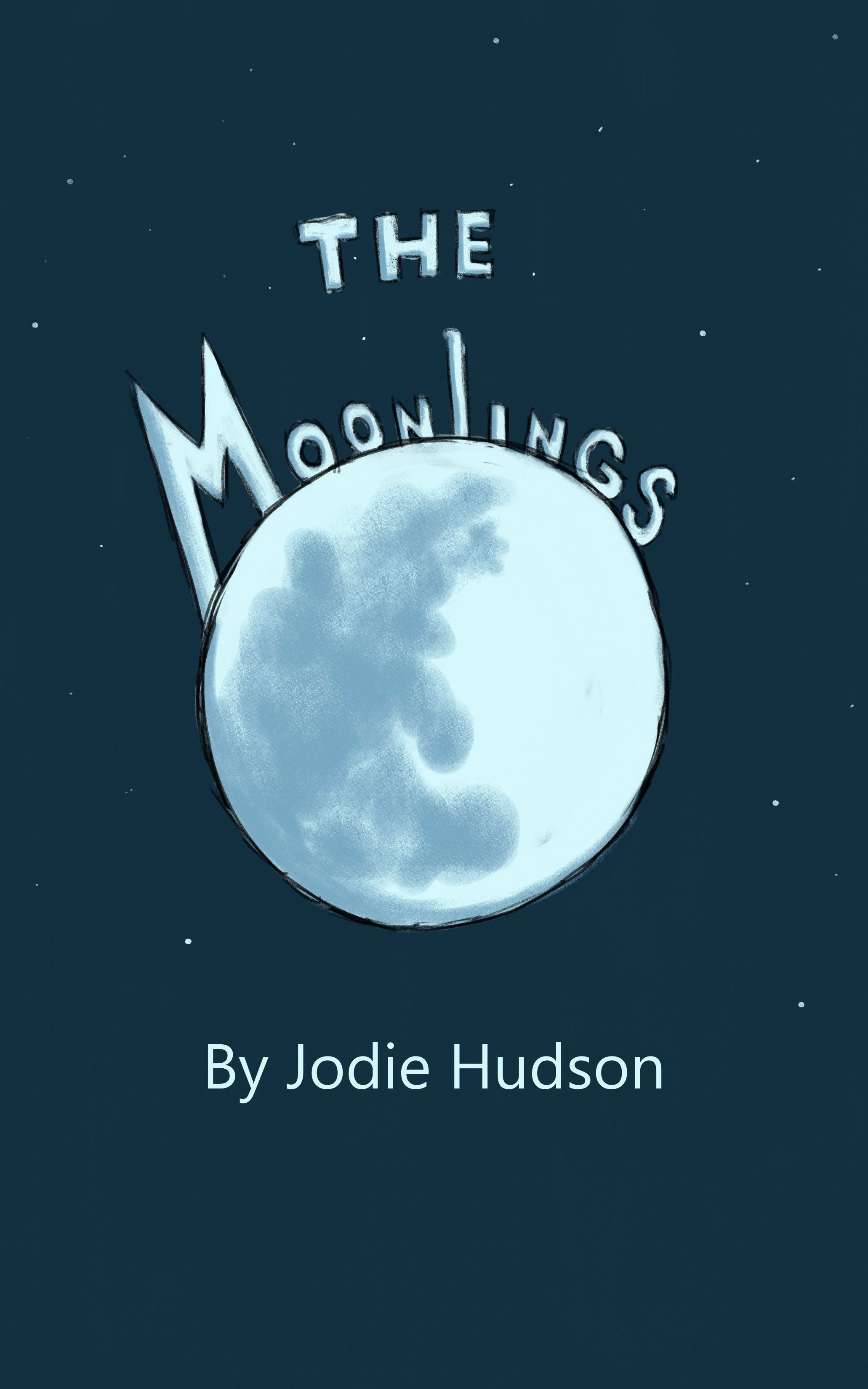
The Moonlings
A landmark discovery of life on the Moon leads to profound changes to Earth's inhabitants. If you're dismayed you were born after the excitement of the Space Race, this is the short story for you!
Ever since David was a child, he dreamed of being an engineer. After 4 years of university, he finally got his degree. Around this time, a landmark event in human history occurred. Beings were discovered that claimed to be from the Moon. Humans decided to call these beings, the Moonlings. And the first thing people observed about the Moonlings was that they loved doing engineering. On the Moon, the Moonlings claimed no engineer worked for wages. They called this process, the Democratization of Labor. Engineering firms had never heard of this concept, but coincidentally this meant labor costs for a worker were reduced to zero for any Moonling hired. So the CEOs of engineering firms didn’t have to understand what the Democratization of Labor meant, all they had to know was that every additional Moonling they hired made their shareholders happier. The engineering work of these Moonlings, many thought, was amazing, ingenious, breathtaking! Some speculated that with them being native to the Moon with 1/6 the gravity of Earth, the Moonlings' minds could just soar higher than humans to create amazing engineering marvels. David, like many, was excited by the discovery of the Moonlings. And while he also did not understand this new concept the Moonlings brought with them, the Democratization of Labor, he was glad it was being applied to his field of expertise. Filled with excitement about these new developments, David started his search for a job at an engineering firm in his city. To his dismay, he found that most employers turned him away as they told him they now employed Moonlings for engineering jobs, but one CEO was willing to meet with him. The CEO told him, the Moonlings didn't understand English or any human language for that matter. They spoke only Moonish. This caused problems because while the Moonlings' work was considered brilliant by many, their engineering work often didn't follow the standards of the engineering firm due to the language barrier. The CEO told David if he retrained to be a translator and learned the language of Moonish, there would be a job at his engineering firm. Now the CEO said he couldn't pay David an engineering salary since David wouldn't be doing any engineering, the Moonlings did the actual engineering. So the CEO couldn't justify paying him that kind of salary since David would provide none of the time or labor associated with engineering. But the CEO told David that translating, while paying far less, was surely better than nothing. David said he would think it over and get back to the CEO in a week.
During this week, David pondered if he decided to retrain, would he still be an engineer? Engineers weren’t really known for their translating skills, but he'd still be working for an engineering firm. Maybe this was just the evolution of the engineering profession? He also met with a few of his Engineering graduate buddies at a pub that week. They were all upset they couldn't find work because of the Moonlings. They told David that it was not that they didn't like the Moonlings, but they wondered why the Moonlings happily worked for free. The engineering firms didn't force them to work for free, it was the Moonlings' choice. The Moonlings claimed everyone worked for free on the Moon, in what they called the Democratization of Labor. David's friends did not understand how working for free had anything to do with democracy… They wanted regulations from government and worker protections from employers so that they had a chance to work alongside the Moonlings where everyone, humans and Moonlings alike, were paid a wage. They also said it was in their best interests that no one worked with Moonlings until regulations were in place. His friends warned if people learned Moonish and worked with the Moonlings now, it would be very difficult or near impossible to get regulations later because the economy would be too dependent on the Moonlings. His friends told him that they were working with politicians, unions, and other organizations and educating the public to get regulations and worker protections. They said David didn't have to help with this if he didn't want to, but all they asked of him was that he did not learn Moonish and work with the Moonlings. David didn't agree, perhaps regulations were needed, indeed he thought regulations sounded like a good idea, but surely learning Moonish was worth it to find work now until regulations came about? He got into a heated debate with his friends over this. Frustrated, David decided to head home from the pub. As David walked home, pondering the discussion of the night, he thought his friends were being xenophobic… or Moonophobic… he wasn't sure… Nevertheless, he thought, the Moonlings' engineering was innovative, probably more innovative than many of his buddies’ engineering work. His friends were just jealous and filled with fear. Why should Moonlings be denied jobs, simply because they enjoyed working for free? It was their choice. And what did his friends mean by the economy would be too dependent on the Moonlings? Moonlings only worked in engineering. Not everyone works in engineering. Some people were accountants, some people were restaurant workers, and others many many other professions. Why did his friends want to ban Moonlings? Nothing they said made much sense. Although, perhaps he had one pint too many to understand, he wasn’t sure. But what he was sure of, even in his current state, was he would not fear Moonlings like his cowardly friends.
So at the end of the week, he told the CEO he would retrain, and the CEO wished him good luck. David poured himself into learning the Moonish language. There were all kinds of courses, and Youtube videos, and apps to learn from... Seems like a whole new industry popped up overnight when the Moonlings arrived. A lot of them cost money, but he figures the paid ones were worth it. The free ones seemed to promise a lot and seemed scammish, David thought. It’s always better to pay for something with money, than pay later with a headache, his mom used to say. So with that in mind, he signed up for a university course as the best bang for the buck. After a 3 month course, he mastered the Moonish language and returned to the CEO for a job. Upon arriving at the engineering firm, when David greeted the CEO, the CEO did not remember him. David told him that he met the CEO before and was told to learn Moonish so he could get a job as a translator. The CEO still didn't remember, but he told David that he recommended this to a lot of recent Engineering grads so David shouldn’t take offense he didn’t recall. David said he understood and asked when he could start. The CEO shook his head. He told David he had no jobs for translators at the moment. While he hired translators, he only needed a few translators. One could use 1 translator for 100 Moonlings. 1 translator for 1 Moonling could also work and probably result in better engineering, yet he didn't want to hire as many translators as he used to hire engineers before the Moonlings arrived. That would increase labor costs. Now sure, hiring the same number of translators as Moonlings, would be a lower labor cost than he spent before the Moonlings arrived, with the cost difference between human engineers and translators. But his shareholders were accustomed to their current labor costs and raising labor costs, even if profits were still made, was no way to keep a CEO job. In any case, the CEO wished David good luck and to show himself out.
David realized his dream since he was a little kid of being an engineer was over. David pondered how he would earn a living. Maybe he would become an accountant, he always liked numbers, and they made good money. Unfortunately for him, there was a skills shortage in accounting. Turns out Moonlings were good at accounting too and had started working in that field too, happily for free. Accounting graduates and veterans alike saw the writing on the wall and fled for a more stable industry. Businesses, in a panic over the skills shortage, hired more Moonlings to make up for the accountants that fled, causing more people to flee the industry, and the hiring of more Moonlings and so on. David’s brief accounting dream was over. David decided to just get a restaurant job to make ends meet until he could figure out what to do as a career. Unfortunately, Moonlings can cook too, happily for free. Unlike engineers and accountants, restaurant workers had a union, and the union went on strike to demand worker protections in its next contract. Most of the public, like David, didn't care or support them. Most of the city's residents enjoyed the Moonling’s food services and thought the restaurant workers were entitled. They argued, lots of people lost jobs before the Moonlings arrived… Did the restaurant workers speak up when telephone operators lost their jobs almost 100 years ago? Sure most of the restaurant workers were in their 20s, born long after the telephone operator profession ceased to exist. But it was the principle of it! Even many restaurant workers in the union saw worker protections as pointless and just wanted the strike to end so they could go back to work. So the union leadership failed to secure worker protections and the union members overwhelmingly ratified a new contract without worker protections, and the Moonlings soon replaced those workers too. David’s brief restaurant dream was over too.
In fact, most of the jobs in David's city were now done by Moonlings. There were a few of the city's residents able to find translating jobs for various professions at low wages, but at a ratio of 1 translator for every 100 Moonling workers, most of the city's residents were unemployed at this point. Many tried to start their own businesses. They had the skills, not their employer, after all! They would develop businesses that valued the workers and their skills and paid wages. This would lead to better products and services than the traditional businesses employing Moonlings and customers would flock to them. But they discovered after they became employers, many customers had little money and chose to buy cheaper goods and services from businesses that employed Moonlings. Soon these new businesses closed shop. Some tried to start businesses with Moonlings working for them but it was far too late. There was nothing to distinguish their business from the old businesses with Moonlings except in a few aspects: The old businesses had name recognition, wealth to advertise, and control of the market…all things the new businesses with Moonling employees didn’t have. So these new businesses closed shop too. With falling labor costs, the government's tax revenue from workers dried up; the city became an impoverished city like many industrial cities in the past like Detroit. So while on paper, the city looked rich in GDP terms, most of the money was in the hands of the owners of businesses that employed Moonlings. Unlike the declining industrial cities of yesteryear though, this was global. Most cities, indeed most countries around the world followed the path of David's city. As the jobs decreased worldwide, at first there was anger at the businesses that employed Moonlings. But CEOs of these businesses reached out to the media and told the public, this was progress. Besides, CEOs said, this was also democracy or… laborization… or something… the Moonlings would be able to articulate their concept better since the CEOs did not speak Moonish but the main point that CEOs were trying to make was, certainly the public wasn't against democracy, were they? So the public, not wanting to be seen as undemocratic, turned their anger elsewhere. Many workers in rich countries blamed poorer countries and immigrants for stealing jobs. Many workers in poorer countries blamed spoiled workers in rich countries for going on strikes for worker protections shutting down work for them. But what workers in rich and poor countries alike had in common was their jobs were soon done by Moonlings.
A tiny minority of countries like the Netherlands were cautious when the Moonlings were first discovered and the Moonlings brought their concept of the Democratization of Labor to Earth. The Dutch people, like all people, did not understand this concept, the Democratization of Labor. However, the Dutch government conducted research to understand how Moonlings working for free would affect their economy. Dismayed by the results of the research, they put regulations in place to require Moonlings to work alongside Dutch people for wages. But most countries were too enamored that the Moon even had life to conduct research. They saw working with the Moonlings as no different than putting a man on the Moon. Thus a "Moonlings Race" was born. One could say, unlike the moon landing, this was not a competition between governments but private businesses, but one could also say, and most governments did say, this was splitting hairs. So most governments rushed to be the undisputed leader of working with the Moonlings. Thus the Netherlands was one of the few countries with lots of jobs that paid wages. David knew very little about the Netherlands but even if he did, he couldn't afford to move to the Netherlands. Plus the Dutch did not have jobs for Moonish translators; Both humans and Moonlings were required to be bilingual in order to work equally alongside each other for wages. And he certainly couldn't work as an engineer in the Netherlands. David's engineering skills had atrophied since university and he never gained real-world experience in the field.
David eventually lost his house and survived on the streets. Worldwide, most governments struggled along with limited tax revenue but this was unsustainable. Eventually, governments could no longer afford their responsibilities. Education, infrastructure, warfare; at first governments partnered with businesses to fund these programs, but eventually businesses had to handle these things alone. However, they were not charities. After all, by law, they were classified as for profit. In exchange for taking on these responsibilities, businesses offered everyone the chance to work in their desired profession. David returned to the CEO for an engineering job. The CEO did not remember him this time either, but he reassured David that a lot of out-of-work engineers came to him so David shouldn’t take offense he didn’t recall. So the CEO put David to work, alongside the Moonlings as equals, through the process called the Democratization of Labor.
That is the end of The Moonlings . Thanks for reading.
Get the app for the rest of Jodie's writing, and everything else on Novellea.
Open in Novellea