
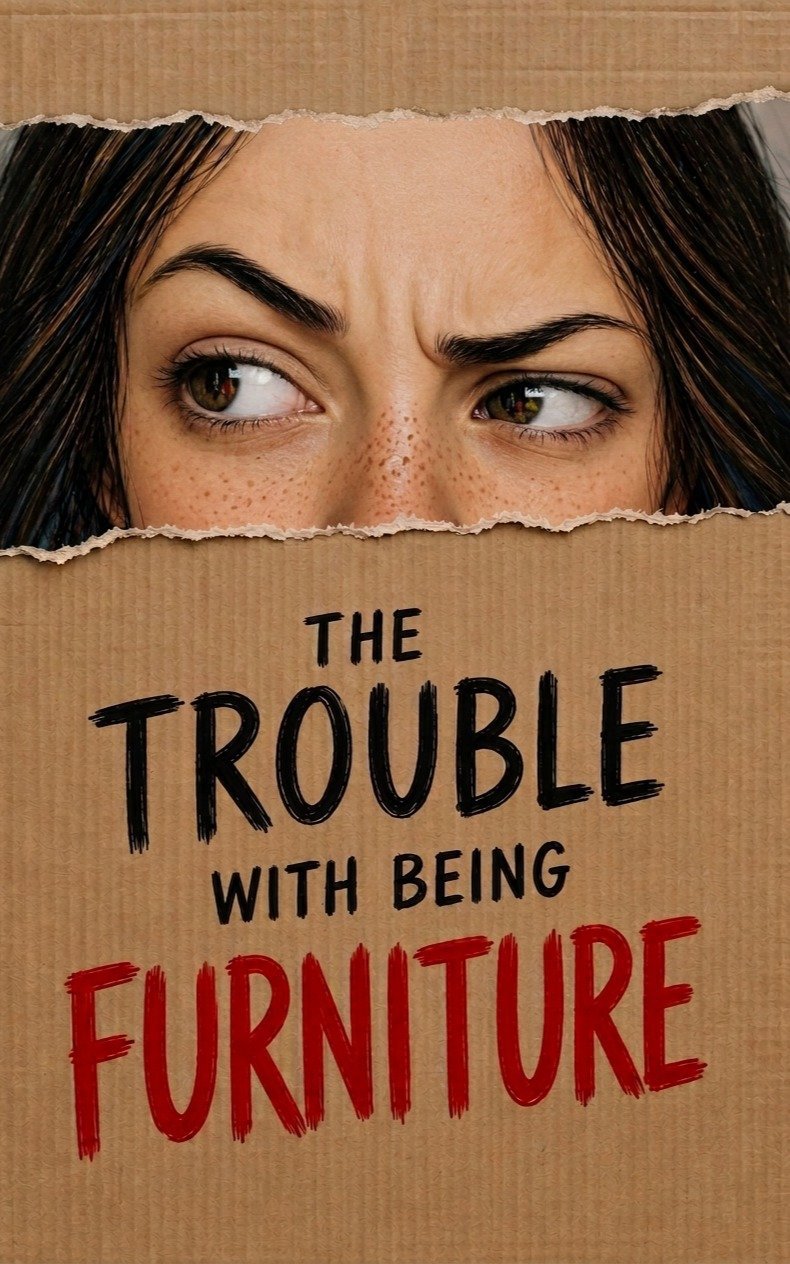
The Trouble with Being Furniture

Chloé can no longer speak. Unfortunately for everyone around her, she can still think.
Immobility follows a little-known law of physics: it turns the human body into a piece of furniture.
I was nine years old when a delivery truck ambushed my childhood on the wet cobblestones of the Boulevard Saint-Germain. The truck won. My spine lost. Somewhere along the way, my limbs surrendered, and my voice declared neutrality. Medical reports politely filed my condition under "locked-in syndrome." I prefer "self-aware furniture."
But the true genius of that afternoon wasn't the wreckage it made of my body. It's the swift efficiency with which it lobotomized everyone else's perception of me. That Tuesday, on the pavement, I closed my eyes being Chloé, an ordinary little girl with braids and Barbie dolls, and I woke up as someone else.
In the eyes of the rest of the world, anyway.
Three years later, my mother is bustling in the kitchen with the frantic energy of a seventh-arrondissement bourgeois who refuses to accept that her life has become a permanent charity ward. She manages this catastrophe through the magic of pathological denial: she tries to resurrect the dead past with the saccharine enthusiasm of a fundraising hostess.
"Do you remember Venice?" she beams, slamming a teacup down with a smile so blindingly fake it makes me wish for internal hemorrhage. "You were running all over St. Mark's Square chasing pigeons. You were laughing so hard. Passersby couldn't help smiling... You were so full of life..."
Mom, spare me your archaeological digs. That was three lives ago, back when my legs actually functioned and I wasn't rented out as an emotional accessory for your guilt complex. Dragging Venice into this kitchen won't fix my pelvis.
She walks over, wiping a discreet trail of drool from my chin.
Here's the foundational flaw of the walking class: they mistake the muteness of a broken chassis for the vacancy of a soul. To them, I am no longer even a person. I am, take your pick, a case study, a mobile altar of resilience, or a wax dummy they dress in pastel knits.
They'd be horrified to discover that the decorative item they've been pitying for three years has spent that time reading its way through digital libraries via an eye-tracking tablet. I devoured anything that helped me escape the room. Cioran, Camus, and Schopenhauer soon became favorites. If you're going to be miserable, you might as well learn from professionals.
Later in the afternoon, Madame de Villandry drops by for tea. She’s the exact archetype of our social caste: a woman who treats my paralysis like a chic, avant-garde art installation that earns endless dividends in moral prestige.
For a moment, she and my mother remain standing three feet away, talking about me in stage whispers. They discuss my maintenance requirements as if I were a piece of antique cabinetry being evaluated by a blind appraiser. She then settles into the Louis XV armchair, crosses her designer fishnets, and fixes me with that professionally rehearsed gaze reserved for starving orphans and saints.
"How brave she is," she murmurs to my mother, dropping her voice with that exquisite aggressive tact of talking about someone as if they were already dead. "It’s a profound humbling for all of us. The universe moves in such mysterious ways..."
Mysterious? No, Madame de Villandry, black ice on Parisian asphalt isn't a cosmic mystery; it's basic physics compounded by municipal negligence. And for the record, I still loathe your smug, Botox-injected face just as much as I did when I could run away from you!
A low rasp escapes me.
Madame de Villandry leans in with a smile so charitable it ought to be tax-deductible, and adopts that high-pitched baby-talk reserved for toddlers and golden retrievers.
"Oh, but yes! Yes, my little darling!" she coos, clapping her hands together like an excited seal. "She agrees! Look at her! Are you giving mommy a big smile? Oh, she's so perceptive, it's just breathtaking!"
Breathtaking, yes. The real miracle in this room is your ability to mistake pity for virtue, my dear.
Tomorrow, they'll wheel me out to the park to get some fresh air like a potted fern. I'll get the usual performance: the cowardly pedestrians who suddenly become fascinated by their phones, anything to avoid looking at me; the morbidly curious who keep glancing back every few minutes, as though they expect the situation to develop; and the occasional aspiring humanitarians who strike up conversations with my mother only to discuss me without ever addressing me directly.
Nobody looks at me and sees a peer, with the sole exception of Céline. She will climb onto my footrest, steal a cookie right off my tray without asking, and casually complain about the boy who still hadn't noticed she existed, as if I weren't a public monument to human tragedy.
She is the only person who doesn't treat me like someone else.
That is the end of The Trouble with Being Furniture. Thanks for reading.
Get the app for the rest of Thomas's writing, and everything else on Novellea.
Open in Novellea