
A Man’s Work is Never Done

What lessons would little boys learn if they grew up in a world where women refused to give back their newly acquired jobs after the Second World War?
“That’s enough now Small, stop your fussing.”
“But Grumpa why can the girls—” Small’s wailing turned the rest of the sentence into a garbled mess, but Grumpa understood the despair unfairness caused in young minds. Grumpa also knew the world refused to change, even for the tears shed by tiny humans.
“That’s enough now.” Grumpa patted the curly blond head.
Small buried his face in the green tartan blanket that covered his grandfather’s lap, and kept sobbing. A few short months ago he would have tried to crawl up onto Grumpa’s lap, but now he was older he just tried to melt into the space next to the wheelchair, hoping the girls wouldn’t see him in this state.
“Alright, alright, come now, come now my pet. That’s enough now,” Grumpa said gently, stroking his rough hands over Small’s hair. “Come, help me with the vegetables and I’ll tell you a story about The Great War.”
Small sniffled for a few more minutes and then looked up. Grumpa told really good stories.
“Go on, fetch me the bowl and vegetables.”
Small walked back carefully with the vegetables and made another trip for the water and the knives. He sat down next to Grumpa, the mound of vegetables next to him. Although he was only five his hands were already nimble with a paring knife. He knew while he peeled and scraped Grumpa would keep talking.
“Now, when the war started, you had to go to the doctor to see what job you were fit to do in the army. He would—”
Small giggled.
“And what’s the giggle for little man?” Grumpa knew what the giggle was for.
“You said he. Boys can’t be doctors Grumpa.”
“Oh yes they can.”
Small just shook his head, making his curls bounce.
“Well, you may be right, they can’t now, but boys could be doctors before the war. When I was a lad your age, boys could be whatever they wanted to be. Anything. The boss in a factory, the owner of a store, even lawyering or doctoring, anything. Fancy jobs, lowly jobs. Any jobs.”
Small giggled some more. He loved Grumpa’s crazy stories.
“When the war came all the able-bodied boys were shipped off to go and kill other boys they had never met. The women, they stayed home, weathering out the bombs, bringing up the children. Guns and ammunition had to be made to feed the hungry war machine. Farms had to be run to feed everyone. Someone had to do all the jobs the men left behind. So, the women stepped up. Into jobs they had never done before. They learned fast. Soon they were running the workforce.”
Grumpa nodded sagely. Small was still trying to picture a male doctor.
“Then the war ended. And the boys came back. Not all of them mind. So many rotted under the poppies in foreign soil. Some lost a limb. All of them lost a part of their mind. Them boys that came back were different than the ones that left. Look at a photo and you’d say oh yes, that’s him, Jimmy, my friend, we grew up together. But the Jimmy with light in his eyes, Jimmy always up for a laugh, that was not the Jimmy that came back to his mum’s house. New Jimmy walks with a shrapnel limp, jumps at loud noises and drinks every day. That’s not the boy I played conkers with, you think. That’s an old broken man wearing a young man’s face.
“The boys came home, and they wanted to go back to their old jobs, but they found there was already someone in the seat. They went to the bosses to complain. But the bosses just smiled their lipstick smiles and said, ‘Sorry, the position’s been filled, we will let you know if anything suitable comes up.’
“The boys got very angry. There was a huge uproar. Then that lady, what was her name? Ah yes, Elenor Fick. She started making them films, all about men and how they weren’t really suited for certain jobs. Women were just genetically predisposed to be better at engineering and all that hog. And how their hormones made men snap too easily, and that’s what started the war in the first place. There was all this talk about how the war had made men weak, and now they can’t be near loud noises and certain smells because it might break their frail constitutions. And that was the nail in the coffin. The movies. People started believing what the Fick flicks were saying. Never mind that they had lived through another truth. Memories are funny things, aren’t they?”
Small sat cross legged on the floor, peeling another potato. This story wasn’t for him anymore.
“I'll never forget, one day, in the thick of it, having a right go at my mam. She was running the big steelworks by then, over Scunthorpe way.
‘Why are you doing this Mum?!’ I was making a right fool of myself, shouting at her like that, ‘Your own son can’t even get a job. They tell me all I’m suited for is cleaning the house. Cleaning the house? In this thing?’
‘What if you get married boy? Your wife won’t want you out of the house for such long hours, too tired to cook a decent dinner when she gets home.’
‘What wife would want a man in a wheelchair anyway? It’s all upside-down Mum…’
She turned to me with that, ice cube down the spine, stare. That woman could shut you right up without words. She didn’t raise her voice, she just lit up a fag.
‘We didn’t choose this, son, you did. No woman wanted that war. You grew up in this house, remember how it was? Me, always a bun in the oven, trying to feed you lot with a turnip and an onion while the pay check went down his throat. Always better with his fists than his words, your dad. For King and country, he said. But I knew he was thinking of those foreign girls. How many little bastard brothers do you think you have running around?
‘No, no woman ever wanted war. Sons and brothers gone. For what? Where is the glory in starving children at home? Their Da, a photo on the mantel. When a typing job came up at the steelworks, I jumped at it. Anna cut her teeth at my desk. She learned to read upside down looking at me drafting letters.
‘No, we are not doing this to you, you did it to yourselves. Your forefathers had it all. They pissed it away. Now it’s our turn. I wish I could give you a chance my son, I know you’re clever enough, but we can’t risk it you see. We can’t risk it going back the way it was.’
“And that was it, end of discussion. I was lucky to meet your grandma, willing to take a man in a chair. You see Small, life’s not fair. If you want to blame anyone, blame your great-granddad for all this nonsense.
“Now go splash some water on your face. The girls will be home from school soon and here’s us chatting away like a bunch of old roosters. The beds still need making and there’s nothing on the stove yet. Come, come. A man’s work is never done!”
*
Small looked at the mottled mirror after he splashed water on his face. Grumpa was always full of stories; you never knew which were real and which were make believe. According to Grumpa there were imps living under his bed who crept out at night and stole his hair for knitting scarves; that was why Grumpa had almost no hair left on his head. There were plenty hairs in his ears and nose though; maybe ear and nose hairs weren’t suitable for scarves, Small thought. Grumpa also said if you eat while lying down you would grow horns. Small was more worried about choking. Horns sounded wonderful; he could use them against the bigger girls when they bullied him.
*
When Small asked older people, “What is that?”, they would say, “Horses with long ears.”
“Aren’t horses with long ears just donkeys?” he asked.
“No. Now go do your chores.”
Small looked through the picture books, looking for a horse with long ears, but he never found one.
Grumpa never said horses with long ears; he waited until the two of them were alone and explained what was happening, as best he could, to Small. That’s how Small knew why the lady dog had to be locked up sometimes; it had nothing to do with horses, or long ears.
Grumpa also never said, “Leave, its women’s.”
Leave, its women’s meant many things. It meant, don’t touch that, boys are not allowed. It meant; this topic is not open for discussion. It meant; you won’t understand. It meant; I don’t want to explain. But mostly it meant, shut up and do what you’re told.
The men said it with fear. The women said it with authority.
Leave, its women’s.
Even though Small was very young, he knew there were certain things you kept in your mind until you had a moment alone with Grumpa. Grumpa was good with horses with long ears, and he was great with women’s things. That was probably why Grumpa secretly taught Small how to read. Even the threat of jail or death couldn’t keep him from seeing the joy on his grandson’s face when he decoded the secrets and mysteries held between the covers of books. Small promised on the head of his favourite dolly, on the pudding of a thousand Sundays, on the lives of his unborn children, that he would never, ever, let on that he could read. If anyone found out, he would never, never, never, ever, ever, ever tell them that it was Grumpa who taught him. Not in a million years. Small practised saying that he picked it up from watching his sisters. He practised that so often he believed it. The story was completely plausible. Small was quick on the uptake, too clever for a boy, his mum always said. If they found out that he could read it would be an inconvenience; if they found out Grumpa taught him, it would be trouble, big trouble. You can’t un-teach a child to read.
*
The day was hot, especially for spring. All the men in the neighbourhood gathered under the big oak tree in the park to do the mending. The smaller children played on the swings and in the sandpit. Most of the older boys played with them, under the guise of babysitting. All the older girls were in school. Small sat in front of Grumpa, unpicking an old jumper. When it was done, he held his hands shoulder width apart, while Grumpa looped the hank of wool around them, then Grumpa wound the wool off his hands into a ball. This gave Small a lot of time to listen to the old men without being accused of being underfoot; useful boys could learn a lot, if they were quiet.
While the men gossiped and laughed, he saw Uncle Farra scribble something in a tiny book that he quickly secreted back into his sleeve, believing no one saw him. Small realised that, if Grumpa’s stories were true, all the old men should be able to read and write. Grumpa said he couldn’t teach Small to write yet; it was too dangerous, there would be too much proof. If only he could see the little book Uncle Farra hid up his sleeve, he could know for sure.
*
The opportunity came about, quite by chance, the next week, when Grumpa sent Small to the shop with Uncle Farra. It wasn’t easy to get around the shop in the wheelchair, so Small was often sent on errands with adults, when they needed some things for the house. Small could be trusted to mind his elders and not be too much trouble. Uncle Farra was known for his sharp tongue and his quick pinch. He didn’t really like children, not even his own grandchildren, but he didn’t mind Small, probably because one didn’t always notice when he was there, and you could easily forget that Small was a child. He was just part of the scenery.
“What does that say Uncle Farra?” Small pointed to a sign outside the shop. He watched the old man’s eyes dart over the words.
If it was any other child, Uncle Farra would have given them a clip around the ear for asking such a potentially dangerous question, but to Small he just said, “Leave, its women’s.”
The sign read: Tomatoes half off.
Uncle Farra bought double the usual number of tomatoes.
So, he can read, Small thought.
“Why are you buying so many tomatoes?” Small asked innocently.
“I want to make chutney.” Uncle Farra narrowed his eyes at Small. There are no flies on this one, he thought, too clever for a boy.
*
Small watched the other old men too. They all did the same when they saw words; their eyes read quickly, their mouths said, “Leave, its women’s.”
One day, when they were alone, Small asked Grumpa, “Can all men read?”
Grumpa let his eyes wander around for a while, making sure there was no one else around. “No. Most my age can. They couldn’t do anything about that. There was one night, before your father was born, we woke up from the smell of the fires. They burned so many books that terrible night. The next day, there were no more boys in schools, there were new laws. The male teachers and professors, they were gone. We were told they were needed elsewhere. I’ve heard stories,” Grumpa shrugged, “But you know, you want to keep your family safe, so you don’t listen to too many stories. You don’t ask too many questions. And now we are here, none of your friends can read, none of them even think about reading.” Grumpa cupped Small’s face in his rough, gnarled hands. “My darling child. You will be surprised how quickly things can change when you introduce fear. It is like a hungry ferret in a cage full of little mice. People will do anything to survive, even things that will not serve them in the long run.”
Small got up and gave his Grumpa a long hug.
Grumpa’s story made Small even more determined to figure out when the reading stopped. When he was around men a little older than his father he watched them closely too. When they came across words they frowned and tilted their heads. Like when you see someone at a train station and you can’t quite place them. You don’t know if they’re famous, or someone you went to school with; either way, you’re too shy to walk up to them and ask.
When he asked his father about the words, the answer was a dismissive, “Leave, its women’s.”
The boys his age didn’t even look at words. What use did they have for such strange markings? When he asked his friend Marko why he never tried to read, Marko frowned and said, “I dunno, its women’s,” like the very idea of written down words belonged to women.
*
There weren’t many books in the house where Small lived with his sisters, mother, father and Grumpa. There weren’t many books in any homes for that matter. His sisters brought books home from school and if they wanted to get more books they could go to the Women’s Centre. Having home libraries wasn’t exactly illegal, but it was highly discouraged. There were books for boys, books with detailed pictures of recipes, house chores and how to mend clothes. You still had to learn things, even if you weren’t allowed to read.
There was a limited number of picture books that told fairy stories. Small’s favourite was the one about Little Red Jacket, who was supposed to take bread and wine to his sick grandfather, but then he listened to the wolf and got eaten for his troubles.
When his mother tried to take the books away from Small, Grumpa said, “Leave him, it’s only pictures.”
Until one day Mother caught him looking at a book that had no pictures.
“Why are you looking at that book, Small?” She cocked her head suspiciously.
Small’s heart was pounding, “I dunno. I like the way it looks, I like thinking about what it could say?”
“And what do you think it says?” His mother wasn’t born yesterday.
“Nothing. Something about Princes and castles and shoes and dragons maybe?” Small wasn’t born yesterday either, he was six now.
*
Uncle Farra was the head charman at the Women’s Centre. He ruled his little army of cleaning men like a general; the place gleamed. Even though Small was a bit too young Grumpa pulled some strings and got him a job, helping Uncle Farra. He was nimble, and happy to climb quite high to do the dusting in hard-to-reach corners. Especially in the library.
Small borrowed books from the library, although the library didn’t exactly know about it. Small figured it was okay because he brought them back in the same condition he got them, and in the prescribed time. He didn’t technically have a card but then again, he couldn’t technically read, so it all squared off. Small loved the books, he found himself in the books, parts of him he didn’t even know existed. He went with the brave girls on quests in far off lands, into caves with treasure and perilous sea voyages. He was there with them, on their wild adventures, while being stuck in a place where he was only good for dusting and peeling and caring for sticky screaming children. Small lived more in those books than he did in his own body.
It was all gravy baby, as Grumpa would say.
Until the day of the chameleon.
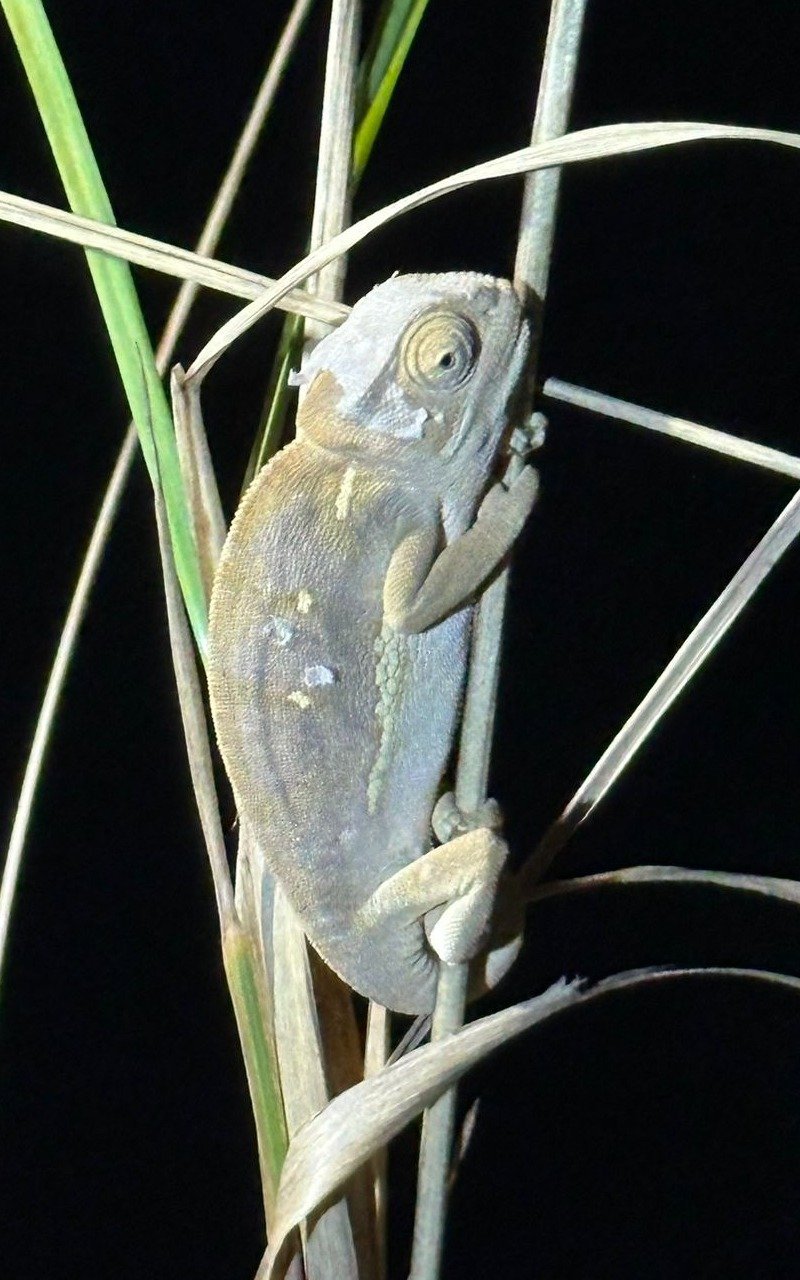
The day the librarian’s friend came in with the beautiful curly tailed beast perched on a twig, in a bird cage. They had found it in a container full of fruit from halfway across the world. She needed a book on how to keep the chameleon alive.
“Oh look! A cha-me-lee-on!” Small said, his eyes sparkling with wonder.
“A what?” the librarian asked.
“A cha-me-lee-on. That one looks like the panther cha-me-lee-on from Madagascar.”
“Why are you saying it like that?”
“Like what?”
“Cha-me-lee-on, that’s not how it’s pronounced, it’s a chameleon. Where did you learn to say it like that?”
“I read about them in—” Small smacked his hands over his mouth like he could force the words back into his mouth. His eyes went big and scared.
The two dangerous women looked at Small with amused head tilts.
“You read it, you say?” the librarian prodded again.
“No, no, no, no, no. I heard it, I meant to say. I heard it. On the T.V. The other day. The woman with the animals. Dianne Attenborough, she went, to the place. To Madagascar. She saw those things.” Small pointed at the chameleon. “She said it, and I heard it, on the T.V.”
The librarian’s friend raised her eyebrow. “If you heard it on the T.V. you would know it was pronounced chameleon and not cha-me-lee-on.”
“I had an ear infection last year?” Small asked hopefully.
The librarian looked at Small, and then at her friend. She looked at them in a way that you could see a lot of cogs were turning; she was making many decisions in a short space of time. Small was eyeing them like a mouse eyeing something that could be a ferret. The ball of adrenaline in his stomach balancing between fight, flight or freeze.
The women communicated without talking out loud. Then the librarian looked at the door. It was still early and there were only three other women in the library, a mother reading to her small daughter and a student, writing fast, a whole stack of books next to her. No one had heard the exchange with Small.
The librarian pursed her lips and said, “Come with me.” She motioned to Small and her friend to follow her to the office. If there was a time to run, it was now, but Small simply couldn’t run. Even in his few short years of life, the idea that you could say no to woman was already scared out of him. He followed the women to the office.
The librarian locked the door behind them.
Small’s heart was beating in his ears. He was so scared he felt faint. He should have made a run for it. He should have run and run and run. As far away as his legs could carry him. He should have joined the circus, joined a band, joined anyone that would have him. Anywhere but here. He had no idea what his punishment was going to be but he was on the verge of wetting himself.
As if she read his mind the librarian turned and said, “Don’t be afraid.”
That didn’t help at all. Small started crying silently.
“Stop it.” The librarian shook Small lightly. “Stop it, I’m not going to hurt you.”
“You’re, hurting, me, right, now,” Small sobbed.
The librarian stopped shaking Small and gave him a quick hug. “I’m so sorry, I didn’t mean to scare you. I just didn’t want us to get caught.”
“But you’re not smoking?” Small thought of the cigarettes Grumpa snuck behind the house when he thought no one was looking.
The librarian laughed. “No, I would never smoke in a library. I was scared of getting caught talking to you about reading.”
Small’s eyes went big again.
“It’s fine, it’s okay, we’re not going to tell anyone,” the librarian’s friend said.
Small’s heart skipped a beat.
“We’re going to help you. We’re part of an, organisation. We don’t think boys should be kept from learning to read and write. We think things should be more, equal.”
Small blinked at the two women.
“We thought you were sneaking the books home to your grandfather; a man of his age should be able to read. We were hoping to gain his trust through you and Farra and recruit him. We had no idea he had already taught you how to read.”
Small was still too scared to answer. What if this was all an elaborate ruse to get him to come clean about reading and about Grumpa?
“We’re not trying to trick you Small. Think about it. We’re putting our own lives at risk here. You are as dangerous to us as we are to you right now.”
Small tried to speak around the galloping heart in his throat. “Why would women help us?”
The librarian looked like she was about to start crying, “Because we’re not all like that, Small, we don’t all think you belong in the house working for free or working for next to nothing in menial jobs. We believe men can be just as clever as women; there’s so much history and literature to back it up. Have you ever heard of a man called William Shakespeare?”
Small shook his head.
“He was this amazing poet and writer, and they just wrote him out of history. They still use his stories, but they just don’t acknowledge him as the author, either saying it’s by an unknown author or crediting his wife, Anne Hathaway, with his work.”
“Oh, I’ve heard about her,” Small said, looking at the women brightly.
“Of course you have,” the librarian said, giving Small’s chin a little squeeze.
Small felt the change, in the air inside him; he knew he was in it now, in his own amazing story. He was the heroine in this adventure, the brave youth trusted with great secrets by an exclusive underground society. Did they have code words and secret knocks? Would he find himself on unexpected voyages?
Small straightened his thin frame and raised his chin. “What can I do to help?” he asked.
That is the end of A Man’s Work is Never Done. Thanks for reading.
Get the app for the rest of Ester Spiller's writing, and everything else on Novellea.
Open in Novellea