
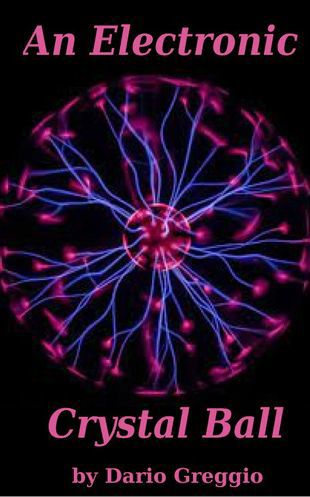
An electronic Crystal Ball (La sfera di bit)
While scanning his own brain in search of old memories, photograph, voices... Alfredo discovers something astonishing
La sfera di bit
Alfredo aveva lavorato sui computer per moltissimi anni, dapprima come hobbista e poi come esperto. Come tutti, aveva sempre inseguito, nella sua vita, qualche progetto molto grande, di quei grandi sogni che in genere non si riescono a realizzare: Alfredo arrivava sempre a un certo punto della strada e poi la abbandonava, catturato da qualcos'altro di più interessante. A riordinare questo stile non troppo coerente lo aiutava una capacità di coordinazione e sintesi non comune: grazie a questa dote, progetti abbandonati da anni riprendevano facilmente vita sulla base di una nuova idea, per essere poi nuovamente ibernati. Non usava esattamente il metodo scientifico.
Tuttavia ogni tanto qualcosa di bello Alfredo riusciva a concluderla. Erano passati ormai 14 anni dalla prima formulazione di quella idea, e un passo dopo l'altro ora Alfredo stava vedendo la realizzazione di un sogno.
Era cominciato con un sogno ad occhi aperti, di quelli che si fanno da adolescenti quando la ragazza è lontana e si è tristi e presi dalla nostalgia dei momenti felici: aveva vissuto una vacanza di una settimana in un paese lontano da casa e aveva preso una grande "botta" per una ragazzina carina. Poi si erano dovuti lasciare e per diversi motivi entrambi avevano capito che non si sarebbero mai potuti rimettere insieme. Non aveva che pochi ricordi di quella settimana, non aveva nessuna fotografia della sua ragazza: però sentiva dentro di sé la sua voce, vedeva il suo viso ovunque e ricordava esattamente le sensazioni provate insieme a lei. Allora pensò che un giorno qualcuno sarebbe stato capace di leggere nella sua mente ed estrarre delle foto di lui e della sua Stefania, di mettere su un nastro le parole dei loro discorsi. Erano i tempi del Commodore 64, e già allora Alfredo passò giorni e notti a sperimentare, a leggere, a documentarsi sul cervello e sulla conversione dei segnali in digitale.
Col passare degli anni, il suo hobby studentesco era diventato il suo lavoro e la sua passione. I mezzi erano aumentati e le conoscenze pure: ogni tanto la vecchia idea aveva rifatto capolino e Alfredo vi aveva dedicato un po' del suo tempo. Ovviamente non c'era più la necessità di avere una fotografia di Stefania, perché poi i due si erano rivisti tante volte e le vite di entrambi erano felicemente sistemate dal punto di vista sentimentale. Solo una volta, Stefania gli aveva detto che se un giorno lui avesse costruito la macchina del tempo, lei avrebbe sicuramente voluto rivivere quella settimana di tanto tempo prima.
Quella sera, Alfredo era come al solito nel suo laboratorio privato circondato da due personal computer, un oscilloscopio digitale interfacciato con un terzo computer parzialmente autocostruito e diversi altri strumenti, e stava tenendo in mano un piccolo casco. Il casco, a dire il vero, era sventrato e sulla sua superficie spuntavano dei fili che andavano a collegarsi a una scheda del terzo computer, naturalmente aperto. Nelle ultime 48 ore aveva visto avvicinarsi il risultato finale, perché finalmente l'interpretazione dei segnali provenienti da diversi punti del suo cranio cominciava a essere meno nebulosa del solito. Ormai l'hardware era a posto e stava lavorando sul software di interpretazione: inutile dire che più la soluzione sembrava vicina, più Alfredo si immergeva nel problema e si concentrava al punto di non mangiare né dormire per parecchio tempo.
Dopo qualche ora, sul monitor apparve un'immagine sensata. L'algoritmo di decodifica non era ancora perfetto, ma Alfredo vi riconobbe chiaramente un'immagine familiare: il suo volto mentre era intento a radersi la barba, nel bagno della casa in cui abitava da circa cinque anni. Perse ancora un po' di tempo per cercare di migliorare la qualità dell'immagine e per cercare di estrarne i colori esatti, però quello che era importante era che il sistema funzionasse, che l'idea fosse divenuta realtà.
Così, nei giorni successivi Alfredo cercò di capire quale fosse il principio che regolava l'uscita delle immagini da quella porta che lui aveva trovato nel suo cervello. In primo luogo si rese necessario aumentare la frequenza di acqusizione delle immagini, perché spesso il sistema rimaneva indietro o sovrapponeva i dati di più immagini. Poi, facendo appello ai classici metodi di rilassamento e concentrazione della mente, Alfredo scoprì che era possibile sintonizzarsi sui ricordi voluti per ottenerne l'uscita in forma digitale: finalmente, così, ottenne le foto che per tanti anni aveva inseguito.
Dopo altro tempo e altre ottimizzazioni, Alfredo scoprì che spesso vedeva comparire sul monitor delle immagini che a lui, consciamente, non erano note. In un primo tempo pensò si trattasse di sogni, fino a quando, tuttavia, non accadde un fatto piuttosto spettacolare. In un momento di particolare lucidità mentale, vide che sul monitor si materializzava l'immagine di quello che stava intorno a lui, del suo laboratorio e dei suoi computer. Non solo, ma dopo avervi prestato più attenzione scoprì che a volte le immagini sullo schermo erano immagini di cose che andavano poi accadendo dopo pochi istanti.
L'effetto era notevole: se la concentrazione era sufficiente si poteva vedere distintamente qualche istantanea di fatti che succedevano poi regolarmente dopo qualche secondo, come un cacciavite che cadeva sul pavimento e Alfredo stesso che si buttava per terra alla sua ricerca. Se invece la concentrazione era minore, il monitor mostrava immagini sfumate, quasi come in un effetto larsen visivo del tipo di quello che si verifica quando una telecamera inquadra il monitor nel quale viene visualizzato il suo output: era il futuro che sfumava nel presente alla velocità di scansione della scheda e del software da lui progettato.
Alfredo fu molto entusiasta di aver scoperto la sfera di cristallo elettronica: il suo cervello poteva vedere nel futuro e riportare alcune immagini su un monitor. Alfredo pensò anche che altre persone avrebbero potuto ottenere risultati migliori del suo nel guardare nel futuro, così si preparò a fare altri esperimenti con dei suoi amici, prima di divulgare l'idea.
Effettivamente ebbe una conferma di questa tesi, perché a seconda di chi veniva sottoposto a questo "esame" i risultati erano diversi. Ci furono persone che riuscirono a spingersi, senza particolare concentrazione, fino al giorno successivo, e i fatti che apparivano sul monitor diventavano a volte addirittura degli articoli di giornale.
Qualcosa però non quadrava negli studi e nelle analisi di quei giorni. Alfredo non lo capì subito, ma dopo qualche tempo notò un'anomalia. Gli era capitato di vedere apparire, uscite dalla sua mente, immagini relative allo stesso momento e allo stesso luogo nel futuro, diverse tra loro; invece, le immagini provenienti da altre persone, se si riferivano ad un dato momento del futuro erano sempre costanti anche se catturate in momenti successivi. Approfondendo gli esperimenti, Alfredo notò che questo discorso era valido anche per il passato: in un primo momento non se n'era accorto perché i ricordi, così come erano stati vissuti, superavano qualunque altra idea, ma con la calma e la concentrazione anche quelle situazioni avevano assunto sfaccettature molteplici. E nemmeno questo capitava mai agli altri.
La questione rimase inspiegabile. Sulle prime egli pensò di stare semplicemente impazzendo o di aver danneggiato in qualche modo il suo cervello: poi però incominciò a credere in una teoria assai azzardata, che vedeva se stesso come creatore di tutti gli scenari di vita possibili. Come se lui stesse sognando di vivere in una realtà, ricca di personaggi e ambientazioni, molto ben simulata dal suo cervello. O da qualcos'altro. In questa maniera si spiegava perché egli aveva visto nel futuro, e perché aveva creduto di vedere altre persone esaminare a loro volta il loro futuro. E invece era tutta un'illusione: era la sua mente a generare la sua realtà, compresa quindi di tutti gli altri personaggi; una realtà a molte dimensioni, senza spazio né tempo, dotata di passato, presente e futuro e di infiniti scenari. Una realtà che fino a poche settimane prima il suo cervello gli passava con il contagocce, sezionandola lungo i due assi del "qui" e dell'"in questo momento", facendogli credere di esistere, di vivere.
Alfredo era fondamentalmente un ricercatore. Il valore degli esperimenti aveva per lui importanza assoluta, anche se in questo caso egli non poteva essere sicuro che anche i suoi esperimenti non fossero un "sogno" come tutto il resto. Ma questa scoperta gli aveva comunque mostrato una possibile, affascinante e irresistibile spiegazione dell'essenza della realtà; decise quindi di provare un passo più in là. Voleva capire entro "che cosa" lui stava sognando, qual'era la dimensione che conteneva la realtà come lui l'aveva sempre vista prima di quegli esperimenti e "chi" aveva ideato quel sofisticato meccanismo.
Due giorni furono sufficienti per annotare a fini scientifici, in un grosso file .DOC, gli studi e i risultati ottenuti per mezzo della sua macchina: dopodiché Alfredo si tolse la vita.
Dario Greggio
Novembre 1991
An Electronic Crystal Ball
Alfredo had been working with computers for many years, first as a hobbyist and then as an expert. Like everyone else, in his life he had always pursued some very big project, one of those big dreams that usually fail to come true: Alfredo was often getting to a certain point along the road and then abandoned it, captured by something else more interesting. An uncommon capacity for coordination and synthesis used to help him to reorder this not-too-coherent style: thanks to this gift, projects abandoned for years easily came back to life on the basis of a new idea, to then be put into hibernation again. He wasn't quite using the scientific method.
However, every now and then Alfredo did manage to build something beautiful. It had now been 14 years since the first formulation of that idea, and step after step Alfredo was now seeing the realization of a dream.
It had just begun with a daydream, the kind you have as an adolescent when your girlfriend is far away and you're sad and caught up in nostalgia for happy moments: he had lived a week's holiday in a country far from home and had taken a big crush for a cute little girl. Then they had to split up and for various reasons they both had understood that they would never be able to get back together. He had only a few memories of that week, he had no photograph of her girlfriend: but he could hear her voice inside him, saw her face everywhere and he remembered exactly the sensations he felt together with her. So he thought that one day someone would be able to read his mind and extract photos of him and his Stefania, to put the words from their chats on a tape. Those were the times of Commodore 64, and even then Alfredo spent days and nights experimenting, reading, documenting himself on the brain and on conversion of signals into digital.
Over the years, his student hobby became his job and passion. His means had increased and the acquaintances as well: every now and then that old idea had reappeared and Alfredo had dedicated some of his time to it. Obviously there was no longer the need to have a photograph of Stefania, because then the two had met again many times and both of their lives were happily settled from a sentimental point of view. Only once, Stefania had told him that if one day he could build a time machine, she would surely want to live again that week from a long time ago.
That evening, Alfredo was as usual in his private laboratory surrounded by two personal computers, a digital oscilloscope interfaced with a partially self-built third computer and several other instruments, and he was holding a small helmet in his hand. The helmet, to tell the truth, was gutted and wires were sticking out on its surface that were going to connect to a card of the third computer, obviously open. In the last 48 hours he had seen the final result approaching, because at last the interpretation of the signals coming from different points of his skull was beginning to be less nebulous than usual. By now, hardware was in place and he was working on the decoding software: needless to say that the closer the solution seemed, the more Alfredo immersed himself in the problem and concentrated to the point of not eating or sleeping for a long time.
After a few hours, a meaningful image appeared on the monitor. The decoding algorithm wasn't perfect yet, but Alfredo clearly recognized a familiar image: his face while he was busy shaving his beard, in the bathroom of the house where he had lived for about five years. He spent some more time trying to improve the quality of the image and trying to extract the exact colors, but the most important thing was that his system was indeed working, that the idea had become a reality.
Thus, in the following days Alfredo tried to understand what was the principle regulating the output of the images from that door that he had found in his brain. In the first place, it was necessary to increase the sampling frequency for images, because the system often lagged behind or overlapped data of several frames. Then, by appealing to classic methods of relaxation and concentration of the mind, Alfredo discovered that it was possible to tune in to the desired memories to obtain their release in digital form: finally, thus, he obtained the photos that he had been chasing for so many years.
After more time and other optimizations, Alfredo discovered that he often saw images appearing on the monitor, that were not known to him, consciously. At first he thought they were kind of dreams, until, however, something rather spectacular happened. In a moment of particular mental lucidity, he saw that the image of what was around him, of his laboratory and of his computers, materialized on the monitor. Not only that, but after paying more attention he discovered that sometimes the patterns on the screen were images of things that were then going to happen after a few moments.
The effect was remarkable: if the concentration was sufficient, one could distinctly see some snapshots of events which then happened regularly after a few seconds, such as a screwdriver falling on the floor and Alfredo throwing himself on the ground in search of him. If, on the other hand, the concentration was lower, the monitor showed blurred images, almost like in a visual larsen-effect, the type that occurs when a video camera points to the monitor where its own output is displayed: it was the future fading into present at the speed of sampling card and software he had designed.
Alfredo was very enthusiastic about having discovered the electronic crystal ball: his brain could see into the future and display some images on a monitor. Alfredo also thought that other people might have outperformed him in looking into the future, so he prepared to do more experiments with his friends before divulging the idea.
He actually had confirmation of this thesis, because the results were different depending on who was subjected to this "examination". There were people who managed to push themselves, without particular concentration, into the next day, and facts showing up on the monitor sometimes even became newspaper articles.
Something, however, did not add up in the studies and analysis of those days. Alfredo didn't understand it right away, but after some time he noticed an anomaly. He had happened to see images appearing from his mind relating to the same moment and the same place in the future, different from each other; on the other hand, the images coming from other people, if referred to a given moment in the future were always constant even if they were captured in successive moments. Deepening the experiments, Alfredo noticed that this statement was also valid for the past: at first he hadn't noticed it because memories, as they had been experienced, surpassed any other idea, but with added calm and concentration even those situations had taken on multiple facets. Nor did this ever happen to others.
The question remained unexplained. At first he thought he was simply going crazy or that he had damaged his brain in some way, but then he began to believe in a very far-fetched theory that saw himself as the creator of all possible life scenarios. As if he were dreaming of living in a reality, rich in characters and settings, quite well simulated by his brain. Or by something else. This explained why he had seen into the future, and why he had believed he was seeing other people looking into their own futures as well. And instead it was all an illusion: it was his mind that generated his reality, therefore including all other characters; a reality with many dimensions, with no space or time, endowed with past, present and future and with infinite scenarios. A reality that until a few weeks earlier his brain was feeding him as with a dropper, dissecting it along the two axes of "here" and "right now", making him believe that he existed, that he actually living.
Alfredo was fundamentally a researcher. The value of the experiments was of absolute importance to him, even if in this case he couldn't be sure that his experiments too were not a "dream" like everything else. But this discovery had nevertheless shown him a possible, fascinating and compelling explanation of the essence of reality; he therefore decided to try one step further. He wanted to understand within "what" he was dreaming, what was the dimension that contained reality as he had always seen it before those experiments and "who" had devised that sophisticated mechanism.
Two days were enough to annotate for scientific purposes, in a large .DOC file, studies and results obtained by means of his machine: after which Alfredo took his own life.
Dario Greggio
November 1991
(English version: august 2023)
That is the end of An electronic Crystal Ball (La sfera di bit). Thanks for reading.
Get the app for the rest of Dario Greggio's writing, and everything else on Novellea.
Open in Novellea