
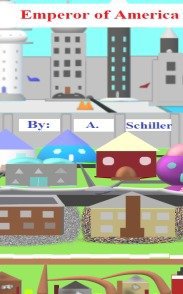
Emperor of America by A. Schiller

A future America likely doesn't want to see. Cities are now divided by rich, better off, worker class, and poor though modern and 1800s style housing. The great emperor rules over all.
The year was 2065, though for Elara and Carl, it might as well have been the 19th century. The morning sun--a rare guest through the grimy window of their cramped tenement—cast long shadows on the slowly decaying flooring. Elara coughed, as her throat was raw from the damp air, as she stirred the farm-raised oatmeal over a sputtering wood fire. Carl was already dressed in his coarse, homespun tunic and trousers. He adjusted the ill-fitting leather straps of his work sack.
"Another day, another step backwards," Elara murmured, more to herself than to him. She clutched the iron pot with her chapped hands. The only electricity in their "zone" was for the mandatory public address system that perpetually spewed the Emperor’s glorious pronouncements, a few small street lights for the passing traffic of the well-to do, and the underground cables that fed electricity only to Rexius City, one of many renamed after the emperor.
Carl grunted as he stared at the spot where a holographic family portrait used to hang—before the last ‘asset reallocation’ by the Emperor's Regulatory Forces. “Don’t let Thorne hear you. You know where they put the ‘negative thinkers’ now.”
Regulator Thorne’s name was a strangling force from the mouth that proclaimed it. He was the farming town’s enforcer of Rex Tudor’s "Great American Rejuvenation." The takeover had happened like a lightning strike. It formed from a slow-motion coup that culminated in the swift reversal of human rights, right from the day he was placed in power. One day, the news channels were reporting the shock by the people over this swift tragedy, and the next, they were forced into the "Truth-Net" while many firings ensued. They began broadcasting only the emperor's voice or what he approved of. The "election" had been a formality—a grand spectacle of misled people who thought he would fix things--swiftly followed by decrees that destroyed rights like a banshee’s scream in the people’s ears.
"I still can’t make myself believe it," Elara whispered, making her voice barely audible. "One moment, we had all... all the technology, supermarkets, department and clothing stores, vehicles, the internet, and freedom—the things that made America stand apart. The next one, we're thrown out of our modern homes and stuck here, hauling water from the public pump and praying for a good harvest."
Carl removed a lock of hair from his eyes. "Tudor promised to 'Make America Dominant Again,' remember? He made it sound like we’d gotten soft, coddled by comfort. He didn’t want anyone who he felt didn’t deserve to get the good things in life to get them. Guess this is what 'dominant' looks like for us, as we didn’t make enough money to make the cut." He gestured slowly towards the window that overlooked rows of identical, decrepit dwellings.
The contrast of their homes to the city was obvious and brutal. Just beyond the designated "Labor Zones"—which were ordered in layers by industry and importance of work, lay the 1800s type buildings of the workers, which were better but not by far from theirs. Then the more modern, lesser homes of the managerial staff and small business owners were revealed, mostly as almost a barrier between the poorer classes, so that any homeless or undesirables could not get through. Last were the gleaming skyscrapers of the Rexius City, where the upper echelons lived in climate-controlled comfort, their hover-cars gliding silently along elevated thoroughfares. Businesspeople in crisp, modern suits and dresses bustled along, their data-pads glowing, their faces unmarred by the grime and toil that marked Elara and Carl. Others, who inherited their gains, sat in their palace-like structures, rarely going out while they ordered their servants to do all the shopping. Once in a while, a sleek, self-driving carriage—made from one type of precious metal or another and polished to a mirror-like sheen--would pass by the edge of their district, causing awe and disdain from their fellow farmers. They carried an "Elite Citizen" in finely tailored, technologically enhanced attire--a stark reminder of the two distinct Americas.
Emperor Rex Tudor himself was always present, at least his public announcements were. His booming voice was amplified and distorted by the broadcasts from the omnipresent "Rex-O-Phone" towers. The speeches for them were like a face slap for being poor. "My loyal citizens, hear me!" his voice thundered that very morning, making the walls of their home tremble. "We are building a glorious empire, a truly tremendous empire! It’s a beautiful empire, more beautiful than any other empire! It’s the greatest empire the world has ever seen! My critics—and there are very few of them now, as you well know—they say I'm too strong. Too direct and overbearing. I say they’re weak and cry too many tears for the lesser ones! They want to drag us back to the days of indecision and failure due to too much mercy! But we are moving forward towards a grand and glorious future! My way is the only way! There is no other way to dominance!"
The Emperor’s graven image, a larger-than-life projection, flashed onto the large public screens—stationed so that no one could miss them. He was a man of great bulk and held imposing stance, with a meticulously coiffed golden hair-do. He held a permanent sneer of self-satisfaction on his lips, with eyes that seemed to constantly scan in all directions for any type of disloyalty—great or small. His opulent, gold-embroidered king’s attire and shining crown was a far cry from the utilitarian grey worn by his regulatory staff, let alone the 1800s worker outfits and rags of the lower classes. He reveled in grandiosity of his self-centered ways and his ego was humungous. He had his own perceived genius and dismissed any opposing viewpoint as "fake news" or "treasonous lies." He was in the process building colossal monuments to himself —Rex Statues and "Tudor Towers" that pierced the clouds in every major city—funded by the forced labor of the conscripted homeless and so-called “illegals”.
Carl soon left for the large communal barn, his muscles already aching in anticipation of the day's work. They received a meager amount of the farm animal’s hard produced goods and few dollars in labor to help keep them alive to slave another day. Elara went to wait her turn at the communal pump, joining a muted procession of women, their faces etched with the same weariness and resignation at this new, old America. They avoided eye contact in fear and kept their whispers silent, for even a moment of shared discontent could be construed as treason.
Later that day, a shadow fell over Elara while she was tending the small, allotted vegetable patch outside their dwelling. It happened to be ‘Old Man Jedidiah’, as was his given nickname. His back was bent like a question mark and his eyes, though rheumy, still held a spark of defiance as he remembered the freedoms past. He used to be a former history professor, and now was scavenging and scrounging to get by.
"Mornin’, Elara," he rasped, his voice a dry wheeze. "I heard the Emperor's latest 'brilliance' this morning. Yet another “great” decree making it mandatory to cheer louder during his speeches. He says our 'spirit index' is too tired out."
Elara offered a weak smile as she spoke quietly. "Yes, just what we needed, more cheering."
Jedidiah leaned forward on his gnarled, pine walking stick. "You know, before he came, we used to have debates. We would argue and even protest. He called it a 'weakness’ and lack of solidarity. He said it made us an unorganized laughing stock. Now, we just nod and repeat as we have nothing else we can do." He shook his head slowly in exasperation. "He dismantled everything free created by forerunners. The courts, the free press, the government, the libraries, the school and the rest were realigned with his own 'truth.' And most of people, fell for it, the others get banished or worse. People wanted to believe his promises of 'unprecedented prosperity' and 'absolute security'. Look around us, child. Do we share this prosperity or security? " He panned his arm wide, in a swish against the grim landscape.
A sudden, sharp voice cut through the air like a knife. "Jedidiah! Keep your opinions to yourself, you crazy old man! You know the rules!" Regulator Thorne—a heavily muscled,and imposing man in his tactical uniform—stood menacingly at the edge of the path while his energy baton hummed softly at his hip. His eyes—cold and calculating, swept over Elara—lingering and leering for a moment too long. She recoiled at the look of violence in his eyes.
Jedidiah merely sighed and straightened his back as much as his age would allow. "I was just sharing some wisdom with the young ones, Regulator. There’s no harm in remembering where we came from."
Thorne scowled at his remark. "Where you came from is highly irrelevant. Where you might be headed soon is what matters. And you will be headed toward is heavier labor if you don't keep that tongue of yours in check. Move along, old man or else."
Jedidiah shuffled away in silence with his head bowed submissively, the spark in his eyes doused with a healthy dose of icy behavior. Elara felt a chill of terror that was deeper than the morning air.
That evening, Carl returned from the barn, thoroughly exhausted and his hands blistered and raw. He recounted how a fellow worker, a young man named Finn, had accidentally dropped a pail of milk, causing a minor delay. Regulator Thorne noticed the action while inspecting the site. Finn had been publicly "re-educated" with a slap of the energy baton causing his screams to echo through the surrounding forest. It was a swift and painful lesson, reinforcing the Emperor's decree: "Efficiency and loyalty are paramount. Failure is not an option for any loyal American."
Elara knelt down, washing Carl's hands with water heated over the small fire. The firelight dancing upon his face highlighted his exhaustion along with a growing, quiet despair. "How much longer, Carl?" she whispered, her voice thick with unshed tears. "How much more misery can we endure?"
Carl just stared into the flickering flames. "He said that he’d bring back the 'good old days'," he murmured with an ironic twist to his lips. "I guess he just meant for himself and those who have the spending power. For us, it’s a living monument to his 'greatness' and lack of empathy. A monument built on our slave labor, our sweat, and our silence."
On the booming overhead and very scratchy ‘Rex-Speak’ broadcast, the Emperor's voice boomed out once more, full of self-congratulation. "My vision is clear and just! My leadership is unmatched and unstoppable! We are forging a new destiny, a glorious and beautiful destiny—where America stands alone, supreme, and unrivaled! All dissenters are merely shadows on my glorious future! They are insignificant, pathetic losers! We are building the future, the greatest future, it’s not a lie! And only I can make it possible! I alone have the power!"
Elara clutched Carl's hand, his calloused skin rubbing against hers. They exchanged a look—a shared understanding of their powerlessness—their disbelief hardening into a grim acceptance of their fate. The stars outside were hidden by the light pollution from the nearby city, and the future seemed equally obstructed, by dark and unrelenting force. The Emperor's triumphant rambling filled the night, a horrifying lullaby for a nation trapped in a nightmare preying upon their existence. The Emperor’s now forced regression to a dim future where only the rich and the powerful were permitted to advance.
That is the end of Emperor of America by A. Schiller. Thanks for reading.
Get the app for the rest of A. Schiller's writing, and everything else on Novellea.
Open in Novellea