
The Shaming Stone
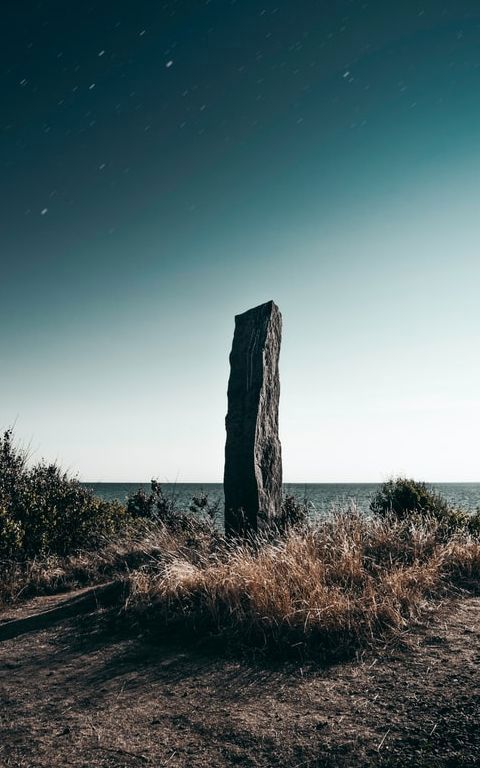
An early Icelandic settler succumbs to bloody vengeance in his pursuit of honour. (Photo by Steven Erixon on Unsplash)
On a nearby hill there is a nīðingr, a shaming stone, which bears my father’s name. For five years it has gone unanswered, and thus made true. But today, I am a man. Today, I answer this insult with blood.
Bjorn Heggsson dies today.
The sea laps grey tongues on the shore, birds screaming for blood as they dive and excrete and gather. I watch them, salty wind blowing back my hair, stinging at my eyes. My father’s homestead is behind me, on a cliff that overlooks the eastern sea. It is made of stone and turf, and smoke carries from its middle, like a whale puffing fire through its blowhole. A fishing boat is moored in dirty sand, strewn with seaweed-laden nets and scabby oars.
I strain my eyes, and try to see my father’s homeland. Somewhere over the horizon is Norway, ruled by its tyrant king.
‘Einar.’
My mother joins me on the cliff edge. I see worry in her eyes. She has gotten used to the way we are avoided on the roads, treated like outlaws. But I cannot.
‘Don’t go to Bjorn Heggsson’s homestead today,’ she says. Her wool gown flaps in the wind. Her face is lined with wrinkles that have not been earned by years. ‘Stay here with us. Your father intends to fish. He needs your help.’
‘I will not be long,’ I reply. ‘There will be time for fishing.’
She places a hand on my shoulder. ‘This challenge is not meant for you, Einar.’
I nod. ‘It is meant for my father. But he’s had five years to answer.’
‘Don’t you wonder why he hasn’t?’
I frown. ‘I do, mother. I wonder why he brings dishonour on our family.’
‘There are worse things than dishonour,’ she says.
I shake my head. ‘No.’
She squeezes my shoulder. ‘What if you die?’ she asks softly. ‘What will we do then?’
‘You will have honour,’ I say. ‘Enough, mother.’
The journey to Bjorn Heggsson’s homestead isn’t far. I follow the road through our farm, where our cows graze at the moss and grass. They are weak and feeble. No one will sell to us, no one will buy from us. We scrape by, ostracised and shamed. Even now, to look on these sickly creatures turns my cheeks a burning red.
It is not long until I see the shaming stone. Bjorn Heggsson wanted us to see it, so he raised it on the hill just north of our homestead. I feel anger stir in my veins. Thor’s thunder crackles through adrenaline spurts.
I cross the boundary stones, and seek Bjorn Heggsson out. I scream his name, scaring his slaves, distressing his cows. My fury is answered by the sky: icy rain pelts down, Valkyrie arrows that shiver down my spine. The wind whips up; there shall be a storm, soon, a storm I have brought. I grip my axe.
The gods are with me.
‘Einar Olafsson!’ Bjorn yells above the wind, emerging from his longhouse. His scraggly beard turns grey at the edges, but he’s still capable. His hands are strong, and he is no fool: there’s an axe in his white-knuckled fists. ‘Where is your father, Einar?’ he calls. ‘Where is that womanly creature you call Olaf?’
I stride towards him. He swings his axe towards me, but finds only air as I dance back. His swing is too wide; he is unbalanced. When I bring my axe down upon his shoulder, the head bites deep into his flesh, and drinks its fill of his blood. He falls down to his knees, crying out in pain, and my second strike is a deathblow that cracks his skull wide open.
‘No!’ Mjoll, Bjorn’s widow, screams. She paws at Bjorn’s corpse. I leave. My business with the man is done; now, I bring down that shaming stone for good.
It is dug into the earth, taller than me, and no mere push will budge it. The runic letters that proclaim my father a thief are pitted with salt and rain. The wind drives harder still, the lashing hail trembling to the distant thunder of a sea-born storm. I tell Bjorn’s slaves to help me and they obey, afraid of the blood that still drips from my axe. Our heels slip in the moss and the mud, and it is a great exertion, but finally the stone topples down. It shakes the foundations of the hill itself.
I return to my father’s homestead as the storm rolls in from the sea. There’ll be no fishing today, not with these winds that would smash our little boat back against the rocks. I drive our cattle to the outbuilding and tie them inside. Their braying is like a choir against the crash of lightning and the drums of thunder. I know, in my heart, that this storm is my doing.
‘Einar, my son.’
My father, Olaf, stands on the threshold of the outbuilding. His loose tunic is plastered against his torso; his greying hair is pressed against his wrinkled face, entangled with his beard.
He embraces me. ‘There’s blood on your axe,’ he says.
‘It is the blood of Bjorn Heggsson,’ I tell him. ‘Your honour is restored.’
A frown wrinkles his brow. ‘Oh, son,’ he says, and I don’t know what he means.
We watch the storm assault the coast, battering the turf roof of our longhouse. The wind is bitter and fierce, grabbing at the cliffs and coming away with handfuls of loose rock. Waves cascade against the rocky shore, grasping at the pebbles and the dirt, dragging them and drowning them in the grey sea. We do not speak; there is no need. We watch the storm that celebrates my vengeance, and wait for it to abate.
***
We buy a cow from Thorkel Ulfsson for three marks of silver, one that is still young and will produce milk. We slaughter our sickly livestock and salt the meat, storing it in the outhouse for the colder months. The storm has driven fish near the shore, and we bring in great hauls of brown scaled cod. The labour is hard and honest, and we sell the excess fish to Thorkel for another mark. If the seas remain plentiful, we will sell more fish to Thorkel until we can buy a bull from his herd.
Thorkel spits in his hand and shakes mine. ‘I have a young bull for you,’ he promises. ‘It’ll be good for breeding by next summer.’
He addresses me instead of my father. I am not sure what to make of that.
My father does not speak of Bjorn Heggsson; he does not speak much at all. The fishing is hard for his aching arms, his muscles straining beneath the weight of the net and the years that have greyed his hair. The ends of his beard have now begun to turn white; the crowfeet about his eyes deepen.
I am not sure what to make of that, either.
‘He’s an old man, Einar,’ my mother reminds me. ‘He’s worked hard for his family. Don’t forget that.’
I don’t know why she thinks I’ll forget.
Two months after the killing of Bjorn Heggsson, we are visited by his eldest son, Frodi. He looks like his father, wide shouldered with a bushy, red beard and a wild mane of hair. He carries an axe at his waist, but he doesn’t come to kill me.
‘Einar,’ he says, his voice level. ‘You killed my father over a matter of honour, but you did not kill him in hólmganga. The killing is unlawful.’
‘He swung his axe first,’ I say.
‘I demand what is owed to me,’ Frodi says. ‘A weregild of four marks for the unlawful killing of a free man.’
‘He swung his axe first,’ I repeat. ‘There’ll be no weregild to pay. Curse you and your demands, Frodi.’
‘There was no hólmganga,’ he says again.
‘I don’t care,’ I say. ‘If there was to be a duel, he should not have swung his axe.’
‘You advanced upon him.’
‘He swung his axe first.’
Frodi clenches his fists. ‘You will not pay? You choose to insult us?’
‘I repay the insult your father gave mine. Honour is settled.’
‘Honour is not settled!’ he cries. ‘I offer you a fair price for my father’s death. I offer you a fair price so that our families might have honourable peace.’
I’m about to respond before I feel my mother’s hand on my shoulder. ‘Einar,’ she says, quietly, so only I can hear. ‘Think on your words. Frodi speaks true. Four marks is not so high a price to pay for peace.’
I stare at Frodi. He is a strong man, and he has come to me honourably. But he must answer for the shame his father laid upon us. Five long years of shunning and scraping by, despised by our neighbours and our community. Treated like outcasts and humiliated, barely better than slaves. I think of the storm that drove the fish to the coast, the storm that came when I took vengeance and killed Bjorn Heggson. The fish that may yet buy us a young bull from Thorkel Ulfsson, that may yet birth us new calves and a stable future. Bjorn is dead, and now his son comes to steal that future from us. No, I will not pay this weregild.
‘Bjorn swung his axe first,’ I say. ‘I refuse to pay your weregild, Frodi.’
Frodi’s face falls, settling into a fatalistic grimace. ‘So be it, Einar Olafsson,’ he says. ‘But know that this insult will not stand. You will hear from me again.’
He leaves the homestead, and I turn to my mother. Her face is grave, but she says nothing.
‘If I pay the weregild, we cannot afford Thorkel’s bull,’ I say.
‘If you are dead, with what labour we will make use of the bull?’ she asks. ‘And what of honour?’
I shake my head. ‘You don’t care about honour, mother,’ I say, and I am surprised by the ice in my voice. ‘You let my father be a coward for five years –’
She slaps me about the face. ‘How dare you speak of your father that way,’ she says, matching the coldness of my tongue. She sees my sneer and goes to hit me again, but I grab her wrist before her hand finds my cheek.
‘First his son,’ I say, ‘and now his wife. When will my father fight his own battles?’
Her eyes narrow. ‘You are a fool, Einar Olafsson,’ she says.
I let go of her arm and turn away.
I’m no fool.
***
Frodi Bjornsson comes for me at the turn of the seasons, when the bitter chill of winter bites across the barren land, and the seas are choppy and wild. He’s not alone: his cousins Jorund and Surt are with him, wielding braziers whose fires dance in the darkness, dragon wings over the horizon. They throw their braziers against our longhouse. The flames do not catch – the turf is sodden with rain – but the torches splutter great fumes of smoke that spill like drake breath about my home. By the time I have helped my parents to the outbuilding, they have left, shadows in the night.
My father comes down with a fever, and in my heart I know it is Frodi Bjornsson’s fault.
‘It is not too late,’ my mother says, as she shivers against hay, made a beast among cattle. The stink of salted fish stings at my nostrils. ‘You must pay the weregild before disaster comes.’
‘I will pay that man nothing,’ I vow, my fists clenched.
‘You should listen to your mother,’ my father says, shuddering.
I am not minded to respond to him, nor to listen to his words.
In the morning, Surt returns. He’s younger than Frodi, and smaller, too. His beard is scratchy and uneven tufts of black hair.
‘You must pay the weregild owed to my cousin,’ he says.
‘Surt,’ I say. ‘You are young. Your beard is not yet grown. Why does your cousin send you instead of coming himself?’
His cheeks redden. ‘My cousin has already spoken to you,’ he says. ‘And you insulted him.’
‘I think he sends you because you are not yet a man,’ I say. ‘And he doesn’t think I would harm you.’
‘You insult me, too?’ Surt asks, his face splotchy with red.
‘I do,’ I say. ‘I say you are a coward, Surt Grimsson, that skulks in the night to set my home aflame. You are a wretch, Surt Grimsson, that does not dare battle me in the day, but instead forces my mother to sleep among the cattle. Yes, Surt Grimsson, I insult you, and I insult you thrice, and would happily do so once more.’
He cries out, and reaches for the seax at his waist, but I am faster. I grab his arms and throw him to the ground, driving my knee into his chest. I slap him like I might a child, stinging slaps that leave angry welts across his beardless face. He tries to force me off, but I am bigger than him, and he does not escape until I let him.
‘I spare you because you are not a man,’ I tell him, as he scrambles away.
‘Don’t,’ I warn, as he reaches for his weapon. ‘Don’t.’
He hesitates. He knows that I am the better man.
‘Go,’ I say. ‘Go and tell your cousin what happened here, and next time tell him to come himself.’
Face red with slaps and shame, Surt scurries away, craven and broken. I scoff, turning. My mother waits at the door. She says nothing, but there is judgement on her face. My good cheer spoils to something rotten. I feel a tightening across my shoulders, like a knotted rope lashed about my frame.
A harsh wind carries from the coast, and we take shelter in the longhouse.
The winter is cruel. Storms roil the waves and there is an icy chill even by the warmth of the fire pit. We bring the cow inside the longhouse, lest she freeze in the outbuilding and perish. We shiver among animal hides and drink ale to warm ourselves, the days and nights mingling in drunken haze. When we run low on food, I collect salted fish from the outbuilding. Even with the salt, they must be thawed beside the fire before they are ready for cooking. I feel the deadliness of the cold each time I venture out, like a wraith that takes residence among my bones and grasps for my heart.
But we will survive. We have plenty of firewood and fish, and we will be able to sell the excess to Thorkel Ulfsson in the spring, in return for his young bull. My only fear is for my father: his fever does not abate, and his fingers turn blue and bloodless as he sniffles mucus and splutters a rattling cough. I tell him that when spring comes, all shall be well, but he can barely manage a smile, hugging wools and furs to his thinning chest, and bringing ale to his trembling lips.
He dies before spring, taken by the cold that began with Frodi Bjornsson’s arson. My mother says she will not take another husband, and that seems right to me.
We do not talk much of the matter.
My father is one of the dim spirits of Hel, now. When we next meet, it shall be in Ragnarök. We shall be enemies in battle, but I will not know him, and he will not know me.
I do not like to think of it. Instead, I plan vengeance. Frodi Bjornsson has killed my father and honour will be settled.
‘Is it not over?’ my mother asks, when I am drunk and speak of my plans. ‘You killed his father, and he killed your father. Honour is settled.’
‘I killed his father in a fair fight, to repay him for the dishonour he brought on our family,’ I reply. ‘Honour was settled when Bjorn Heggsson died. Now Frodi Bjornsson must answer for this killing, or there will be war between us.’
She stares back at me. ‘Then war is our fate,’ she says, and that is that.
***
With spring comes the pale warmth of a budding sun. I visit Thorkel Ulfsson and do business with him, bringing back with me a lively bull. The ghosts of winter still carry over whispering winds, visible in the sun as fleeting brushes of white air. Spatters of rain spit against the moss, and clouds gather in thick fog around the volcanic teeth of Hel. The land reminds me that spring came too late for my father. Honour is yet to be settled.
I visit Frodi Bjornsson the next day.
The shaming stone is overgrown with moss, left to fester in the ground. Frodi’s slaves toil in his fields, coaxing life from the scattered patches of hardy grass. The air is thick with the brays of goats, grazing on wet moss.
Frodi steps from his longhouse, wearing furs over the shoulders of his woollen tunic. Two dogs bark and snarl as I approach, guarding at Frodi’s legs. Behind them, I see Frodi’s family: his mother, wife and child, nervously waiting in the shadows of his longhouse.
‘Einar Olafsson,’ Frodi says. He holds an axe. ‘Why are you here?’
‘My father is dead,’ I say. ‘He caught a chill when you set fire to my home, and over the winter he died of it.’
Frodi frowns, tilting his head in respect. ‘My sympathies, Einar.’
I smile thinly. ‘I do not come for your sympathies, Frodi. I come for the weregild owed to me.’
Frodi’s frown deepens. ‘You’re not serious?’ he asks. ‘Am I the winter’s chill?’
‘I cannot prosecute the wind,’ I say, ‘but I can blame those it conspired with to kill my father.’
Frodi’s frown clears; there is almost levity on his face. ‘You refused to pay my father’s weregild, Einar, and you struck him down with your own axe. Now you want me to pay for conspiring with the winter wind?’
‘Your father’s death was a settling of honour,’ I say. ‘My father’s death was an act of cowardice.’
‘Cowardice?’ Frodi repeats. He scoffs, stepping forwards. ‘You do not pay the weregild,’ he says. ‘You insult me and assault my cousin. And now you blame me for the fact that the winter wind is cold, and your father was old.’
‘I blame you for setting fire to my home!’ I cry, but Frodi laughs.
‘Einar Olafsson, you have lost your mind.’
We stare at each other for a few moments, his dogs wining and snuffling behind his legs.
‘When I saw you on my doorstep,’ Frodi says, ‘I thought you had come to repair your actions. To retract your insults. To apologise for your treatment of my cousin. To pay the weregild for the killing of my father.’
I sneer, but he continues.
‘Instead,’ he says, ‘you come demanding money. When it is me who is owed. And I will get what I am owed, Einar. I give you my word on that.’
‘Hah,’ I reply. ‘What will it be, Frodi? Skulking about in the night, or hiding behind your cousin?’
He tenses in his shoulders, but all that shows on his face is a thin smile and a hardening of his eyes. ‘It is spring,’ he says. ‘There is much to do. I will come for you in the autumn, Einar Olafsson. Until then, leave me be.’
‘Autumn?!’ I laugh. ‘I think not.’
Frodi shakes his head. ‘Look to your family, Einar. Rear your cows. Fish your fish. Take a wife and put a child in her. In the autumn, we shall fight the hólmganga, and honour – finally – will be settled.’
‘I accept your challenge, Frodi Bjornsson,’ I say.
‘Then leave me and my family alone.’
I think on his words as I walk back to my homestead. He seems so reasonable. So honourable. But his words seem to wilt in the straining sun.
‘He chides me,’ I say to my mother. ‘As if I do not provide for my family. As if I do not know how to tend my farm or gather fish from the sea.’ I nod. ‘I hear the insult in his words.’
My mother says nothing, tending to the food.
‘He tells me to take a wife and make a child,’ I continue. ‘To boast of his own, and remind me of my shortcomings.’
‘Einar,’ my mother says suddenly. ‘Why are you so ill-tempered? What deformity makes you see such poison in the words of other men?’
I glare at her. ‘I shall tell you, mother,’ I say. ‘If you should like to know.’
She looks up and frowns. She is quiet for a time. ‘Speak, then,’ she eventually says, with a small sigh.
‘You marvel at my deformity,’ I say, ‘as if it was not caused by my father, with your help.’
‘You must let this go –’
‘– five years!’ I shout. ‘Five years of dishonour and shame! Five years of ostracization and hatred! Five years of that weight upon my back! I was a boy! Did you not think that weight would leave me marked? Did you not think I would be broken by it, crushed by it, crippled by it?!’
‘And it is over!’ my mother cries. ‘Do you not see that? This hatred in you, this suspicion in you, it will make all mankind your enemy. It is enough, Einar!’
She pauses, and there is silence; the silence between the snarls of two feuding wolves.
‘Frodi Bjornsson has done us a great kindness,’ she says quietly. ‘He has given us the spring and the summer. I will pray for another surplus, which you will sell to Thorkel Ulfsson and pay the weregild that Frodi demands. And –’ she raises a hand when I go to speak. ‘– and, when you go to pay him the weregild, you will tell him that the death of your father is to be measured against your insults and your assault on his cousin, and that there is to be truce between our families.’
I stare at her for a few moments.
‘No,’ I say. ‘I will not pay the weregild. I will not measure my father’s death against a few slaps. And I will not have truce with cowards and murderers.’
‘Then do not take a wife,’ she responds, venom in her voice. ‘I do not want a grandson from you.’
She turns back to the pot, and we don’t speak further.
***
I don’t wait until autumn for my vengeance. I don’t repeat my father’s mistake.
In the height of summer, when the night still holds the ghost of the sun, I return to Frodi Bjornsson’s homestead. When I look at his farm, I see clearly what he has taken from me. The size of his goat herd. The slaves that tend to his farm, and share a longhouse the size of mine. His vast longhouse that makes a mockery of my home. His wife and child, of which he boasts, parading his superiority over me. Five years of shame have crippled my family’s wealth. Five years of fish rotting because no one would buy from us. Five years of sickly cattle because no one would help us. Five years of poverty because of what his family did to us.
A few sparks set the seal-fat brazier aflame. I stride towards his home, so much bigger than mine, and throw it against the turf roof.
Fire catches. The summer has been fair; the turf is dry. The flames dance to the beat of my vengeful heart.
I hear screaming from inside, and take my leave. Halfway home, I hear a great howl over the wind, a peal of misery and loss.
‘What have you done, Einar?’ my mother asks, waiting for me at my door. When I look back, I can still see the flames over the horizon, feeding hungrily.
‘I have taken vengeance for my father,’ I say. ‘I have returned what was done to us.’
She goes back inside without saying a word. I linger a while, watching the fires flicker over the horizon. I feel the blood race through my veins. In my heart, I know I have started something fateful. Something that cannot be stopped, and can only end in blood.
I enter my longhouse. My mother has returned to sleep, wrapped in furs on the bench, facing the wall. She seeks to shame me, but I feel the opposite of shame.
I cannot sleep. My blood stirs. I am impatient for the next day, when Frodi Bjornsson will come for me, and we will do battle, and one of us will die. I pray to the gods that he’ll come tonight. There is a smile fixed upon my face, fixed and rictus. But I must wait, I must wait. Patient Frodi. Arrogant Frodi. He delayed my honour, and he has paid the price he had to pay.
Let howling wolves bring him to me. Let us take the islet walk and fight the hólmganga, and let me split his skull open with my axe. Let his family weep and his cousins scream, let his slaves sicken and die, let his goats be devoured by creeping beasts, and let his household burn, tonight, by my hand.
But Frodi does not come that night, nor the next. It is three days before he comes to my farm, flanked by his cousins Jorund and Surt.
‘Einar Olafsson,’ Frodi says, his voice breaking. ‘You have killed my child, and I have come to kill you.’
‘Hólmganga, then,’ I reply with a grin.
‘No,’ he says. ‘I do not duel with rabid dogs.’
He advances, axe in hand, his cousins flanking me as their seaxes flash in the sun. ‘When you are dead,’ Frodi vows, ‘I shall raise a new nīðingr to shame your ghost.’
I leap at him, but he raises his axe and our weapons slam together. Jorund advances on my right, swinging his blade towards me: I jump back and the seax only grazes my side. I stumble, off-balance, towards Surt, but he is young – he hesitates – and my axe buries into his shoulder. He falls, dead. Jorund screams for his brother, sweeps down his seax. I bring up my offhand to protect my face and the blade clefts between my index and middle finger, splaying the flesh. I swing my axe towards him, but he dodges back, and then Frodi is upon me, driving his weapon towards my side. I barely parry. Blood pours from my hand, throbbing agony that makes it hard to think – Jorund charges at me again and I’m on the floor, blood weeping from my side, I’m dying, I snarl, I will not die here, I will not –
– I stand before Frodi brings his axe down, clipping his chin with my shoulder and disrupting his swing. Jorund swipes at me but stops to block my wild blow, I follow up with another, battering against his guard, I will kill him! Frodi has recovered now, he comes up behind me, I barrel forwards, driving my shoulder into Jorund so we topple to the ground and Frodi’s axe only finds air. We scramble, but the pain in my hand is too much, Jorund has the advantage, and he pins me. I bite at his hand, and he lets go with a scream. I headbutt him and he falls back, Frodi drags him off and swings down his weapon, deep into my good arm, I am done, I –
Jorund pulls Frodi back and they stand over me. My hand is throbbing. I cannot move the other arm. I have lost, I –
‘Damn you, Einar,’ Frodi says, panting. ‘You could have paid the weregild. You chose this fate for us.’
‘Finish this, Frodi,’ Jorund says. ‘Take vengeance for your father and your child. Take vengeance for my brother.’
‘I have taken our vengeance,’ Frodi says, but his voice seems distant. ‘It’s done. Leave him to the dirt. Come, cousin. Let us carry poor Surt back home.’
I watch helplessly as they lift Surt from the floor and walk away. My legs should work, but I am tired, so tired, I –
‘Mother…’ I cry weakly, as she appears above me. ‘Help me.’
She slowly shakes her head. Her face is worn with tired wrinkles, her mouth thin, her eyes cold and dead.
‘No, son,’ she says.
‘No.’
That is the end of The Shaming Stone. Thanks for reading.
Get the app for the rest of Stephen Duxbury's writing, and everything else on Novellea.
Open in Novellea